

By: Caffeinated Gear Review Team

Fresh coffee starts with freshly ground beans – it’s a truth we’ve confirmed through countless hours of testing and brewing. As professional baristas and coffee experts at Caffeinated Gear, we know that a quality grinder isn’t just another gadget – it’s the foundation of exceptional coffee at home. Whether you’re pulling shots of espresso or brewing with a filter, an electric burr coffee grinder or manual grinder is absolutely essential.
We’ve discovered through our extensive testing that brewing speciality coffee without grinding your own beans is like cooking a gourmet meal with stale ingredients. This is particularly crucial for espresso brewing.
Through our work with various domestic espresso machines, we’ve found that pre-ground coffee rarely matches the precise grind size your specific machine needs for optimal extraction. While pressurised portafilters can compensate somewhat, they’re primarily included with entry-level machines for convenience rather than quality.
Our blind taste tests with identical beans – one bag whole and one pre-ground revealed noticeable differences in flavour and freshness. The results weren’t even close.
While our team now primarily uses electric grinders for testing and daily brewing, manual grinders offer distinct advantages that make them ideal for many coffee enthusiasts.
Quality manual grinders start from £10-20, significantly less than their electric counterparts. But here’s a crucial tip from our testing experience: those cheap electric “grinders” in the £20-30 range? They’re actually blade choppers, not true grinders. True coffee grinding requires burrs, not blades – otherwise, you’re just randomly chopping beans rather than creating the consistent particle size essential for good extraction.
For more insights about electric options, see our:
We’ve tested grinders everywhere from kitchen countertops to mountain trails, and manual grinders are unmatched for portability. No power source needed means you can grind anywhere – perfect for camping, hiking, cycling, or beach trips. Pair it with portable brewers like the Aeropress or Nanopresso, and you’ve got brilliant coffee wherever your adventures take you.
Our extensive testing has shown that at similar price points, manual grinders often outperform electric ones in grind consistency. The reason? When you buy a manual grinder, your money goes entirely towards grinding mechanics – better burrs and components – rather than motors and electronics.
Manual grinding also prevents heat build-up that can affect flavour, something only premium electric grinders address through reduced RPM.
For outstanding espresso beans, check out our:
Living with light sleepers? Manual grinders are brilliantly quiet compared to their electric counterparts. Our morning testing sessions never disturbed anyone, making them perfect for early risers who don’t want to wake the household.
We’ve organised our reviews starting with budget-friendly options, but if you’re seeking premium grinders, simply scroll down to our high-end selections.
Through our testing, we’ve found that higher prices typically translate to:
For occasional coarse grinding (like for cafetière), basic models can suffice. However, for espresso or Turkish coffee, we strongly recommend investing in a higher-quality grinder, especially for daily use.
For complementary equipment, see our:
The most popular grinder on Amazon might be fine for casual weekend brewing, but for serious coffee enthusiasts grinding daily or seeking perfectly dialled-in espresso, investing in quality pays dividends in your cup.
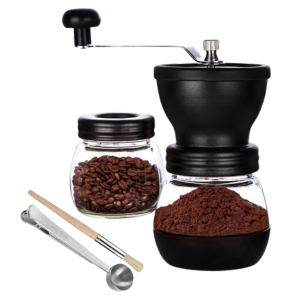
As coffee professionals, we’ve found this burr grinder to be a standout bestseller in the UK market—and for good reason.
The remarkable price point of this burr grinder caught us off guard during testing, especially given its impressive performance.
During our hands-on testing, we noticed this grinder bears striking similarities to the Hario Skerton Plus, which we’ll examine in detail below.
Based on our extensive brewing experience, this grinder performs admirably for French press, pour-over, and even AeroPress brewing methods—particularly now that coarser grinds are becoming more popular for AeroPress techniques.
For espresso enthusiasts, we must be frank: without modifications, this grinder won’t deliver the ultra-fine consistency and precision required for non-pressurised portafilters.
While the price point seems almost too good to be true, our testing confirms it’s a solid choice for coffee lovers on a budget.
For those interested in exploring similar options, our partners at Shop Coffee in Cambridge offer an excellent selection:
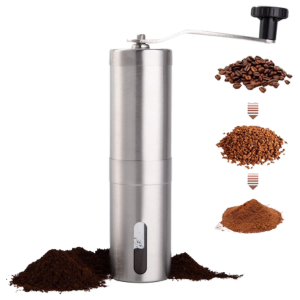
This budget-friendly manual grinder has generated quite a buzz, with an impressive number of reviews and customer questions on Amazon.
Through our testing process, we’ve learned to set realistic expectations for grinders in this price range.
The smaller burr size means longer grinding times—a trade-off for the compact design. During our trials, we found that finer grinds demand significantly more time and effort. For espresso grinding, expect 3-5 minutes of work for a double shot, depending on your dose and grind requirements.
For brewing methods like AeroPress, filter coffee, or French press, the grinder performs adequately. However, we strongly recommend investing just £7 more in one of our higher-rated options below.
For portable grinding needs within the £20-£30 range, we particularly recommend the Hario Mini Mill Slim Plus, which we’ll discuss in detail later.
For more brewing insights, check out our related guides:
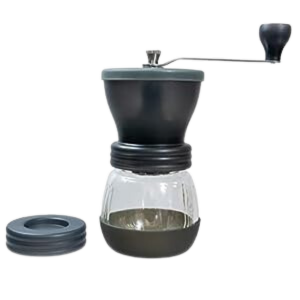
The Skerton Plus has earned its legendary status in the speciality coffee world, offering remarkable value for money. Our team has extensive experience with this model—it’s been a staple in our testing kitchen since day one.
Having thoroughly tested this grinder across multiple brewing methods, we can speak to its durability and performance from direct experience.
The build quality impressed our team, delivering consistent grounds despite its modest price point. We’ve successfully used it for various brewing methods, including espresso, though precise dialling-in proves challenging.
While the Japanese-only instructions might seem daunting, we found online resources more than sufficient for mastering this grinder.
For French press enthusiasts, we recommend considering the blue horse upgrade kit for improved consistency at coarser settings.
The grinder works well with pressurised portafilters, but traditional basket users might want something with finer adjustment capabilities. We discovered a useful modification using an M8 nut for stepless grinding, plus adding reference marks for consistent settings.
The durable glass container doubles brilliantly as a storage solution, and comes with a practical lid.
For those interested in automation, we’ve tested the drill modification method—though we recommend gentler speeds than commonly suggested to protect the burrs and maintain grind quality.
In our professional assessment, the Hario Skerton Plus represents excellent value, especially when enhanced with available modifications for specific brewing needs.
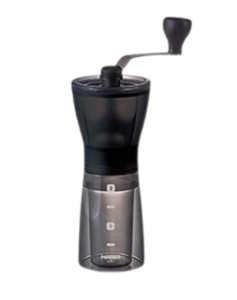
This compact offering from Japanese coffee equipment specialist Hario pairs perfectly with the AeroPress, thanks to its travel-friendly dimensions and lighter weight compared to the Skerton.
In our comparison testing, we found the Mini Mill Slim Plus offers distinct advantages over the Skerton, particularly in grind adjustment precision and setting repeatability—crucial for switching between brewing methods.
The spring-loaded burr design gives it a notable edge, especially for coarser grinds. While the Hario Skerton Pro shares this feature and sports an attractive design, it commands a higher price point.
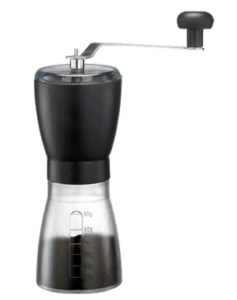
As coffee professionals, we’ve noticed this grinder shares design elements with the Hario Mini Mill Plus but comes at a notably lower price point.
During our hands-on testing, we found the lighter weight suggests less robust construction compared to the Hario.
While budget-friendly options have their place, our experience has taught us to be cautious with entry-level grinders.
We’ve learned through countless testing sessions that investing slightly more often pays dividends in longevity and performance.
For occasional use or travel brewing, this grinder might suit your needs.
However, our testing philosophy centres on finding the sweet spot between cost and quality.
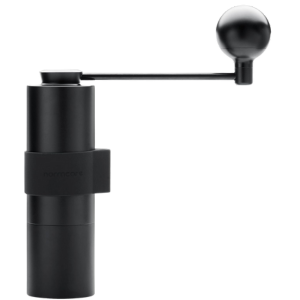
This grinder caught our attention with its striking design, reminiscent of the premium Comandante series.
The 38mm steel burrs match those found in several higher-end electric grinders, including the Sage Smart Grinder Pro.
Our team particularly appreciated the wooden knob during testing – it provides superior grip and comfort compared to plastic alternatives.
The included travel case adds significant value, making this a compelling option in its price range.
However, we recommend reading on, as our testing revealed some even more impressive options at similar price points.
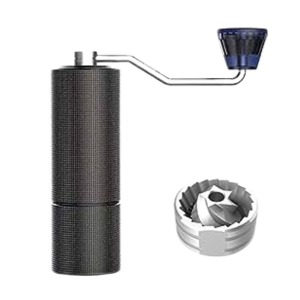
Through extensive testing, we’ve found the C2 stands out for its remarkable grinding speed and consistency.
The precision-engineered burrs (55-58HRC hardness, 5-axis CNC machined) significantly reduce fines, producing notably uniform grounds.
Our team uses this grinder regularly, and we’re impressed by its espresso grinding capabilities at this price point.
While premium options like the Made by Knock Aergrind offer additional refinements, the C2 dominates the sub-£100 category.
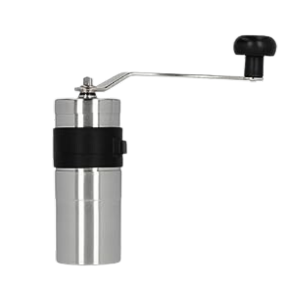
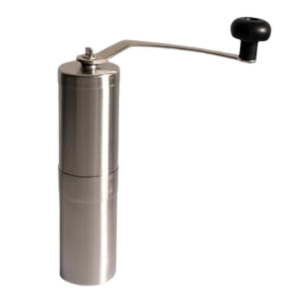
This compact grinder has earned its reputation among coffee professionals and enthusiasts alike, particularly those who pair it with an Aeropress.
The Porlex Mini II addresses durability concerns from the original model, particularly around the handle mount.
Its space-saving design – fitting neatly inside an Aeropress – makes it a favourite among our team members who travel frequently.
A larger version of the Mini II, offering increased grinding capacity without compromising portability.
The key difference lies in capacity – the Tall handles 30g versus the Mini’s 20g.
Despite its increased height (5.5cm taller), it maintains Aeropress compatibility, offering flexibility for various brewing methods
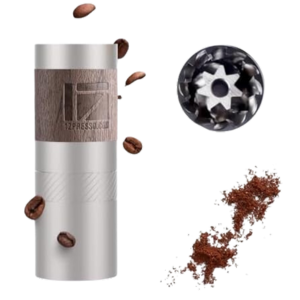
Our testing revealed impressive build quality, with premium materials including stainless burrs and an aluminium alloy body.
The design mirrors the prestigious Comandante, but at a more accessible price point.
With 30 grind adjustments and a dual bearing shaft, this grinder offers exceptional precision.
The simple disassembly makes cleaning straightforward – a crucial factor for maintaining grind quality.
For serious coffee enthusiasts seeking premium features without the Comandante price tag, both the Q2 and upcoming JX deserve serious consideration.
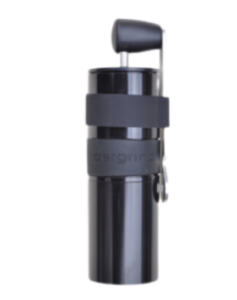
The Aergrind stands out as a brilliant companion to the Aeropress, much like the Porlex Mini we discussed earlier.
This innovative grinder, crafted by Peter Kilpatrick, emerged from a triumphant Kickstarter campaign in March 2017 and has since won countless admirers in the coffee community.
The story begins with Knock’s acclaimed Hausgrind, followed by their first portable creation, the Feldgrind.
Building on this success, Peter’s vision for the ultimate portable grinder led to the Aergrind – specifically designed to complement the Aeropress perfectly.
As part of our comprehensive testing process, we’ve spent considerable time with both the original and latest versions of the Aergrind. While we generally favour electric grinders for daily use (particularly given some RSI considerations), these manual grinders have proven themselves exceptional tools.
The Scottish craftsmanship shines through in every detail. Premium components define both versions, but the latest iteration brings welcome refinements. Most notably, it features Italmill titanium-coated burrs, enhanced stability through an extended axle bearing, and a more robust crank arm.
The latest model showcases superb build quality with zero plastic components. We particularly appreciate the walnut crank knob, magnetic snap-on lid with aluminium dial, and the secure screw-on grounds container.
Made By Knock’s customer support deserves special mention – our research and community feedback consistently highlight their outstanding service record.
Having the updated version in our test kitchen, we’re impressed by its premium feel and finish. While it sits above the £100 price point, the value proposition is compelling. Our long-term testing unit has travelled extensively in various conditions, grinding countless beans for pour-over coffee in remote locations, and still maintains its like-new condition.
The grinder’s performance stands out in several key areas. It offers impressive grinding speed, exceptional ergonomics during use, and straightforward grind adjustment. We’ve successfully tested it across the full spectrum of grinds – it achieves the ultra-fine consistency needed for espresso, even managing to choke our Sage Bambino Plus with traditional baskets.
For Aeropress users seeking portability (the handle cleverly fits in the rubber sleeve), we believe the Aergrind represents excellent value. While cheaper alternatives exist, the superior build quality and performance make it a wise long-term investment.
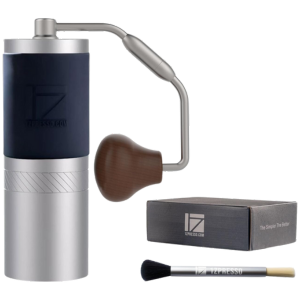
The 1Zpresso J now takes the place of the previous IZpresso JX model.
The J model sits alongside its sibling, the JX Pro (which we’ll examine next), with the Pro variant particularly excelling in espresso preparation.
The 48mm steel burrs put this grinder in serious territory – matching the respected OE Lido’s burr size, despite a significantly lower price point.
Like its compact cousin, the Q2, build quality impresses with premium materials throughout – stainless steel, aluminium alloy, and a wooden handle. The combination of thoughtful handle design and substantial burrs delivers notably faster grinding times compared to many competitors.
Independent verification comes from numerous sources, including a particularly insightful Amazon review from an engineer who’s owned multiple manual grinders. Their assessment mirrors our findings: exceptional build quality paired with swift, effortless grinding.
Our market research reveals consistent praise for this grinder’s value proposition, especially considering it’s priced at roughly half the cost of the Comandante C40.
We recommend watching Dave Corby’s detailed review for additional insight. His expertise carries significant weight in the industry, with manufacturers regularly consulting him during product development.
We’ve covered an extensive range of manual grinders, from budget-friendly options to premium models that rival professional equipment.
Two notable grinders deserve mention, though current availability limits their inclusion. The Comandante C40, while exceptional, faces UK stock issues, with some sellers attempting to charge well above RRP. Similarly, the highly regarded Orphan Espresso Lido grinders remain difficult to source in the UK market.
We’ll update our recommendations when availability improves. Meanwhile, let’s address some common questions about manual grinders.
Each grinder features its own adjustment mechanism, typically involving an adjustment nut or wheel, sometimes with numbered settings. The crucial first step is finding the zero position – the point where the burrs make contact. Grinders with marked settings from fine to coarse make this straightforward, while others require experimentation.
For specific guidance:
The concept of “best” varies significantly based on individual needs. Rather than seeking the absolute best, we encourage considering specific requirements.
For instance, “best portable manual grinder for Aeropress” yields clearer recommendations – the Made by Knock Aergrind or Porlex Mini II excel in this category.
Similarly, when seeking the best manual grinder for espresso, consider crucial factors like burr size (larger burrs reduce grinding time for fine espresso grounds), adjustment settings (finer control for espresso), and verified performance through expert reviews.
Budget considerations matter, but we recommend prioritising your specific needs alongside cost. Entry-level grinders might disappoint if you require ultra-fine grinding, speed, and precise adjustment.
We recommend a dry cleaning approach – avoid water at all costs. Most grinders allow either:
For specific models, numerous online tutorials demonstrate proper cleaning techniques, like the helpful guide available for the Timemore C2.
Grinding time varies based on three key factors:
Coarse grinds require less time per gram than fine settings. For reference:
Larger burrs generally reduce grinding time significantly.
Manual grinders typically outlast their electric counterparts due to simpler mechanics and fewer potential failure points. Our vintage grinder collection includes functioning models from the 1940s-60s.
Modern manual grinders might prove even more durable, featuring metal and high-grade plastic construction instead of traditional wooden housings.
While burrs do wear over time, manual operation produces less stress than electric motors. Additionally, single-dose grinding reduces the risk of foreign object damage, as users can inspect beans before grinding.
Price variations reflect genuine differences in materials, engineering, and performance. Key factors include:
The price spectrum makes more sense when comparing it to other precision instruments – quality comes at a cost, but delivers tangible benefits in performance and longevity.
Caffeinatedgear.com is a participant in the Amazon Services LLC Associates Program, an affiliate advertising program designed to provide a means for sites to earn advertising fees by advertising and linking to amazon.co.uk.
© 2025 Caffeinated Gear.