

By: The Caffeinated Gear Team
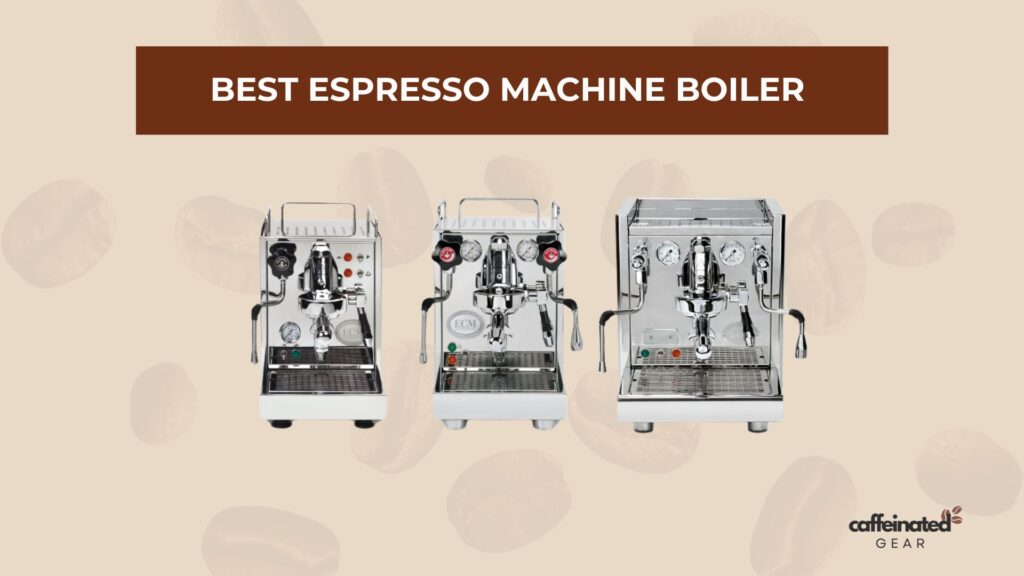
Looking to purchase your perfect espresso machine? Understanding the boiler system is crucial to making the right choice for your brewing needs.
We’ll walk you through the three main types of espresso machine boiler systems – single boiler, heat exchanger, and dual boiler – to help you find your ideal match.

As coffee professionals, we’ve extensively tested single boiler machines, which feature (you guessed it!) just one boiler for both brewing and steaming.
This design means you’ll need to tackle brewing and steaming separately, with a brief waiting period between tasks as the boiler adjusts temperature.
For espresso enthusiasts who primarily enjoy straight shots, or those who make just a few milky drinks daily, we’ve found this isn’t much of a compromise at all.
Through our testing, we’ve seen that popular entry-level machines like the Gaggia Classic, Sage Barista Express, and Rancilio Silvia all use single boiler systems.
You’ll also find this setup in bean-to-cup machines such as the Gaggia Brera and De’Longhi Magnifica Plus.
Our experience shows that single boiler machines shine in several areas:
They’re the most budget-friendly option when shopping for home espresso machines.
These machines typically reach brewing temperature faster than their dual boiler counterparts.
We’ve calculated that they’re more economical to run compared to dual boiler systems.
The main limitation we’ve encountered is the inability to brew and steam simultaneously – something both heat exchanger and dual boiler machines can manage.
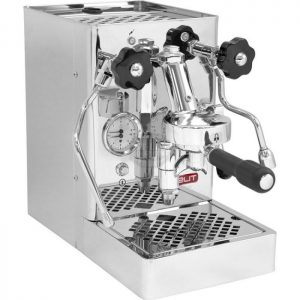
The Lelit Mara represents excellent value in the heat exchanger category, available for just under £1,000.
For our complete analysis of the Lelit range, see:
Heat exchanger (HX) machines offer simultaneous brewing and steaming, much like dual boiler systems, but achieve this through clever engineering.
In our testing, we’ve found that these machines use a fascinating system – a single steam boiler with a copper pipe running through it. This pipe heats fresh water to the perfect brewing temperature as it passes through the steam boiler.
Our research shows that HX machines offer significant value. Models like the Lelit Mara and Rocket Appartamento start around £1,000, while comparable dual boiler machines typically cost twice as much.
[Try the new Appartamento TCA & Rocket Faustino Grinder Setup for 6 months at £75 per month (Including 1Kg of Coffee Beans Each Month) and if you don’t like it, they will collect it, no questions asked.
If you like it, keep renting it – all maintenance & support is covered, so you’ll never have to worry about problems further down the line.
You can also now buy ANY of the Rocket espresso machines with 2 years interest free credit!
Our maintenance experience shows that HX machines are typically more cost-effective to service and repair than dual boiler systems, simply because there’s only one boiler to maintain.
Through our energy consumption testing, we’ve confirmed that HX machines use marginally less power than dual boiler systems, resulting in lower running costs.
One distinct advantage of HX machines is their water freshness, since they draw directly from the water reservoir rather than storing water in a boiler.
The main drawback of HX machines is their lack of direct temperature control for brew water.
When you adjust the steam pressure, it inevitably affects your brew water temperature.
While cooling flushes are necessary with HX machines, we’ve found through our testing that a quick flush benefits double boiler machines as well for optimal shot quality.
As coffee specialists, we appreciate the straightforward design principle behind dual boiler machines – they feature two separate boilers, one dedicated to coffee brewing and another for milk steaming.
A brilliant example is the Sage Dual Boiler, which goes beyond the standard dual boiler design. This innovative machine combines dual boiler technology with a heat exchanger system that pre-heats the incoming water, significantly reducing thermal shock to the boiler.
Through our extensive testing, we’ve discovered several key advantages of dual boiler systems:
You get complete control over both brewing and steaming temperatures independently, allowing you to fine-tune your steam pressure without compromising your brew temperature.
Shot-to-shot consistency is notably better, especially when pulling multiple shots in succession.
While cooling flushes aren’t strictly necessary, our barista team has found that a quick group flush can still enhance shot quality, even on dual boiler machines.
From our experience, there are some trade-offs to consider with dual boiler machines:
They typically command a higher price point compared to heat exchanger models.
When repairs are needed, you’ll generally face higher maintenance costs than with HX machines.
Since the brew water comes from a boiler rather than the fresh reservoir, water freshness can be slightly compromised.
These machines usually require more time to reach optimal temperature compared to HX models.
While our detailed breakdown above should give you a solid foundation for making your choice, we’ve created this straightforward guide to help you pinpoint the perfect machine for your needs. Simply note which statements match your situation:
Our testing has shown that newer HX machines are starting to blur these traditional distinctions, offering some features typically associated with dual boiler machines.
In our professional assessment, thermoblocks and thermocoils represent modern alternatives to traditional boiler systems. They function as on-demand water heaters, similar to how a combi boiler differs from a traditional tank system.
Budget-friendly espresso machines typically use thermoblocks – metal blocks with internal chambers that heat water as it passes through.
Some cutting-edge espresso machines like the Sage Bambino Plus and Barista Pro utilise thermocoil technology, which offers distinct advantages over traditional thermoblocks.
Based on our extensive testing, thermocoils represent a significant improvement over thermoblocks. They feature metal tubes coiled within the heating block, through which water circulates. We’ve found they offer faster heating, more consistent temperatures, and generally greater durability.
Before concluding, we’d like to share a crucial insight from our years of testing various machines: regardless of your boiler type, the single most impactful upgrade you can make is using higher quality coffee beans.
Caffeinatedgear.com is a participant in the Amazon Services LLC Associates Program, an affiliate advertising program designed to provide a means for sites to earn advertising fees by advertising and linking to amazon.co.uk.
© 2025 Caffeinated Gear.