

By: The Caffeinated Gear Team
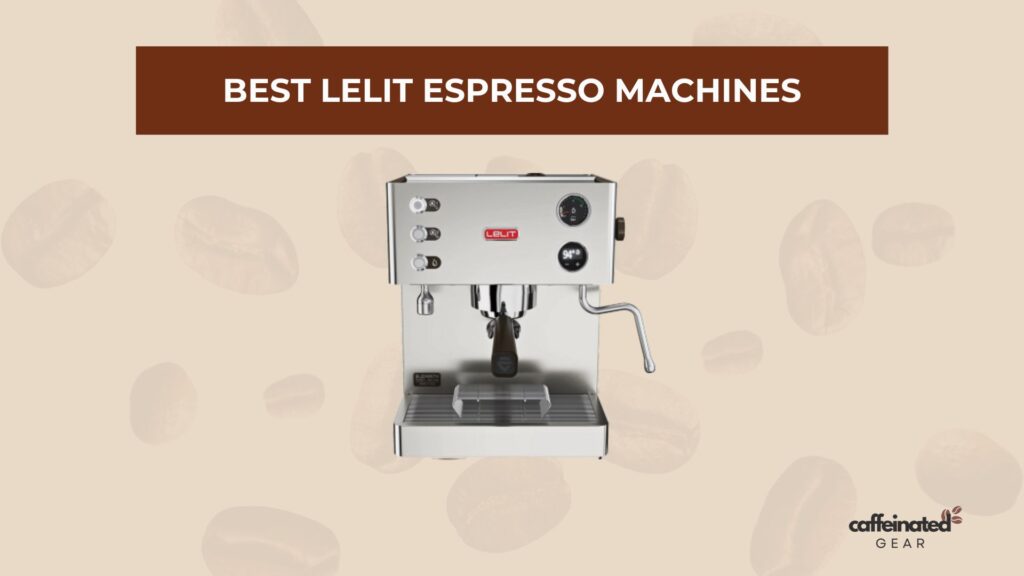
Searching for the perfect Lelit espresso machine? We understand – these Italian-crafted machines have caught your eye, but with so many options available, choosing the right model can feel overwhelming. As professional baristas and coffee experts, we’ve spent countless hours testing these machines to help you make an informed decision.
In this comprehensive guide, we’ll share our hands-on experience with Lelit’s espresso machine lineup, breaking down exactly what makes each model unique. We’ll help you understand how they compare to competitors at similar price points, and most importantly, which Lelit machine will best suit your coffee-making journey.
If you’re eager to dive straight into the machine reviews, you can click here to jump straight to the machine reviews. Otherwise, let’s explore what makes Lelit such a fascinating brand.
In the picturesque region of Brescia, near Lake Garda, Italy, a remarkable story of coffee innovation began. Lelit started its journey in the mid-1980s as L’Elettrodomestico Italiano (The Italian Home Appliances), later simplifying to L’EL.IT and finally becoming the Lelit we know today.
What began as a specialist manufacturer of premium irons and steam boilers transformed in 2001 when they ventured into espresso machine production. From humble beginnings in a hardware store attic with just two passionate founders, Lelit has grown into a family-led powerhouse of coffee innovation, now steered by the founders’ sons.
What sets Lelit apart is their unwavering commitment to Italian craftsmanship. Each machine is hand-built using primarily Italian-sourced components, striking a brilliant balance between innovation and traditional quality. They’ve earned a reputation for creating machines that outperform their price tags without compromising on materials or build quality.
The company’s remarkable growth story took an interesting turn during the Covid crisis. While many manufacturers scaled back, Lelit boldly expanded their workforce and production capacity, leading to impressive growth. More recently, they joined the Breville Worldwide family (known as Sage Appliances in some markets), a move that’s brought greater accessibility and more competitive pricing to their range.
British coffee enthusiasts can now purchase directly through Lelit’s UK website, and like Baratza (another recent addition to the Sage/Breville group), their machines offer exceptional value for money.
For more detailed information, check out our Lelit coffee machines FAQ.
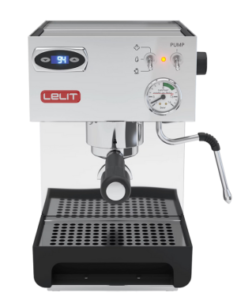
During our extensive testing, we’ve found the Anna PL41TEM to be a remarkable achievement in entry-level espresso machine design. It perfectly demonstrates Lelit’s talent for creating machines that perform well beyond their price point.
Consider this: for £450, you’re getting a polished stainless steel machine with an adjustable PID, brass boiler, brass group, 3-way solenoid, and adjustable OPV. That’s £50 less than the Gaggia Classic Pro and about £130 below the Rancilio Silvia’s price point.
To put this in perspective: modifying a Gaggia Classic with a PID and 9-bar adjustment would cost you £600-£650, while similar modifications to the Silvia would push the price to £700-£750. The value proposition here is simply outstanding.
For newcomers to the world of espresso, let’s break down why the PID (Proportional Integral Derivative) matters so much. This sophisticated temperature control system uses a boiler sensor and feedback loop to maintain precise temperature stability. Even better, the Anna’s PID is adjustable – a feature not found on all PID-equipped machines.
During our testing, we discovered the OPV comes pre-set to 10 bars, which is nearly perfect for most users. Should you wish to adjust it, the process is straightforward:
[IMAGE]
The temperature range is particularly impressive, offering brew temperatures from 80-130°C (preset to 95°C) and steam temperatures from 120-140°C (preset to 125°C).
What Could Be Better?
In our extensive testing, we found just one minor drawback: the 57mm portafilter size. While this doesn’t affect coffee quality, it does limit your choices for accessories like tampers, puck screens, and distribution tools. Most accessories come in 58mm (industry standard) or 54mm (popular with Sage/Breville machines), making 57mm something of an outlier.
We’ve often wondered about this design choice, as Lelit uses 58mm portafilters in their other machines. While it’s not a deal-breaker, it’s worth considering if you’re planning to build an extensive collection of coffee accessories.
Understanding the Anna Family
Lelit offers two additional Anna models at lower price points:
The entry-level “EM” version features a panarello steam wand, push buttons instead of toggle switches, and no PID. The “LEM” version sits in the middle, offering toggle switches and a professional steam wand, but no PID. The “TEM” model we’ve discussed here represents the premium version with all features included.
In our view, Lelit could simplify their naming convention – perhaps “Anna” for the base model, “Anna Pro” for the LEM version, and “Anna PID” for the TEM. We’ll explain a similar naming pattern with the Anita models later.
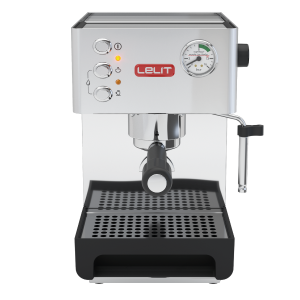
Compared to the PL41TEM, this entry-level Anna offers these key differences:
For those unfamiliar with steam wand terminology, let’s explore the panarello. This clever device, pioneered by Gaggia and Saeco, was designed to simplify milk frothing for home baristas. It features a side air intake that automatically incorporates air into the steam, creating milk froth with minimal technique required.
While this might seem like coffee trivia, it’s worth noting that Saeco likely invented this technology alongside their groundbreaking bean-to-cup machines in the 1990s.
The panarello wand excels at creating that classic, thick-foamed cappuccino style that dominated coffee shops in the 90s (just add a generous dusting of chocolate powder for the full retro experience). However, if you’re aiming to master microfoam for latte art and contemporary speciality coffee drinks, you’ll want to consider a model with a professional steam wand instead.
A professional steam wand is simpler in design – essentially a steam pipe with a tip containing one or more holes. While it requires practice to master, we firmly believe the learning curve is worth it for the superior control and milk texture it provides.
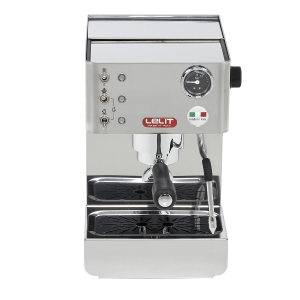
After extensive testing in our workshop, we’ve found the Lelit Anna PL41LEM occupies an interesting middle ground in the Anna range.
This model comes equipped with professional-grade toggle switches and an upgraded commercial steam wand, sacrificing only the PID temperature control and digital display to achieve its more modest price point.
While the £30 savings might seem tempting, our experience as professional baristas leads us to strongly recommend investing in the TEM version instead.
The value proposition of a factory-installed PID at this price difference is exceptional.
To put this in perspective, when we upgrade machines like the Gaggia Classic with aftermarket PIDs, our customers typically spend between £80-£120 for the components alone, not including professional installation costs.
Based on our real-world testing and countless shots pulled, we can confidently say that the marginal cost for precise temperature control makes the TEM version the smarter choice for any serious home barista.
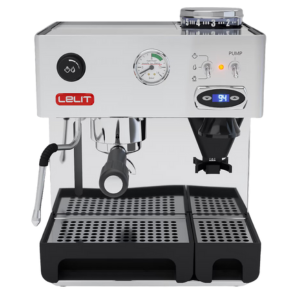
After extensive testing in our workshop, we’ve found the Anita to be essentially the Anna’s more sophisticated sibling, upgraded with an integrated grinder. Each Anita model corresponds directly to an Anna variant, with this particular model mirroring the Anna 2’s capabilities plus grinding functionality.
To put it in perspective, the relationship between Anita and Anna mirrors what we see with the Sage Barista Express and its base model. For context, since British coffee enthusiasts might not be familiar with the Infuser (as it’s not available in the UK), think of the Duo Temp Pro but with additional features like programmable shot buttons, an integrated pressure gauge, and a dedicated hot water outlet.
What sets the Anita apart in our testing is its remarkable departure from typical integrated-grinder machines. While many manufacturers simply bolt a basic grinder onto their standard espresso machine, Lelit has created something genuinely special here.
Our hands-on experience revealed that the Anita’s integrated grinder is the only one in its class offering stepless adjustment. This might sound technical, but it’s a game-changing feature that allows for microscopic grind adjustments – crucial for achieving the perfect extraction.
For coffee enthusiasts shopping in the £500-£600 range, our testing suggests only two serious contenders: the Anita and the Barista Express. The Barista Express typically retails at £629.99 but often sees discounts to around £500-£550, putting it in direct competition with the Anita.
Here’s what our comparative testing revealed:
Anita’s Advantages:
Barista Express Benefits:
Understanding the Anita Range
Like its sibling the Anna, the Anita comes in three distinct versions. Our experience with each model has shown clear differences in capabilities and target users.
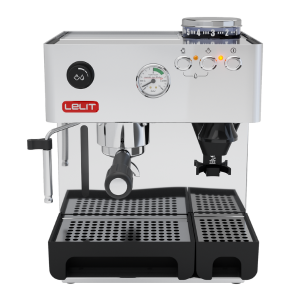
The base model mirrors the Anna PL41EM’s core features while adding grinding capabilities. It comes equipped with a panarello steam wand and uses a traditional button interface instead of toggle switches. While lacking PID temperature control, it maintains the essential Lelit build quality.
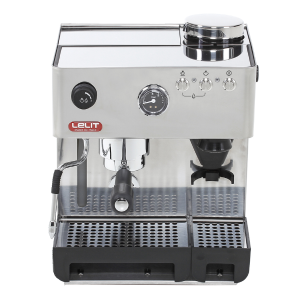
The EMI sits in the middle of the range, distinguished by its professional steam wand while retaining the EM’s core features. From our testing, it’s an excellent middle-ground option for those wanting better milk texturing without the full PID upgrade.
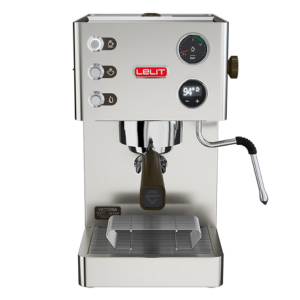
In our extensive testing of single boiler espresso machines, we’ve discovered that while the Anna 2 shines in the best entry level (under £500) category, the Victoria stands out brilliantly in the premium range under £1,000.
When comparing high-end single boiler machines in the UK market, the Profitec Go typically takes the crown. However, we’ve found the Victoria offers similar features and performance while being nearly £200 more affordable at current prices.
The Victoria comes equipped with the sophisticated LLC (Lelit Control Centre) – the same system found in the prestigious Mara & Bianca models. Its professional-grade 58mm group incorporates Lelit’s exceptional portafilter and distinctive “water slide” splitter. The robust 300ml brass boiler (larger than Anna’s), adjustable PID, customisable OPV, and programmable pre-infusion round out its impressive specs.
While matching the Profitec Go’s feature set, we noticed some differences in implementation. The OPV adjustment requires internal access and tools on the Victoria, unlike the Go’s convenient external screw. Similarly, the Go’s pre-infusion more accurately mimics line pressure.
For those considering machines like the Gaggia Classic Pro or Rancilio Silvia with future modification plans, we suggest taking a serious look at the Victoria. Our calculations show its price point matches these machines’ post-modification costs, making it a compelling choice for the serious home barista.
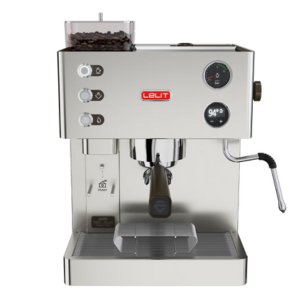
During our review process, we immediately recognised the Kate as Victoria’s integrated counterpart, much like the relationship between Anita and Anna. For those drawn to the Anita but seeking premium features like a 58mm portafilter, pre-infusion capability, dual programmable timed doses, and shot timer functionality, we believe the Kate deserves serious consideration.
Our market research reveals an interesting gap – very few integrated grinder espresso machines offer both boilers and 58mm groups. The Kate stands alone with its comprehensive feature set: 300ml brass boiler, chromed brass group, properly adjusted 9 bar OPV, 3-way solenoid valve, wide-range adjustable PID, pre-infusion settings, stepless grind adjustment, shot timer, and dual timed doses.
This unique combination makes the Kate particularly suitable for aspiring home baristas working with limited space and budget. However, based on our practical experience, we recommend carefully considering whether an integrated grinder truly meets your needs. In our testing, we found the Victoria paired with a quality stand alone grinder offers greater flexibility, with minimal space difference.
Regarding value, we should note some important distinctions. While the Kate might appear to combine Victoria with the Lelit William (typically an £1,100 combination), it actually incorporates 38mm conical burrs similar to the Lelit Fred. Our price comparison shows the Victoria-Fred combination costs roughly the same as the Kate.
We particularly appreciate that starting with the Victoria-Fred setup leaves the door open for future grinder upgrades as your coffee journey evolves.
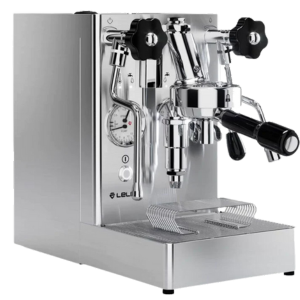
After extensive testing in our coffee lab, we’ve discovered that the Lelit Mara X stands out as a revolutionary heat exchanger E61 group espresso machine.
The brilliance of heat exchanger machines lies in their single-boiler design with an integrated pipe running through it. This pipe, known as the heat exchanger, warms the water as it flows through the system.
What sets the Mara X apart is Lelit’s innovative dual-sensor approach. By placing temperature probes in both the boiler and heat exchanger, they’ve created a remarkably stable brewing environment. The PID system uses this data to maintain precise temperature control, making temperature surfing a thing of the past.
We were particularly impressed by the machine’s two distinct operating modes. The first focuses purely on espresso brewing, while the second cleverly prioritises espresso before ramping up steam power during shot pulling. This means you can steam milk right after your shot is complete.
For those who prefer working like a dual boiler machine, we found a quick group head flush pre-heats your cup and triggers the boiler temperature rise, allowing simultaneous steaming and brewing.
The user interface couldn’t be simpler. A discreet switch behind the drip tray toggles between modes, while a three-way temperature selector offers precise control.
Temperature settings we measured:
Space efficiency is another winning feature. At just 22.5cm wide, 41cm deep and 35cm tall, the Mara X has one of the smallest footprints among E61 heat exchanger machines. This compact design makes it perfect for kitchens where counter space comes at a premium.
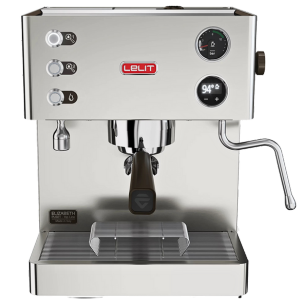
The Lelit Elizabeth might look unassuming, but our testing revealed it’s packed with sophisticated features that would impress even seasoned baristas. Much like a well-crafted espresso, there’s more complexity here than meets the eye.
What truly sets this machine apart are its innovative pre-infusion capabilities. Through extensive testing, we’ve found the dual pre-infusion modes – steam pressure and bloom pre-infusion – offer remarkable control over extraction.
The steam pressure pre-infusion delivers a gentle start to extraction, while the bloom mode (with the steam boiler off) allows for sophisticated light roast experiments. You can fine-tune both modes, adjusting timing up to 20 seconds and tweaking steam boiler temperature to modify pre-infusion pressure.
For coffee professionals and enthusiasts who want to experiment with extraction profiles without a flow paddle, these features are pure gold. Our testing showed particular success with lighter roasts, where the customisable pre-infusion helped unlock subtle flavour notes.
We were also impressed by several thoughtful design elements:
At just over £1,000, we believe the Elizabeth offers exceptional value. When comparing it to the Sage Dual Boiler, which often sells at a similar price point, both machines offer compelling features that punch well above their weight class.
The choice between these excellent machines ultimately depends on your specific needs and preferences. We recommend thoroughly researching both options to determine which best suits your coffee brewing style.
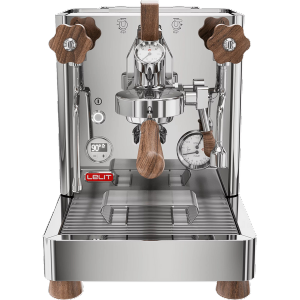
After extensive testing in our coffee lab, we can confidently say the Lelit Bianca V3 stands as a remarkable achievement in home espresso engineering.
Its reputation for excellence is well-earned, and our hands-on experience confirms why coffee enthusiasts consistently praise this machine.
At its core, the Bianca V3 is a sophisticated dual boiler espresso machine featuring an E61 group head, offering both manual pressure profiling via the brew paddle and programmed options.
The thoughtfully designed system includes a whisper-quiet rotary pump with plumbing capabilities, comprehensive LCC PID controls, and precise pressure monitoring through both the group gauge and the innovative 2-in-1 pump and steam pressure display.
We particularly appreciate the professional-grade no-burn steam wand and the clever 2.5L water tank design, which can be positioned at the back or either side for maximum versatility.
While the Bianca isn’t a hidden gem like some machines we’ve reviewed, its capabilities genuinely impressed our testing team.
The machine’s striking aesthetics complement its technical prowess, but what truly sets it apart is the rare combination of programmable and manual pressure profiling at this price point.
In our professional assessment, only the Rocket R Nine One, La Marzocco GS3 MP, and Slayer single group offer comparable functionality – all at significantly higher price points.
Regarding potential drawbacks, our testing revealed no major concerns.
While some coffee enthusiasts avoid E61 group heads on principle, we find this preference largely personal rather than technical.
The only consistent feedback from our testing team echoes the broader coffee community: the inability to save and quickly switch between pressure profiles feels like a missed opportunity.
Currently, transitioning from programmed to manual profiling requires navigating through the LCC to disable profile steps.
We anticipate Lelit might address this through future updates, adding preset profile storage and easier manual mode switching.
Based on our extensive testing of both brands, this comparison requires careful consideration of your specific needs.
Lelit typically targets the prosumer market with machines designed for coffee enthusiasts seeking precise control and professional features.
Sage, meanwhile, often focuses on combining user-friendly features with domestic kitchen integration.
However, this generalisation doesn’t apply uniformly across either brand’s range.
Our recommendation always depends on your individual requirements and which specific models you’re comparing.
Our team has visited the Lelit manufacturing facility in Castegnato, Brescia, Italy. Their espresso machines are meticulously hand-assembled using predominantly Italian-sourced components and materials.
Based on our extensive experience with Lelit machines, their longevity primarily depends on maintenance and care.
These premium machines are built with high-quality components and are designed to be serviceable, unlike disposable appliance-grade equipment.
We’ve found that Lelit machines can provide reliable service for many years when properly maintained.
However, it’s important to note that while the hand-built construction and quality components typically result in fewer issues compared to mass-produced machines, no equipment is entirely immune to occasional faults.
The key advantage with Lelit is that if issues arise, you’ll have access to manufacturer support and qualified technicians who can service these machines, ensuring they remain operational for years to come.
When purchased from Lelit directly or through authorised dealers in the UK, these machines come with a 2-year manufacturer’s warranty. We strongly advise against purchasing from grey market importers to ensure warranty coverage.
The Lelit range spans from £400 to £2100, offering options for various budgets. In our testing and comparisons, we’ve consistently found that Lelit machines provide exceptional value within their respective price brackets. Whether you’re shopping at the entry-level or premium end, we believe a Lelit machine deserves consideration.
Our experience teaching coffee enthusiasts suggests this depends on your expectations.
For those embracing the home barista journey and accepting the learning curve, Lelit machines are as approachable as any professional-grade equipment.
However, if you’re seeking push-button convenience, it’s important to understand that Lelit produces traditional espresso machines, not automated bean-to-cup systems.
While the Anita and Kate models feature integrated grinders, they remain manual machines requiring barista skills.
The primary learning curve involves mastering the art of dialling in your shots, a fundamental skill for any serious coffee enthusiast.
Our maintenance routine for Lelit machines includes several key practices:
Regular backflushing is essential for machines with 3-way solenoid valves. This involves using a blank disk in the portafilter to run cleaning cycles – with detergent every few hundred shots and with water as frequently as desired.
Descaling requirements depend entirely on your water hardness. In soft water areas, descaling might be unnecessary. For hard water regions, we recommend considering water treatment solutions rather than frequent descaling, as descaling solutions can potentially affect internal components over time.
Our daily maintenance routine includes:
While the Anna and Anita models include ESE pod compatibility, we strongly recommend using freshly ground coffee. These machines are engineered for optimal performance with freshly ground beans, and you’ll achieve far superior results this way.
As professional coffee equipment testers, we classify Lelit among the premium home barista espresso machines. They effectively bridge the gap between commercial and domestic equipment.
Their machines incorporate commercial-grade components in compact, single-group designs at competitive price points.
We particularly appreciate Lelit’s practical approach to premium quality – delivering professional-grade performance without unnecessary cosmetic flourishes that would inflate costs.
Through our testing of the Anna range, we’ve found this varies by model:
For detailed specifications, see: Lelit Anna
Our extensive testing reveals the Elizabeth as an exceptional machine that deserves more recognition in the coffee community.
It offers unique features at its price point that set it apart from competitors. We expect its reputation to grow significantly as more coffee enthusiasts discover its capabilities.
For our detailed analysis, see: Lelit Elizabeth
Through our testing of the Anna range, we’ve found this varies by model:
For detailed specifications, see: Lelit Anna
Caffeinatedgear.com is a participant in the Amazon Services LLC Associates Program, an affiliate advertising program designed to provide a means for sites to earn advertising fees by advertising and linking to amazon.co.uk.
© 2025 Caffeinated Gear.