

Caffeinated Gear » Best Cheap Espresso Machines Review: Expert Guide to Budget-Friendly Options
By: Caffeinated Gear Review Team

Looking for a budget-friendly espresso machine in the UK? Our team of certified baristas and coffee experts has put together this comprehensive guide to help you find the perfect affordable option.
We’ll focus on semi-automatic traditional espresso machines—the type most home brewers are searching for. These machines use electric pumps to generate pressure, rather than manual lever systems. Don’t worry if this sounds technical; we’ll break everything down for you.
Let’s address the elephant in the room: what exactly counts as “cheap” when it comes to espresso machines? The answer isn’t straightforward. A £1,000 machine might seem budget-friendly compared to professional models costing £3,000 or more. Similarly, a £300 machine could be considered cheap next to its £1,000 counterparts. It’s all about perspective and your personal budget.
While we love sharing our detailed insights, we know some of you prefer to cut straight to the chase. Here are quick jumps to each price category:
Our journey into the world of home espresso began with an unexpected stroke of luck. We had the chance to test the Sage Oracle, though briefly, as a review unit. This high-end machine gave us valuable perspective on what premium features offer—and what you can live without when shopping on a budget.
After that enlightening experience with the Oracle, reality kicked in. We needed to find something more wallet-friendly, which led us to a second hand 2003 Gaggia Classic paired with a new Sage Smart Grinder Pro. This combination proved brilliant—both machines are still performing admirably today.
The market has changed significantly since then. These days, even older Gaggia Classics command premium prices, with decade-old models fetching nearly £200. This price point makes the new Gaggia Classic Pro increasingly attractive, especially considering its warranty and modern features.
Given this wide range of prices, we’ve structured our guide into three categories: under £100, under £200, and under £500. Let’s explore what each price point offers.
At this entry-level price point, it’s crucial to understand what you’re getting. Sub-£100 machines aren’t simply stripped-down versions of their pricier cousins—they’re fundamentally different beasts.
Think of it like this: a rowing boat and a yacht are both boats, but they serve very different purposes and offer vastly different experiences. The same principle applies to espresso machines.
Typical characteristics of sub-£100 espresso machines include:
We’ll explore these aspects in detail for each machine, but here’s the bottom line: sub-£100 machines make compromises to hit their price point. While they can make decent coffee, they won’t match the shot quality of higher-end equipment.
Our professional recommendation? If possible, consider stretching your budget to the sub-£200 range. The Gaggia Espresso stands out as the best option in this category, offering significantly better value than most sub-£100 machines.
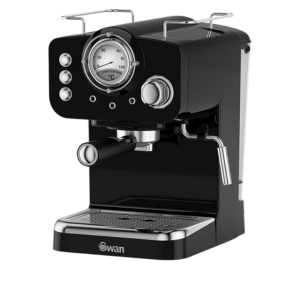
This machine presents an intriguing value proposition, especially as its price has gradually decreased from its original £100 mark. While it’s a generic model sold worldwide under various brands (including Aldi’s Ambiano), it offers some surprising features for its price point.
During our extensive testing, we found it performs reasonably well within its class. However, for superior coffee quality and longevity, we strongly recommend considering the Gaggia Espresso.
The thermoblock heating system, while basic, proves efficient enough for home use. The included temperature gauge—likely added as a premium feature—actually proves quite useful for temperature surfing, helping achieve more consistent shots.
A significant upgrade option has emerged: a compatible bottomless portafilter is now available, transforming this budget machine’s capabilities. However, at just over £100 total investment (machine plus portafilter), you’re approaching the price of more capable machines.
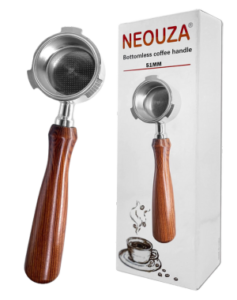
The stock pressurised basket limits grind adjustments and produces a characteristic taste that won’t satisfy coffee enthusiasts. However, this £25 bottomless portafilter upgrade (which includes a standard basket and accepts other 51mm baskets) significantly improves the machine’s potential.
For those happy with the standard setup, quality beans will still produce decent results. But having an affordable upgrade path makes this machine more interesting for those starting their espresso journey.
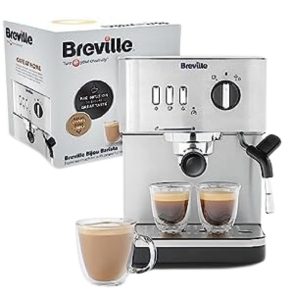
Typically priced around £220, this machine becomes particularly interesting when available under £100. While it might appear similar to Sage’s Duo Temp Pro, it’s an entirely different machine under the hood.
A quick note on branding: Despite the name, this isn’t related to Breville’s premium machines sold as Sage in the UK. It’s manufactured by Newell Brands, who own the Breville name in Europe.
At sub-£100, this machine offers decent value. It includes pressurised baskets (single and double shot), and theoretically accepts standard baskets. However, the unusual 52mm portafilter size presents challenges. While 52mm Astoria and 52mm Wega baskets exist, they may require modifications to fit properly.
Finding a well-fitting tamper can also be tricky. We recommend a true 51mm tamper like this model, which provides better coverage than nominal 51mm tampers that actually measure 50-50.5mm.
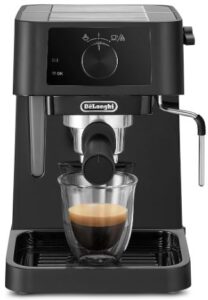
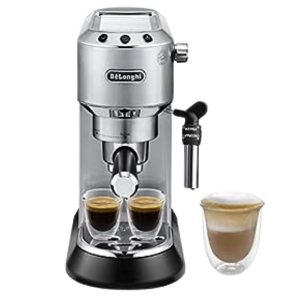
After extensive hands-on testing, we’ve found the Stilosa stands out in the sub-£100 category. Despite sitting slightly above the £100 mark, it frequently drops below this price point during sales. What sets it apart is its traditional boiler system rather than a thermoblock – quite rare at this price level.
For coffee enthusiasts watching their budget but wanting lasting quality, the Stilosa makes perfect sense. Our experience with DeLonghi spans numerous machines, and their expertise in crafting durable budget-friendly equipment shines through here.
While the machine uses plenty of plastic components (though less than some rivals, with its metal cup warmer), we’re impressed by its build quality. As coffee equipment specialists, we’ve seen DeLonghi’s consistent track record as the world’s largest coffee machine manufacturer, particularly in creating affordable machines that stand the test of time.
Let’s be realistic – you won’t get professional-level temperature stability at this price point. Shot-to-shot consistency might vary, much like other machines under £500. However, our testing showed it performs admirably within its category, and crucially, it’s built to last longer than most budget alternatives.
Moving up the price ladder, an extra £100 typically brings modest improvements in build quality and potential drink quality. However, there’s one standout exception that truly justifies the price jump.
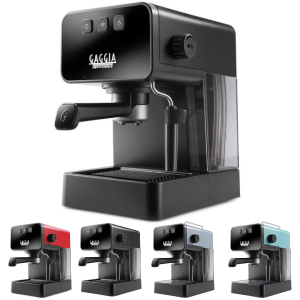
During our extensive testing, this machine genuinely surprised us. While it’s not the cheapest option under £200, we’re ranking it first because it outperforms everything else in its class – and even some pricier models up to £300!
Our team’s history with Gaggia’s budget range, including the Gran and Viva models, left us initially skeptical. However, this machine completely changed our perspective. Made in Italy with home baristas in mind, it offers features we’d expect from much pricier equipment.
Here’s our controversial but confident statement: The Gaggia Espresso Style is currently the finest espresso machine available under £200, possibly even under £300.
Why such bold praise? Our testing revealed:
With a £200 budget, we’d choose this machine without hesitation. Here’s what sealed the deal during our testing:
For anyone shopping in the £200 range without plans to stretch to £350-£400, this machine stands unmatched. Some aspects even rival the Gaggia Classic – quite controversial coming from Classic enthusiasts like us! But we can’t ignore how a 1900W stainless steel thermocoil machine with PID and preinfusion makes excellent coffee more accessible.
Our critiques mainly focus on advanced features: no solenoid valve (leading to potential portafilter spray and wet pucks), basic spouts, and high-pressure preinfusion. However, these are common limitations in this price bracket, typically only resolved in £400+ machines like the Gaggia Classic Pro or Sage Bambino Plus.
For detailed insights, check our comprehensive review:
Pro Tip from Our Testing: When modifying the steam wand for manual operation, secure the rubber pipe with a cable tie – a lesson we learned the hard way!
Having spent countless hours testing this machine in our coffee lab, we can confidently say it’s one of the most popular entry-level espresso machines in Britain – and for good reason. What truly excites us as coffee professionals is its hidden potential that many owners might not realise.
Through extensive testing, we’ve discovered that this modest machine can produce surprisingly excellent espresso with just a few key modifications. While it’s designed for casual home use with pressurised baskets, we’ve found it can transform into a capable home barista tool.
The secret lies in upgrading to a standard portafilter. We particularly recommend this naked portafilter, which we’ve thoroughly tested in our video review. Its bottomless design offers invaluable visual feedback about your extraction quality.
For truly outstanding results, we’ve found that combining this upgrade with precise puck preparation, regular group head flushing, a quality grinder, and most importantly, high quality freshly roasted coffee beans, dramatically improves shot quality.
A standout feature that impressed our barista team is the unique Panarello wand. Unlike typical Panarello systems that produce thick, spoonable foam, this one can actually create proper microfoam – a rare capability that significantly reduces the learning curve for beginners seeking café-quality milk texture.
The machine’s compact footprint is brilliant for small kitchens, and its streamlined design caught our eye during testing. While we feel the full UK retail price is somewhat steep, we regularly spot excellent deals that make it remarkably good value.
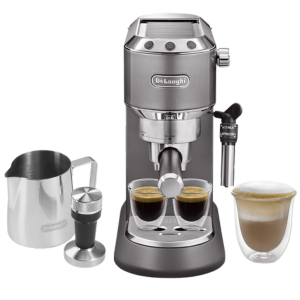
In our detailed comparison testing, we found the DeLonghi EC785 to be essentially identical to the EC685 in terms of core functionality. The main differences lie in the colour options and included accessories. You’ll receive a milk pitcher and a proper tamper with this model.
For context, DeLonghi’s separate tamper typically costs around £20, though this specific version seems exclusive to certain machine bundles. The DeLonghi milk pitcher usually retails at about £20. We’d suggest considering these accessory values when comparing prices – if you’re seeing more than a £40 premium over the EC685, you might want to think twice, as our testing revealed no significant performance differences beyond aesthetics and the included extras.
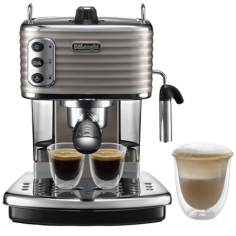
This widely popular budget espresso machine has certainly made its mark in the market. While product photos showcase an attractive finish, our hands-on testing revealed slightly less premium materials and construction compared to its siblings.
The machine’s footprint is notably larger than the EC685, extending about 10cm wider, though it compensates with a generous 1.4L water tank (versus 1.1L) and an expanded drip tray. It still maintains relatively compact dimensions for its category.
A key technical distinction is its traditional brew boiler system rather than a thermoblock. However, detailed specifications about the boiler’s construction and capacity aren’t readily available – even in our research of DeLonghi’s parts catalogue.
While we appreciate the inclusion of a proper brew boiler, our testing experience suggests this alone doesn’t necessarily elevate it above similarly-priced thermoblock machines like the EC685. When weighing up against the EC685’s superior build quality, smaller footprint, and advanced Panarello features, the choice isn’t straightforward even for our expert team.
The current market pricing often brings pleasant surprises, though like its sibling, we find the full RRP a bit ambitious.
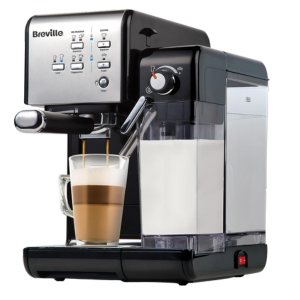
During our testing, we found this machine presents an intriguing concept – combining portafilter operation with an automatic milk system. While it’s not targeting the enthusiast barista market, it offers an interesting solution for those seeking an affordable middle ground between bean-to-cup convenience and traditional espresso preparation.
The machine uses a 51mm pressurised basket, though modification is possible with standard baskets (compatibility depends on the rim profile – we’re actively collecting user feedback on successful fits).
For most users sticking with pre-ground coffee and the standard pressurised basket, our testing suggests the milk drinks will taste comparable to entry-level bean-to-cup machines. However, the price point sits significantly lower than automated alternatives.
We should note that “one touch” is somewhat misleading – the portafilter operation requires manual intervention, and even selecting milk drinks needs multiple button presses. However, at roughly 25% of the cost of entry-level one-touch bean-to-cup machines, it presents compelling value.
A crucial consideration is the fixed milk temperature of approximately 75°C. Through our testing, we found this produced notably hot drinks – ideal for those who prefer very hot beverages, but potentially too hot for others seeking more nuanced milk textures.
Before we explore our top recommendations under £400, we’ve got something rather unexpected to share!
Let’s have a frank discussion about investing in higher-end equipment. After countless hours testing machines across all price ranges, we’ve made some surprising discoveries about value for money.
Here’s something worth considering: many quality machines are now available through flexible payment plans, often around £69 monthly. While the total cost might seem steep at first glance, let’s put this into perspective.
For coffee enthusiasts currently using pod machines, the monthly savings on coffee beans versus pods can significantly offset the cost. Plus, these premium machines typically offer better build quality, more consistent results, and actually make the learning process smoother than entry-level models.
What’s particularly brilliant about current financing options is the opportunity to try these professional-grade setups for three months. It’s essentially a no-pressure trial period at £50-£69 monthly, giving you time to decide if the investment matches your coffee ambitions.
When we discuss budget-friendly espresso machines in the £250-£400 range, it’s important to understand the context. In the world of traditional espresso machines with standard portafilters and baskets, this price point actually represents the entry level.
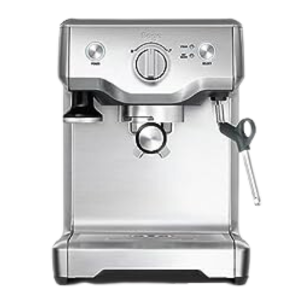
Through extensive testing, we’ve found the Duo Temp Pro to be a solid choice for aspiring home baristas. As a low cost espresso machine, it offers remarkable value, essentially providing the core features of the popular Barista Express without the integrated grinder.
The absence of a solenoid valve doesn’t affect espresso quality – it’s purely a cost-saving measure. However, this means you’ll need a bit more patience when relieving pressure after shots. We recommend waiting 60-90 seconds after pulling a shot before removing the portafilter to avoid any messy ‘portafilter sneezes’ (where hot grounds can spray out under pressure).
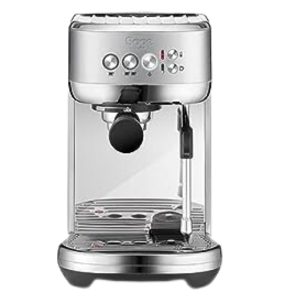
After months of daily use in our testing kitchen, the Bambino Plus has consistently impressed our team. Despite its compact size, this machine packs serious power for both espresso extraction and milk steaming.
The technical features are remarkable for this price point – true low-pressure pre-infusion and PID temperature control are typically found on machines costing twice as much. The 3-second heat-up time isn’t marketing hype – we’ve verified it repeatedly in our tests.
For milk drinks, the automatic texturing system produces surprisingly good results when properly set up (ensure the jug contacts the temperature sensor). However, the manual steam wand is where this machine truly shines, offering excellent control for developing proper milk texturing technique.
Regarding the limitations we’ve noted – the lightweight design does require a stabilising hand when locking in the portafilter, but this quickly becomes second nature. The compact drip tray needs regular attention, but we’ve developed some practical workarounds:
For optimal results, we recommend using freshly roasted, high-quality beans. For our complete analysis, see our:
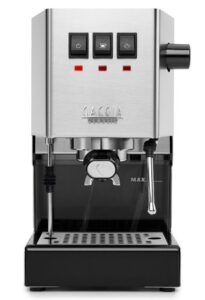
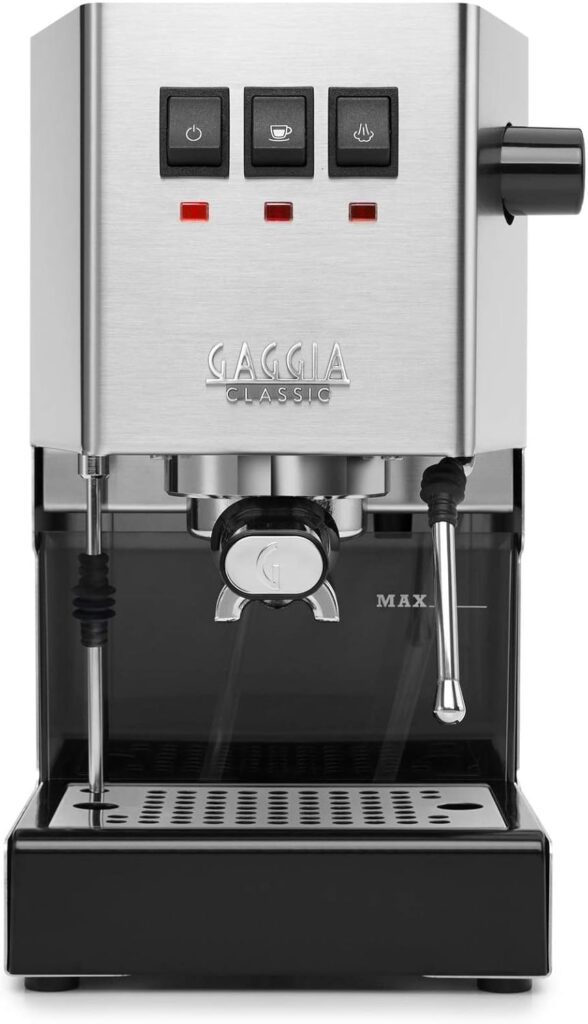
The Gaggia Classic Pro holds a special place in our testing lab, and for good reason.
Through extensive hands-on experience, we’ve discovered this machine offers something quite rare in the coffee world: genuine longevity combined with professional-grade espresso capability.
We’ve put countless machines through their paces, but this one stands out for its robust engineering. Consider this: our team still regularly uses a 2003 Classic model that pulls shots as brilliantly as ever – that’s nearly two decades of consistent performance.
The recent change in ownership from Philips back to Italian hands has brought welcome improvements. Our testing confirms they’ve successfully recreated the magic of the original Classic, with the machine once again being crafted in Italy.
Let’s address the elephant in the room – the ‘downsides’ we’ve noted aren’t really limitations, but rather opportunities for customisation. The Classic Pro arrives with solid baseline performance, but our experiments show it truly shines with some thoughtful modifications.
Two key upgrades stand out from our testing: the pressure modification and PID installation.
The pressure mod is surprisingly straightforward and budget-friendly. It involves adjusting the OPV (over pressure valve) spring to achieve an optimal 9-bar pressure – creating a more forgiving extraction process. During our tests, this resulted in noticeably more consistent shots. Shades of Coffee offers reliable modification kits that we’ve successfully used.
The PID modification makes a substantial difference to temperature stability – a crucial factor our team always looks for in espresso machines. We’ve found PID kits ranging from £80 to £150, with some offering additional pre-infusion capabilities.
One practical consideration: these modifications will void your warranty. Our recommendation? Give the machine a thorough workout in its stock configuration before diving into modifications. While the Classic Pro is remarkably reliable, it’s wise to ensure your specific unit is functioning perfectly first.
For more detailed insights into this remarkable machine, check out our comprehensive review:
All features match the 2019 version above, with these updates:
The 2024 “EVO” update to the Classic Pro caught our attention, particularly since the 2019 model was already performing admirably in our tests. Our analysis suggests these changes focus primarily on manufacturing efficiency and durability improvements.
Let’s break down the key updates we’ve observed:
This upgrade particularly impressed our testing team. The previous chrome-plated version was prone to marking, sometimes even showing blemishes straight from the box. The new stainless steel construction offers superior durability that should match the machine’s legendary lifespan.
The redesigned assembly makes accessing internal components significantly easier. While the Classic has always been relatively straightforward to maintain compared to its peers, our technicians appreciate the improved access for repairs and routine maintenance.
The switch from chrome plating to an all-brass group (lead-free) with stainless steel surround represents a notable upgrade in build quality. We’ve noticed the group now connects to a metal plate, explaining the silver finish visible from below.
The 2019 Pro featured an anodized aluminium boiler – aluminium treated with an electrochemical process for corrosion resistance and chemical stability. The new model retains an aluminium construction but uses Exelia 3010-B242, a highly durable food-safe coating, instead of anodization.
For more expertise on coffee equipment, see our detailed guides:
The single most crucial factor? Quality coffee beans.
Our testing lab consistently proves this principle holds true across all price points. When consulting with users of both budget and premium machines, we’ve found that switching to better beans often resolves quality issues immediately.
The espresso machine market divides into two main categories: traditional espresso machines and bean to cup systems. While both produce espresso, their approaches differ significantly.
Bean to cup machines feature an integrated grinder system. They handle the entire process automatically – from whole beans to finished espresso at the press of a button.
The brewing process occurs in a removable brewing unit that works in conjunction with the grinder to dose and tamp the coffee automatically, then internally disposes of used grounds.
For detailed analysis of bean to cup options, see:
Traditional (or portafilter) espresso machines essentially function as compact versions of commercial machines adapted for home use. However, our testing reveals that the similarity to professional equipment varies significantly with price point.
Budget machines under £300 naturally differ more from commercial units than machines in the £1000-£2000 range, particularly in build quality and consistency.
These machines require a separate grinder, though some models include built-in grinding mechanisms (Note: while sometimes marketed as bean-to-cup, these remain traditional machines).
The process involves using a portafilter with a filter basket, requiring manual dosing, tamping, and shot pulling. Our testing shows this method demands more skill than automated systems, particularly when using non-pressurised baskets.
Budget espresso machines typically fall into the category we classify as domestic pressurised basket systems.
These machines feature 15-19 bar pumps, similar to higher-end domestic units. However, while premium machines usually include an OPV (over-pressure valve) limiting basket pressure to 9 bars, budget models often cap at 12-14 bars.
These systems prioritise consistent appearance, producing a coffee foam that mimics crema. While different from the genuine crema found in perfectly extracted shots, these machines offer good accessibility both in price and ease of use.
The pressurised basket design allows for more forgiving operation – no precise dialling in required, and they work with pre-ground coffee (though we always recommend freshly ground beans for best results).
Through our testing, we’ve found most budget machines use thermoblocks or thermocoils rather than traditional boilers.
These heating systems can be remarkably effective. For instance, many Sage machines, including the Barista Express and Bambino Plus, utilise thermoblock technology. The Bambino Plus and Barista Pro feature Sage’s patented “ThermoJet” system, demonstrating ongoing innovation in this area.
For more technical details, see:
This question requires nuanced consideration, as “good” espresso means different things to different coffee enthusiasts.
Entry-level machines (15/19 bar with pressurised baskets) typically face challenges with temperature stability and channelling – where water finds paths of least resistance through the coffee puck, resulting in uneven extraction.
However, taste preferences vary significantly. Professional baristas or experienced espresso enthusiasts might notice limitations in shot quality. But for those newer to espresso or who primarily enjoy milk-based drinks, these machines can produce entirely satisfactory results.
Caffeinatedgear.com is a participant in the Amazon Services LLC Associates Program, an affiliate advertising program designed to provide a means for sites to earn advertising fees by advertising and linking to amazon.co.uk.
© 2025 Caffeinated Gear.