

By: Caffeinated Gear Review Team

Our comprehensive review of the Sage Bambino Plus (known as the Breville Bambino Plus outside Europe) draws from years of hands-on testing and professional barista experience.
After extensively using this machine in our test kitchen since its release, we’ve gathered invaluable insights about its performance, reliability, and real-world capabilities.
We’re particularly excited to include our latest findings on the standard Sage Bambino model, which has recently become available in the UK market at a more accessible price point.
What sets our review apart is our commitment to thorough, real-world testing.
The Bambino Plus in our test kitchen.
As professional baristas and coffee equipment specialists, we believe in extensive testing before sharing our recommendations.
Rather than rushing to publish quick impressions, we dedicate weeks to exploring each machine’s capabilities, quirks, and long-term performance.
Our team’s approach combines technical expertise with practical, daily use, ensuring we uncover details you won’t find in standard product descriptions.
We continuously update our reviews based on ongoing testing and valuable feedback from our community of coffee enthusiasts.
This hands-on experience, combined with our professional coffee background, allows us to offer insights that go far beyond basic feature lists.
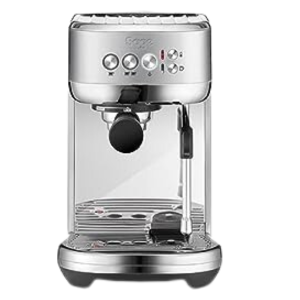
When it comes to innovative coffee machines, Breville Australia’s lineup stands out brilliantly – known in the UK market as Sage coffee machines.
Their impressive range includes the sophisticated Sage Oracle series of bean-to-cup machines, the exceptional Sage Dual Boiler, and the widely celebrated Barista collection, featuring the Barista Express, Barista Touch, and Barista Pro.
Sage has recently expanded their stellar lineup with an exciting addition – the Barista Touch Impress:
As coffee experts, we’ve been particularly intrigued by the Sage Bambino Plus, which has emerged as one of their most sought-after machines in recent years.
Our journey with the Bambino Plus began in early 2020, when we conducted extensive testing for several weeks as our primary home espresso machine before crafting this review.
The machine’s impressive performance led us to continue using it well beyond our initial testing phase. Its compact design and reliable performance even made it our go-to travel companion for several Cornwall holidays.
Over time, our understanding of this machine has been enriched by valuable feedback from our community of coffee enthusiasts, whose experiences have helped shape and refine this review.
Having tested numerous espresso machines over the past five to six years, we’re uniquely positioned to compare the Bambino Plus against similar machines in its price range.
After extensive hands-on experience with the Bambino Plus, here’s our concise verdict for 2025.
The Sage Bambino Plus offers remarkable value for money. In the sub-£400 price category, it stands virtually unmatched.
This compact powerhouse consistently produces quality espresso and achieves excellent milk texture, whether you prefer manual or automatic steaming. It also features a convenient hot water function for Americano lovers.
While spending more might open up additional options, for those with a strict £400 budget, the Bambino Plus remains our top recommendation.
We’ll discuss this in detail, but it’s worth noting that while there are cheaper alternatives on the market, they simply don’t match the Bambino Plus’s capabilities. The only genuine competitor at a slightly lower price point is the standard Bambino model, which we’ll examine later in this review.
This compact marvel heats up in just 3 seconds – practically before you can say its name. Despite its small footprint, it boasts a generous 1.9L water tank, and its user-friendly design makes operation a breeze.
For espresso preparation, the machine comes with both pressurised (dual-walled) and standard baskets. When using the dual-walled baskets with pre-ground coffee or a basic grinder, you’ll achieve notably better results than with most machines in the £100-£200 range.
This superior performance stems from several high-end features rarely found in sub-£500 machines (and sometimes absent even in £1,000+ models):
For serious home baristas using traditional baskets with proper espresso grinders like the Sage Smart Grinder Pro, Dose Control Pro, or any of the Eureka Mignon series, better options exist – but not quite at this price point.
While machines like the Gaggia Classic Pro and Rancilio Silvia command higher prices, our extensive testing reveals that the Bambino Plus actually outperforms them straight out of the box – speaking purely about performance, without considering long-term durability.
After months of rigorous testing, we’ve found that anyone willing to invest time in mastering basic barista skills can pull remarkably impressive shots using the Bambino Plus’s standard baskets. The milk texturing capabilities of this compact machine are equally outstanding.
In this fascinating showdown, a professional barista using just the basic Bambino model and a Sage Smart Grinder Pro competed against a novice operating a commercial machine worth thousands, paired with a high-end grinder. Surprisingly – or perhaps not so surprisingly – the Bambino emerged victorious.
While this primarily demonstrates that skill trumps equipment cost, it brilliantly showcases the Bambino’s impressive capabilities at its price point.
Let’s be clear – the Bambino isn’t without its limitations. If your budget stretches further, pricier machines offer additional benefits. However, when it comes to pure performance and cup quality, we’ve found it remarkably hard to beat at this price point.
It’s crucial to note that your grinder choice significantly impacts espresso quality. In fact, our testing has shown that grinder quality often matters more than the espresso machine itself (though that’s a much broader discussion).
Assuming you’re using a capable grinder (as demonstrated in the challenge above with the Smart Grinder Pro – which truly proved its worth), our experience suggests you mightn’t notice a dramatic difference in cup quality even if you opted for the Sage Dual Boiler at triple the price.
The Dual Boiler does offer notable conveniences, like simultaneous milk steaming and shot pulling, plus precise temperature control for a wider range of beans. However, stick to classic espresso roasts with the Bambino Plus, and you’ll achieve excellently dialled-in shots – the true foundation of espresso quality.
A Word About Roast Levels
During our extensive testing period, we received numerous queries from users experiencing consistently sour shots with their Bambino Plus. Our investigation revealed a common thread – they were attempting to use lighter roasted beans.
For entry-level espresso machine and grinder combinations, we strongly recommend sticking to traditional espresso roasts. It’s worth noting that today’s “medium” roasts from quality third-wave roasters often run significantly lighter than traditional espresso roasts.
Through our testing, we’ve consistently found that lighter roasts demand more from both the grinder and espresso machine. Most entry-level setups, including grinders and espresso machines, typically struggle to properly extract lighter roasts.
When it comes to grinding lighter roasts, your equipment choice is crucial.
Our testing with Sage grinders revealed an interesting safety feature – they’re equipped with a slipper clutch mechanism.
This clever bit of engineering prevents damage when dealing with particularly challenging beans.
You might hear a distinctive clicking sound when attempting to grind lighter roasts fine enough for standard baskets – that’s the clutch doing its job.
Even with a capable grinder, lighter roasts present their own set of challenges.
They typically demand an extremely fine grind setting, and your grinder needs to be up to that task.
But here’s the real challenge we’ve discovered through extensive testing: even with perfect grinding, many users still struggle with lighter roasts on entry-level machines.
The core issue? These beans need higher brewing temperatures for proper extraction.
This explains why we often hear from Bambino and Bambino Plus users about sour-tasting shots.
Based on our professional experience, we strongly recommend starting your espresso journey with traditional medium-dark roasts.
Once you’ve mastered your technique and potentially upgraded your gear, then consider exploring the world of lighter roasts.
The negatives
We’ll explore these more thoroughly in our detailed review below, but the main issue we’ve identified is the compact drip tray.
Don’t worry though – you’ll quickly adapt to working with it.
The machine’s lightweight design means it can shift slightly when locking in the portafilter.
Through regular use, you’ll naturally develop the habit of steadying it with your free hand – it becomes second nature.
Over our years of testing and gathering user feedback, these have been the only consistent minor issues, apart from the lighter roast challenges mentioned above.
While some users have reported faults, we’ve found these typically surface early within the warranty period.
In our experience, Sage’s customer service has been excellent, usually resolving issues by providing replacement units.
Baskets: Current stock ship with single and double standard baskets and single and double dual wall baskets. (This is in the UK, may not be the same with Breville versions selling in other countries)
Older stock may come with only dual walled baskets, so if you’re not buying directly from Sage Appliances, we recommend confirming with your retailer whether you’re getting one of the newer units with standard baskets.
The moment we unpacked the Sage Bambino Plus, its compact footprint and stunning aesthetics caught our attention.
While this model sports the classic stainless steel finish, we should mention that keeping it pristine can be a bit of a challenge with fingerprints.
Our team has grown quite fond of the black variants (black stainless and black truffle) since they’re much more forgiving when it comes to showing marks.
A pleasant surprise awaited us with the water reservoir – at 1.9 litres, it’s remarkably generous for such a compact machine.
To put this into perspective, many competitors in the compact espresso machine category offer significantly smaller tanks. The De’Longhi Dedica comes with a 1L reservoir, while the De’Longhi Scultura provides 1.4L capacity.
This sleek machine won’t monopolise your worktop space, and its contemporary design will complement any modern kitchen setup.
Unlike some commercial-looking alternatives, Sage espresso machines are thoughtfully designed to blend seamlessly into home environments.
The drip tray is admittedly compact, but whether this matters depends entirely on your kitchen layout and how often you’re willing to empty it.
For additional insights into budget-friendly options, see our:
One of the most striking features we’ve discovered is the lightning-fast 3-second heat-up time – and we can confirm this isn’t marketing hyperbole.
Naturally, you’ll want to warm up the group head and portafilter by running some water through before pulling shots.
Even with this preparation, you’ll be crafting espresso within 10-15 seconds of switching on the machine – quite remarkable performance that’s remained consistent throughout our two years of testing.
While features like rapid heating and automated milk steaming might grab headlines, the Bambino Plus’s core strength lies in its 9-bar pressure system – the gold standard for espresso extraction.
This specification sets it apart from many entry-level domestic machines, which typically feature 15-bar pumps without pressure regulation, as they’re designed primarily for pressurised baskets and ESE pods.
The Bambino Plus includes another crucial feature that’s rare at this price point: a PID controller.
A PID (Proportional Integral Derivative) controller uses sophisticated algorithms to maintain precise temperature control.
This technology ensures thermal stability throughout the extraction process, resulting in more consistent and higher quality shots compared to machines without temperature regulation.
Finding a PID at this price point is unusual – in fact, you’d typically need to spend twice as much to get this feature, except in other Sage models.
When we discuss why budget espresso machines don’t match up to the Bambino Plus, it’s not about convenient features like rapid heating or quick steam recovery.
The real distinction comes down to two essential elements: the 9-bar pressure system and PID temperature control.
Let’s examine some popular alternatives in the UK market that lack these crucial features:
Available at roughly a quarter of the Bambino Plus’s price, this machine merits consideration for those on a tight budget. While it lacks an over-pressure valve, standard baskets, PID control, and low-pressure pre-infusion, it’s still a serviceable starter machine. Standard baskets can be fitted, though achieving consistent results without PID and OPV requires practice.
Despite commanding a price point close to the Bambino Plus, this machine mirrors the Dedica’s basic feature set. The premium here largely pays for Smeg’s distinctive retro styling rather than enhanced functionality.
Currently priced at less than 25% of the Bambino Plus, this machine offers surprisingly good value. While it can’t match the Bambino’s pressure control or temperature stability, it does include pre-infusion and a proper steam wand – impressive features at this price point.
The “Professional 20 bar pressure system” marketing claim raises immediate concerns for our team of coffee experts.
In espresso brewing, more pressure isn’t better – it’s about optimal pressure. The 20-bar specification is as useful as a car with 30 wheels. A pressure gauge without units or clear calibration doesn’t help either.
Our testing of this sub-£100 machine revealed decent performance for the price. However, it shares common budget machine limitations: 15-bar unregulated pressure and thermoblock heating without PID control. Its temperature gauge does enable basic temperature surfing, which helps manage overheating issues.
For more insights about pressure systems, read our article:
The inclusion of both PID temperature control and a 9-bar pressure system fundamentally distinguishes the Bambino Plus from its lower-priced competitors.

Current UK models of the Bambino Plus come equipped with both single and double shot options in standard (single-walled) and pressurised (dual-walled) varieties.
For older models that only included pressurised baskets, standard baskets can be purchased directly from Sage Appliances for £5 when in stock.
Standard baskets feature multiple filtration holes, allowing coffee to pass while retaining grounds.
Pressurised baskets channel all extraction through a single small hole, creating artificial pressure that compensates for coarser grinds or pre-ground coffee.
While many coffee enthusiasts dismiss pressurised baskets, we recognise their practical value for beginners or those preferring convenience over maximum flavour potential.
Our blind testing revealed that while freshly ground coffee through standard baskets produces superior results, the pressurised baskets still deliver acceptable espresso with quality pre-ground beans.
The Bambino Plus includes programmable low-pressure pre-infusion – another premium feature unexpected at this price point.
Beyond the factory settings, manual control is available by holding down the shot button during pre-infusion and releasing it to begin full-pressure extraction. Stop the shot by pressing the flashing button again.
For beginners, we recommend starting with the default pre-infusion settings before experimenting with manual control. Managing too many variables while learning can be overwhelming.
Regarding timing: pre-infusion counts within your total shot time, not in addition to it. For instance, when aiming for a 30-second extraction at a 1:2 ratio (19g coffee to 38g espresso), that includes the pre-infusion phase.
The Bambino Plus offers three temperature and three texture settings for automated milk steaming – remarkable functionality at this price point.
As experienced baristas, we initially approached the automatic steaming feature with scepticism. However, we’re impressed to report that this clever machine produces textures rivalling what we achieve manually after years of practice.
Better still, the steam wand functions in both automatic and manual modes, offering flexibility for different skill levels and preferences.
A quick note about our initial review of the Bambino’s automatic milk steaming feature: we made a rookie mistake!
Originally, we thought there was an issue with the temperature settings during automatic steaming.
After further testing, we discovered the problem was actually user error – we hadn’t positioned the milk jug correctly on the temperature sensor.
Since then, we’ve extensively tested the auto steaming feature, and we’re genuinely impressed with its performance.
While our more experienced team members can achieve slightly better results manually, the automatic feature produces milk texture that would take most beginners years to master by hand.
Despite what the manufacturer suggests, you’ve got options when it comes to milk jugs.
While Sage recommends using only their included jug for automatic milk texturing, our testing reveals more flexibility.
We’ve thoroughly tested various professional-grade jugs in our coffee lab, including our favourite Dritan Alsela 500ml Motta jugs.
Our collection includes several styles, from the sleek handle-free Barista Space models to various other professional-grade options.
After extensive testing with the Bambino Plus’s auto steaming feature, we’ve found that most standard stainless steel jugs of similar capacity work brilliantly.
The key is matching the capacity of the original jug – this ensures proper sensor contact and optimal texturing results.
Position Your Jug Correctly
During our extensive testing, we discovered that proper jug placement is crucial.
The temperature sensor sits towards the back of the drip tray, so remember to push your jug backwards until it’s directly over this sensor.
If you skip this step (as we did in our initial tests), the machine won’t accurately read the milk temperature.
Maintain a Clean Sensor
Through countless tests in our coffee lab, we’ve noticed that inconsistent results often stem from a wet temperature sensor.
A quick wipe of the sensor before each use makes a remarkable difference in achieving consistent foam and temperature.
Fine-tune Your Settings
Every coffee lover has unique preferences.
We suggest experimenting with different temperature and foam settings until you find your perfect combination.
For additional insights about milk preparation equipment:
The manual milk steaming performance of the Bambino Plus has genuinely impressed our testing team.
As certified baristas who’ve worked with everything from home machines to prosumer setups and commercial equipment, we can confidently say this machine stands out for its exceptional milk texturing abilities.
While the Sage Dual Boiler remains our top pick for ease of use, the Bambino Plus leads the pack in its price range for consistent, quality milk texturing.
Take the Gaggia Classic for comparison. Though we love this machine, mastering its steam wand requires significant practice and patience. The Bambino Plus, by contrast, offers a much gentler learning curve.
Our key discovery: start steaming about 7-8 seconds after activating the steam wand, regardless of the ready light.
Creating beautiful latte art demands practice, but the foundation lies in achieving the right milk texture.
The entry-level Sage machines excel in this area thanks to their professional-grade steam wands and user-friendly steam delivery systems.
While the Duo Temp Pro and Barista Express use the original thermocoil (requiring slightly more time), newer models like the Bambino Plus, Barista Pro and Barista Touch feature the advanced thermojet system for near-instant steam readiness.
Our side-by-side tests revealed that the Bambino Plus’s 4-hole steam tip provides enhanced power and speed compared to the standard Bambino.
Professional baristas accustomed to commercial machines might find the steaming pace slower, but it outperforms most thermoblock machines in its class.
A common issue we’ve encountered in our barista training sessions is users trying to steam tiny amounts of milk.
While minimal waste is admirable, steaming very small quantities (like for a macchiato) proves challenging, especially in standard-sized jugs.
For micro-drinks, we recommend investing in a smaller milk pitcher.
Through extensive testing, we’ve identified timing as the cornerstone of consistent milk texture.
Here’s our proven method for the Bambino Plus (adjust to taste, but maintain precise timing):
Initial Rolling Phase: 5 seconds
Counter to conventional wisdom, begin with creating a vortex.
Angle your jug to establish a rolling motion before any aeration.
Aeration Phase: 30-40 seconds
Lower the jug slightly while maintaining its angle until you hear a gentle hissing sound.
Warning: Avoid aggressive roaring sounds – they indicate loss of texture control.
Warming Phase: 12-20 seconds
Slightly raise the jug while keeping the angle to maintain the roll.
This phase distributes microfoam and achieves your desired temperature.
Temperature Sensing Varies by Machine
While experienced baristas often suggest stopping aeration when the jug feels warm to touch, our testing shows this doesn’t apply universally.
It works well with powerful machines like the Sage Dual Boiler but proves unreliable with the Bambino Plus and similar machines, typically resulting in under-stretched milk.
Though not officially listed for UK models, we’ve discovered a hidden hot water function on some Bambino Plus units.
To access it, simultaneously press the single shot and milk froth level buttons briefly, then press the single shot button again to stop.
Note: This feature’s availability depends on your machine’s firmware version.
The Bambino Plus requires two essential cleaning cycles: standard cleaning and descaling.
A backflush cycle is essential maintenance for your Bambino Plus.
Our team of experts has found this process straightforward once you understand the basics.
You’ll need a blind filter basket (also called a backflush disk) and cleaning solution.
The Bambino Plus will signal when it needs cleaning by alternately flashing the single and double shot buttons (typically after 200 shots).
Not ready to clean? Simply press the steam button to postpone – though keep in mind the machine will remind you again at next startup.
Here’s our tested cleaning process:
Important note: Despite what the manual suggests, you don’t need to place a bowl under the portafilter.
The cleaning solution flows directly into the drip tray through the machine’s internals – that’s the whole point of the backflush disk.
Once complete, the machine returns to ready mode.
Simply store your backflush disk safely, give the portafilter a thorough rinse, and empty the drip tray.
The Bambino decides when. You can’t manually trigger the automatic cleaning cycle.
We discovered this through extensive testing – attempting to force a cleaning cycle actually reprogrammes the single shot button to maximum volume rather than initiating cleaning mode.
Want to clean before the machine prompts you? Simply do a manual backflush: place the cleaning tablet on the backflush disk and pull five to six 10-second shots until the cleaning solution dissolves completely.
Bambino won’t stop winking. If your machine keeps flashing, it likely hasn’t registered a completed cleaning cycle.
Run another cycle without a cleaning tablet (assuming you’ve already done a proper clean).
Remember these crucial steps:
Cleaning tablets are pricey. While Sage’s cleaning tablets work well, they’re not cost-effective.
We’ve extensively tested Puly Caff cleaning powder and found it brilliant.
At roughly £10 for 900g, it’s significantly more economical.
This versatile powder also works wonderfully for:
Our favourite cleaning trick: mix a small amount with hot water to create a solution perfect for wiping down your Bambino’s exterior.
Follow with a dry cloth for a spotless finish.
Your Bambino signals descaling needs by alternating between shot button and steam button flashes (15 seconds each).
While you can temporarily dismiss this by pressing any flashing button, it’s best to descale when prompted.
Our tested descaling process:
Once the initial litre runs through, you’ll need to:
After completion, the single shot and steam buttons will blink as the machine enters standby.
Final steps:
For more on cleaning the Bambino, check these out:
Every espresso machine has its quirks – even premium models aren’t perfect.
Here’s what we’ve discovered about the Bambino Plus after months of testing:
Teeny weeny drip tray
The drip tray size isn’t just about capacity – it’s about functionality relative to size.
We’ve noticed a significant difference between the standard Bambino and Plus models in this regard.
The standard Bambino manages fine with the same-sized tray because:
The Plus, however, requires more frequent emptying due to:
While you can minimise overflow by catching steam wand purge water in a separate jug, regular emptying is still necessary.
This isn’t problematic if your machine sits near a sink.
However, it could become tedious in an office setting or when the nearest sink is far away.
We’ve noticed many new home baristas struggling with sour shots on the Bambino Plus.
This issue primarily affects lighter roasted beans.
Traditional darker espresso blends work brilliantly with the machine’s preset brew temperature.
However, lighter roasts typically need higher temperatures to extract their full sweetness – something the Bambino Plus can’t accommodate due to its fixed temperature setting.
Based on our testing, we recommend sticking with traditional medium-dark to dark espresso roasts for this machine.
For those committed to lighter roasts, consider these alternatives:
The Gaggia Classic with PID modification
The Rancilio Silvia with PID modification
The Sage Dual Boiler
For more see:
When our team evaluates espresso machines for sheer value, the Sage Dual Boiler consistently stands out from the pack.
This sophisticated machine boasts dual boilers with precise PID temperature control, including the saturated group head.
The result?
Exceptional temperature stability and the ability to fine-tune your shot temperature between 88-96°C in precise one-degree steps.
After extensive testing, we’ve found the Sage DB performs well above its price point.
You’d typically need to spend nearly twice as much to achieve noticeably better shot quality.
While it sits in a different price bracket from the Bambino Plus, here’s the honest truth: if you’re keen on extracting brilliant shots from lighter-roasted speciality coffee beans, the entry-level price point might not quite meet your needs.
Speaking of sour shots – let’s address this common concern.
If you’ve heard murmurs about the Bambino and sour shots, rest assured it’s not a fault with the machine.
The reality is that lighter roasted beans typically require slightly higher brewing temperatures, and the Bambino Plus (like the standard Bambino) doesn’t offer temperature adjustment.
For comparison, the Barista Express and Barista Pro do allow temperature adjustments, though not quite as precisely – offering a range of 91-95°C versus the Dual Boiler’s wider 88-96°C span.
However, if temperature adjustment isn’t high on your priority list, we firmly believe the Bambino Plus stands as one of the strongest contenders in its price range.
Through our extensive network of coffee enthusiasts and professional baristas, we’ve gathered some insights about potential issues with the Bambino Plus.
The standard Bambino has fewer reported problems so far, though being newer to market, time will tell.
It’s worth noting that entry-level machines typically see more reported issues – and both Bambino models fall into this category.
We’ve documented cases of a leaking fault where water meant for the drip tray via the solenoid valve ends up on the counter instead – usually due to misaligned or missing drip tray piping.
Some users have reported issues with the auto-steaming function failing.
While these issues can be frustrating, there’s a silver lining: every case we’ve encountered occurred within the warranty period, and Sage consistently provided replacement units.
Our team’s verdict on the Sage Bambino Plus is overwhelmingly positive.
For anyone seeking their first espresso machine, particularly those prioritising user-friendliness, this machine delivers impressively.
It consistently produces quality espresso (provided you use great quality coffee), creates beautifully textured milk, and offers an intelligently designed experience that even complete beginners can master quickly.
When working with this machine, our team discovered that the fixed brew temperature makes it better suited for medium to dark roasts rather than lighter ones.
During our extensive testing, we found the Bambino Plus serves brilliantly as a secondary machine for serious home baristas who already own premium setups.
Its compact size has proven incredibly practical for travel too. Our team has successfully transported the Bambino Plus to various holiday destinations, from cosy cottages to seaside caravans in Cornwall, where its minimal footprint made it a perfect temporary setup.
For its price point, the Bambino Plus stands out as one of the finest entry-level home espresso machines we’ve tested, particularly when considering its user-friendly features and impressive shot quality straight from the box.
Our customers frequently ask us about choosing between the Bambino Plus and the Gaggia Classic Pro.
While these machines sit in a similar price bracket, they offer distinctly different experiences, as we demonstrate in our detailed comparison below.
Here’s our straightforward assessment: The Bambino Plus excels in user-friendliness and immediate results, while the Gaggia Classic Pro shows its true potential after modifications. With PID and OPV mods, you’re looking at roughly £150 more in investment.
The Gaggia Classic represents traditional Italian engineering—built for longevity and home maintenance. In contrast, the Bambino Plus follows modern appliance design principles, focusing on immediate functionality rather than long-term serviceability.
Choose the Bambino Plus if:
Choose the Gaggia Classic Pro if:
For an comprehensive look at the Gaggia Classic Pro, read our:
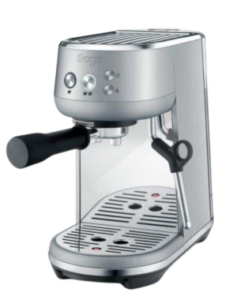
Let’s examine the standard Sage Bambino model. While it entered the UK market later than other regions, it brings some interesting variations to the Bambino lineup.
This machine shares many core features with its Plus sibling—similar aesthetics, slightly reduced dimensions, and the same thermojet heating system, minus the automatic milk steaming function. Our testing revealed several additional differences worth noting.
Price Advantage: While the cost difference isn’t as dramatic as in other markets (particularly the US, where there’s about a £145 gap), the UK price remains approximately £70 lower than the Plus model.
Dedicated Hot Water Function: Unlike the Plus model’s complex button combination for hot water, the standard Bambino features a straightforward hot water button, dispensing through the steam wand—a significant improvement for Americano enthusiasts.
Practical Drip Tray Design: Though smaller, the drip tray proves more functional since it doesn’t collect auto-purge water or solenoid discharge, making it less maintenance-intensive than the Plus version.
Enhanced Steam Wand Mobility: The ball-joint mounting offers superior range of movement compared to the Plus model’s up-down limitation, providing better angles for milk frothing.
Reduced Water Capacity: The 1.4L tank (versus 1.9L in the Plus) might require more frequent refills, though this rarely impacts daily use if you’re near a water source.
Manual Milk Frothing Only: The absence of auto-frothing hasn’t bothered our testing team, as manual techniques typically yield superior results with practice.
Different Pressure Release System: While it uses a brew valve instead of a solenoid, we found it performs admirably, producing acceptable puck consistency without the dreaded “portafilter sneeze”—a common issue with non-solenoid machines.
No Included Razor Tool: Though not included, we strongly recommend purchasing this inexpensive accessory separately. It ensures consistent dose height and level tamping—crucial variables for consistent shots.
Basic Steam Tip Design: The single-hole steam tip, while functional, takes longer than the Plus model’s four-hole version. For optimal milk texturing, consider upgrading to Sage’s four-hole tip.
Entry-Level Tamper: The lightweight plastic tamper feels inadequate for serious use. We recommend investing in a proper 54mm tamper for better results. For detailed tamper recommendations.
Our final verdict? The choice between Bambino models largely depends on your priorities. For those who value manual control and can live without auto-steaming, the standard Bambino offers excellent value. We’d suggest budgeting for the razor tool, a proper tamper, and the four-hole steam tip to maximise its potential.
Caffeinatedgear.com is a participant in the Amazon Services LLC Associates Program, an affiliate advertising program designed to provide a means for sites to earn advertising fees by advertising and linking to amazon.co.uk.
© 2025 Caffeinated Gear.