

By: The Caffeinated Gear Team

Looking for a stylish coffee companion that brings both Italian design flair and brewing prowess to your kitchen counter? We’ve spent countless hours testing and analysing Smeg’s coffee machines to help you decide if they’re worth the investment.
Our comprehensive review focuses on Smeg’s two flagship models: their traditional espresso machine and their sophisticated bean-to-cup offering. We’ll cut straight to the chase and share our honest, expert insights so you can make an informed decision about these luxury appliances.
As coffee professionals who’ve tested hundreds of machines, we understand you’re seeking straightforward answers about Smeg’s coffee makers. You’ll find our detailed analysis below, backed by years of hands-on experience and technical expertise.
Let’s dive into the specifics of both machines:
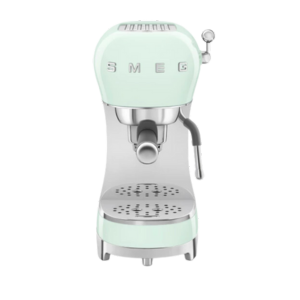
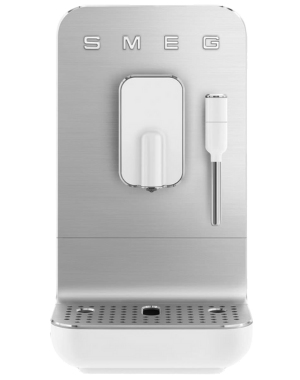
Both machines showcase Smeg’s signature retro-modern aesthetic, and their marketing certainly catches the eye. While they also produce a Lavazza capsule machine and filter coffee maker (which we’ll touch on later), we’re focusing on their flagship models here.
If pure aesthetics guide your purchasing decisions, you might be ready to click “buy” right now. However, we strongly recommend reading our complete analysis first. Our testing revealed some surprising insights that you should consider before making your investment.
The ECF02 features a 15-bar pump thermoblock system, pressurised basket, 1L water tank, and milk steaming wand – all wrapped in that distinctive Smeg design. Meanwhile, the BCC01 offers a 19-bar pump thermoblock system, 1.4L water tank, and Panarello steam wand.
One thing immediately caught our attention: these machines carry significantly higher price tags compared to others with similar technical specifications. We’ll explain why this matters shortly.
Need Some Coffee Clarity?
Before we dig deeper into the Smeg machines, let’s break down some essential espresso machine terminology. This quick primer will help you understand exactly what you’re looking at – not just for Smeg machines, but for any coffee maker you’re considering.
In the world of espresso machines, pressure matters – but perhaps not in the way you might think.
When manufacturers mention 15 or 19 bars of pressure, they’re referring to the pump’s maximum output. After years of testing machines, we’ve noticed this specification often gets misused in marketing materials, sometimes to rather amusing effect.
Here’s what really matters: the ideal pressure for extracting espresso is actually 9 bars. It’s a figure that’s been established through decades of coffee science and practical experience.
The key difference between many domestic machines (including these Smeg models) and prosumer-grade equipment lies in something called an overpressure valve (OPV). For instance, two popular entry-level machines, the bean to cup machine and the kitchen appliance grade espresso machines, use similar pump systems.
The Gaggia Classic Pro and Sage Bambino Plus – two highly regarded entry-level home barista machines – incorporate OPVs that regulate pressure to optimal levels:
This means that despite having 15-bar pumps, they deliver pressure more precisely for better extraction. Most home espresso machines come preset to 9 bars through their OPVs, though some, like the Gaggia Classic, may need adjusting.
Understanding this context, the Smeg ECF01’s 15-bar system puts it in line with cheaper home espresso machines, while the BCC02’s 19-bar pump doesn’t necessarily offer advantages over other bean-to-cup machines in its class.
Moving on to heating systems, let’s clarify how thermoblocks work compared to traditional boilers.
Classic espresso machines typically use dedicated boilers – whether stainless steel, aluminium, or copper – heated by internal or external elements. These boilers handle both brewing water and steam production.
Thermoblocks take a different approach. Instead of heating a reservoir of water, they heat water on demand as it flows through a heated metal block with internal channels. Their close cousin, the thermocoil, uses a metal coil (usually copper) within the heating block instead of carved channels.
Thermocoil technology represents a newer innovation, found in Sage’s clever machines – though notably, their premium models (the Oracle, Oracle Touch, and Dual Boiler) use traditional boiler systems
Both Smeg models use thermoblock heaters, which you’ll find in many entry-level machines. This is particularly noteworthy for the ECF01 traditional machine, as it affects temperature stability and steam power. For the BCC02, it’s less significant since most domestic bean-to-cup machines use similar heating systems.
Finally, let’s examine pressurised baskets – a feature particularly relevant to the Smeg ECF01 traditional espresso machine (bean-to-cup machines use different internal brewing systems).
Traditional filter baskets feature a simple pattern of holes and demand precise grind size and careful puck preparation – the barista skills needed to dial in grind settings and properly prepare coffee in the basket for optimal extraction.
Through our extensive testing, we’ve found that mastering grind adjustment and puck preparation is absolutely crucial for quality espresso. These factors, combined with good equipment and fresh beans, form the foundation of excellent coffee.
Let’s address the elephant in the room – pressurized portafilters and baskets (whether you know them as Gaggia’s “Perfect Crema” baskets or Sage’s “Dual Walled” options) have gotten quite a bad rap in the coffee community.
After extensive testing in our coffee lab, we’re going against the grain here at Caffeinated Gear: pressurized baskets absolutely deserve their place in the coffee world.
While some coffee snobs might suggest these baskets are better suited as tiny hats for rodents, our team of certified baristas has found they bridge an important gap between fully automatic and traditional espresso making.
Bean to cup machines offer brilliant convenience, but they often miss that hands-on experience many coffee lovers secretly wish for. Plus, they typically can’t match the espresso quality potential of traditional machines – though we should note this isn’t always the case.
Traditional espresso machines, however, sit at the complete opposite end of the user-friendly spectrum. Here’s what you’ll need for a standard non-pressurized setup:
Through our testing experience, we’ve found this level of commitment suits only a small fraction of coffee drinkers. It’s effectively a hobby – the “Home Barista” lifestyle – and not everyone wants their morning coffee to become a full-blown passion project.
But what if you fancy that authentic espresso-making experience without diving deep into the technical rabbit hole?
Well, if budget isn’t a constraint, we’ve thoroughly tested the Sage Oracle and Oracle Touch. These machines offer the convenience of bean-to-cup systems but with remarkably better results. In our comparative analysis, they consistently outperform standard bean-to-cup machines in both coffee quality and milk texturing.
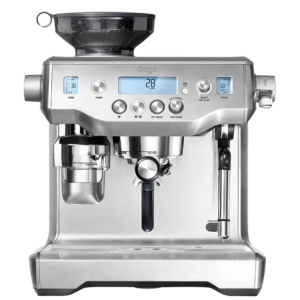
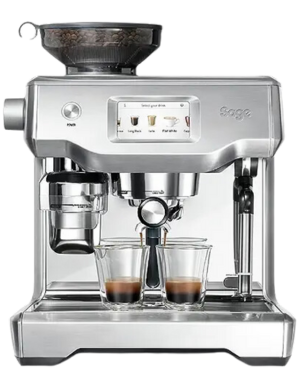
After extensive testing in our coffee lab, we can confidently say these machines deliver professional barista-quality coffee with minimal effort.
Mind you, you’ll still need to handle a few tasks yourself.
Moving coffee in the portafilter, adding milk to the jug, and performing the final pour are all part of the experience.
But that’s brilliant, really – it keeps the authentic feel of crafting coffee whilst automating the trickier technical bits.
Think of these machines as your personal ghost barista.
They handle the complex technical elements with incredible precision, yet let you take the credit for those perfect cups.
However, we should mention something important about the engineering.
These are sophisticated pieces of kit with numerous precision components.
While that’s fantastic for coffee making, it’s worth considering that repairs outside the warranty period might be costlier than simpler machines.
If you’re working with a more modest budget and don’t mind a touch more hands-on involvement, we recommend considering the Sage Barista Touch.
It shares the brilliant touchscreen interface and automatic milk steaming system (which consistently produces stunning microfoam, by the way).
The key difference is that unlike the Oracle range, you’ll need to handle the dosing and tamping yourself.
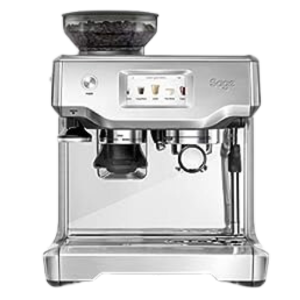
Let’s be honest – not everyone has the budget for a premium espresso machine that costs as much as a small car. If you’re wincing at those price tags, we completely understand. Our team at Caffeinated Gear has good news: there are brilliant alternatives that won’t require a chat with your bank manager.
Before we dive deeper, you might want to check out our latest review of the newer model:
Perhaps you’re looking for something more hands-on than a bean-to-cup machine, but you’re not quite ready to embrace the full complexity of home barista life with its precision
and technical terminology like “dialling in” and “WDT technique”. We understand completely.
For those working with a more modest budget of a few hundred pounds, pressurised basket machines offer an excellent middle ground.
The Sage Bambino, Bambino Plus, Barista Express, Barista Pro and Gaggia Classic all come equipped with both pressurised and standard baskets, giving you flexibility in your brewing approach.
These machines typically start around £350, making them worth considering if they fit within your budget.
There’s a significant technical distinction between these machines and cheaper domestic models that only offer pressurised baskets. Most budget machines use 15-bar pumps without an over-pressure valve and often struggle with temperature consistency.
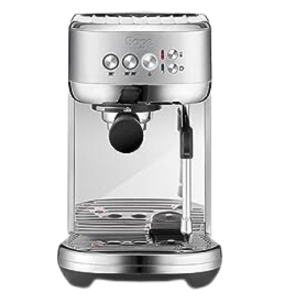
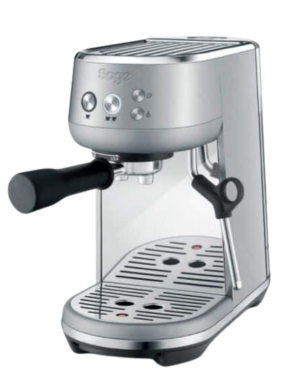
Take the Sage Bambino or Bambino Plus as an example. While you can use pressurised baskets, these machines pack serious home barista credentials. They feature PID temperature control, maintaining precise brewing temperature and efficiently managing the transition between brewing and steaming.
The built-in over-pressure valve keeps extraction at an optimal 9 bars of pressure, and the professional-grade steam wand makes it surprisingly straightforward to create silky microfoam for your flat whites. When you’re ready to advance your coffee journey, switching to standard baskets is as simple as changing a part.
The standard Bambino has recently arrived in the UK market at a lower price point. It trades the Plus model’s automatic milk steaming for manual control and features a more compact design with a smaller water tank.
Let’s start with a fundamental component of many coffee machines: the Panarello steam wand.
A Panarello steam wand consists of a specialised pipe, constructed from either plastic or metal materials, that encases the main steam pipe.
Its distinctive feature is a small air intake hole positioned on the side.
When immersed in milk (or your preferred plant-based alternative), this clever design automatically aerates the liquid through the intake hole.
For coffee enthusiasts new to milk steaming, the Panarello design offers a helpful stepping stone into the world of milk texturing.
In our testing, we’ve found that most Panarello wands produce a specific type of foam – thick with larger bubbles – ideal for traditional cappuccino styles.
However, there’s one notable exception we’ve discovered: the DeLonghi steam wand, which uniquely achieves proper microfoam, setting it apart from other Panarello designs including the Smeg ECF01.
You’ll typically find Panarello steam wands on two types of machines:
In contrast, professional espresso machines and home barista models feature traditional steam wands with specific steam tips.
These conventional wands require more skill but offer superior control over milk texture when properly mastered.
While positioned at a price point approaching entry-level home barista territory (similar to the Sage Bambino), our analysis of the Smeg ECF02 reveals some interesting specifications:
Technical Specifications:
Let’s compare two popular models:
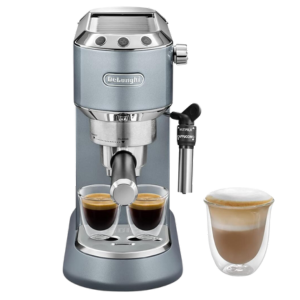
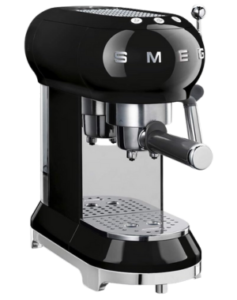
Both machines share core characteristics: pressurised baskets, Panarello steam wand, thermoblock boiler, and 15-bar pumps without overpressure valves.
Through our extensive testing, we’ve identified that the primary distinction between the Smeg ECF01 and the DeLonghi Dedica EC685 lies in aesthetics rather than functionality.
The Smeg offers:
But consider this: you’re looking at roughly double the investment for these aesthetic benefits.
We believe the DeLonghi Dedica represents excellent value, particularly at current market prices. While sub-£100 machines exist, our experience suggests the Dedica outperforms them consistently.
If you’re drawn to Smeg’s iconic design language and understand you’re primarily paying for aesthetics, that’s perfectly valid. We simply want to ensure you’re making an informed decision.
The Smeg BCC02 represents the brand’s venture into bean-to-cup technology. This semi-automatic machine (what we call “one-touch coffee”) differs from fully automatic (“one-touch cappuccino”) models.
Key differences from traditional espresso machines include:
Our research into domestic bean-to-cup machines reveals that most share remarkably similar internal components, particularly in their brewing units and similar grinders with few grind adjustments.
Where Sage machines like the Oracle, Oracle Touch, and Barista Touch differ is in their approach to espresso preparation. While offering bean-to-cup convenience, they maintain traditional espresso extraction methods. This distinction often results in espresso that more closely matches traditional preparation methods – though whether that’s preferable depends entirely on your taste preferences.
When we examine bean-to-cup coffee machines, drawing clear lines between price brackets isn’t straightforward since most share similar brewing mechanisms.
Let’s start with the Smeg bean-to-cup coffee machine. The BCC02 model offers semi-automatic operation with one-touch coffee brewing and includes a Panarello steam wand. Its predecessor, the BCC01, comes without a steam wand, though we rarely see this version in current markets.
This compact machine showcases minimalist design with standard specifications:
After our extensive testing, we found ourselves questioning the premium price point. For comparison, the Gaggia Cadorna provides four customisable user profiles with temperature control options.
The Smeg commands a higher price than the Cadorna Style and matches the well-known Gaggia Anima & the Gaggia Magenta. Our research shows it’s also pricier than several popular DeLonghi options, including the Eletta and Autentica Plus, while the feature-rich Dinamica Plus costs just £20 more.
This price-to-feature ratio prompted our team to investigate further. Here’s a detailed comparison:
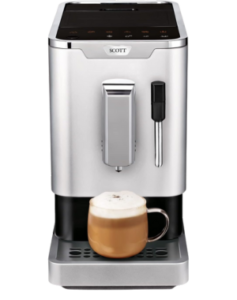
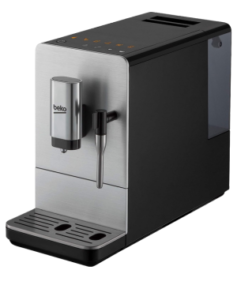
Our comparison reveals that, like Smeg’s traditional machine, similarly equipped alternatives are available at substantially lower prices. The main differentiator? Smeg’s distinctive retro design.
The Beko and Scott machines offer comparable features and specifications. Interestingly, all three manufacturers provide versions without steam wands—a rare finding in the bean-to-cup category.
What caught our attention was the Beko’s price point—less than half that of the Smeg machine.
When investing in this price range with brands like Gaggia, DeLonghi, or Melitta, you typically receive numerous advanced features such as LCD displays, personalisation options, and multiple user profiles.
We should note that bean-to-cup machines fundamentally operate using similar principles—a grinder paired with a brewing unit. This means espresso quality won’t vary dramatically between machines.
However, we understand that many coffee enthusiasts investing in this price bracket expect exceptional drink-making capabilities or advanced features. In our assessment, the Smeg’s premium primarily reflects its design rather than functional advantages.
We’re not criticising this choice. Many of our readers prioritise kitchen aesthetics and appliance cohesion. If you appreciate Smeg’s design language, have matching appliances, and understand you could achieve similar results for less money but choose the Smeg anyway—that’s perfectly valid.
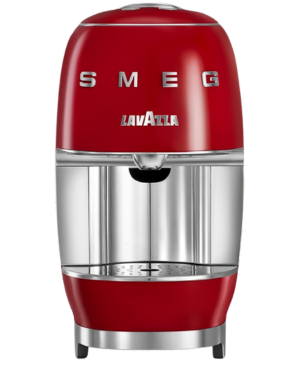
Regarding Lavazza machines, they share DNA with Nespresso, featuring a brewing unit designed by the same inventor. Simply put, this is a Lavazza A Modo Mio machine wearing Smeg’s distinctive aesthetic.
When comparing prices with options like the Modo Mio Deséa Espresso, which costs less and includes one-touch cappuccino functionality, the premium appears linked to Smeg’s design philosophy rather than enhanced capabilities.
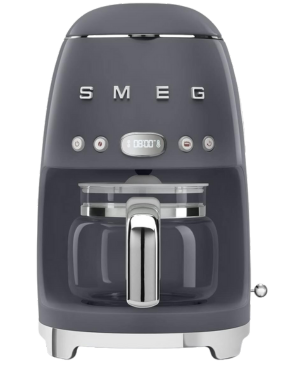
The pattern continues with Smeg’s filter coffee machine. While it carries a premium price tag, our testing revealed no standout features justifying the cost from a pure coffee-making perspective.
Its specifications include:
These features appear on many competitors at lower price points, as detailed in our comprehensive guide to
This common query deserves clarification. No, they’re distinct companies with separate histories.
Smeg’s story began in 1948 in Guastalla, Northern Italy. The name SMEG (Smalterie Metallurgiche Emiliane Guastalla) reflects its metalworking origins. Their first product, the Elisabeth cooker, launched in 1956.
DeLonghi’s journey started earlier, in 1902 in Treviso, initially manufacturing industrial components. They entered the consumer market in 1974 with an oil-filled radiator.
While both companies have grown through acquisitions—DeLonghi acquiring Kenwood and Braun, and Smeg purchasing La Pavoni in 2019—they remain separate entities.
The confusion might stem from similarities between the DeLonghi Dedica and Smeg ECF01 espresso machines, but they’re products of independent manufacturers. For more insights into DeLonghi’s range, see our
From our extensive testing of Smeg’s range—including bean-to-cup machines (with and without steam wands), traditional espresso machines, Lavazza capsule machines, and filter coffee makers—we’ve found this question requires nuance.
The answer depends entirely on your priorities. When evaluating pure value-for-money against features, similar machines often cost less. However, if kitchen aesthetics matter as much as coffee quality, Smeg’s distinctive design might justify the premium for your specific needs.
For coffee enthusiasts focused purely on beverage quality, the price premium might be harder to justify. When investing extra in a traditional espresso machine, you might seek tangible benefits like enhanced thermal stability through PID temperature control or precise 9-bar pressure regulation via an overpressure valve—features that directly influence espresso quality.
However, we recognise that many coffee lovers value both form and function in their kitchen appliances. If aesthetic appeal and brand heritage matter to you, then Smeg’s premium pricing aligns with other luxury kitchen brands where design commands as much value as performance.
The key is understanding exactly what you’re investing in. Whether prioritising performance, design, or a balance of both, being clear about your priorities will help ensure satisfaction with your choice.
Caffeinatedgear.com is a participant in the Amazon Services LLC Associates Program, an affiliate advertising program designed to provide a means for sites to earn advertising fees by advertising and linking to amazon.co.uk.
© 2025 Caffeinated Gear.