

By: Caffeinated Gear Review Team
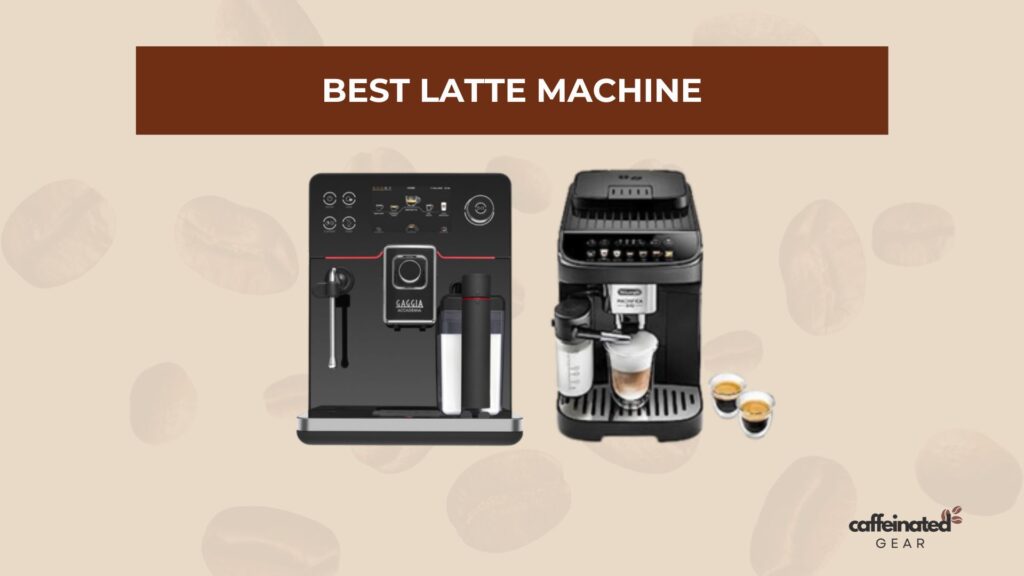
Searching for your perfect latte machine? We’ve got brilliant news for you – though first, let’s clear up a common misconception about these wonderful devices.
Here’s something interesting we’ve learned through years of testing coffee equipment: while many people search for ‘latte machines’ or ‘cappuccino machines’, these aren’t actually separate categories of coffee makers. But don’t worry – we’ll help you find exactly what you need for creating those perfect, creamy lattes at home.
A latte combines espresso with steamed milk that’s been carefully heated and textured to create that signature silky smoothness. Its cousin, the cappuccino, uses the same ingredients but with different proportions and a distinctly different milk texture.
“So what should I actually look for?” It’s a question we hear quite often in our coffee workshops.
The answer? You’ll want an espresso machine – but wait, there’s more to it than that! Through our extensive testing and barista experience, we’ve discovered that choosing the right type of espresso machine makes all the difference for crafting brilliant lattes at home.
Fortunately, nearly every espresso machine comes with milk steaming capabilities – it’s just a matter of choosing the right style for your needs.
In our years of testing coffee equipment, we’ve worked with two main categories of espresso machines:
Traditional espresso machines feature a portafilter – that’s the handle with a filter basket you might have seen baristas using. With these machines, you’ll measure your coffee (using either a separate or built-in grinder), tamp it down, lock the portafilter in place, and start the extraction.
Fun fact: We still say we’re “pulling” a shot of espresso because the original machines used levers that baristas would literally pull down. Most modern machines use pumps instead, but the terminology has stuck around – though “pumping a shot” doesn’t quite have the same charm!
After extracting your espresso, you’ll steam your milk to create that perfect latte texture we all love.
Interested in exploring traditional espresso machines or finding the perfect grinder? Our team has put together detailed guides:
Bean-to-cup coffee machines represent a brilliant fusion of convenience and fresh coffee brewing.
These sophisticated machines handle the entire process automatically – from grinding fresh beans to producing perfect espresso shots with just one button press.
The internal mechanisms take care of everything: the built-in grinder processes your beans, while the brewing unit precisely tamps the grounds and works with the pump to extract your espresso.
After extensive testing, we’ve identified several distinct categories of bean-to-cup machines, though it’s worth noting that these categories often overlap and terminology varies across manufacturers.
Standard or Semi-Automatic machines excel at producing espresso and Americano with single-button simplicity.
For milk-based drinks like cappuccino, these machines require manual milk steaming and pouring – putting you in control of the final result.
The fully automatic one-touch milk machines (sometimes called cappuccino makers or latte machines) handle everything – including milk frothing – with a single button press.
Most standard machines come equipped with Panarello wands – steam pipes wrapped in a metal or plastic sleeve with an air intake that simultaneously heats and textures your milk.
While Panarello wands might not offer the finesse of professional equipment, our testing shows they produce consistently good results for latte drinks that will satisfy most coffee lovers.
These wands offer two key advantages: simple maintenance (just purge with steam and wipe clean) and precise temperature control. The trade-off compared to one-touch systems is the extra time and effort required.
One-touch machines typically feature removable milk carafes with integrated frothers.
These clever containers can be stored in your fridge between uses. When you select a drink like latte, the machine simultaneously prepares the espresso while heating and frothing the milk from the carafe – delivering both into your cup automatically.
The convenience of one-touch operation is brilliant, though we’ve found the cleaning routines are usually more involved, and you’ll have less control over milk temperature.
Texture control tends to be limited, but this is typical of most automatic milk systems, including Panarello wands.
Our testing has revealed two additional noteworthy categories of bean-to-cup machines regarding milk preparation.
First are the cappuccinatore (or “cap in cup”) machines, which use an external frothing device attached to the steam pipe. These draw milk directly from your bottle or jug.
Some modern examples like the Gaggia magenta milk actually offer one-touch milk drinks, though most cappuccinatore machines still require a two-step process for lattes.
The second category features professional-grade steam wands – the same tools you’ll find in high-end cafés.
These wands are typically longer and slimmer than Panarello versions, featuring precision-engineered tips with single or multiple steam holes.
Professional steam wands provide unmatched control over both temperature and texture – perfect for creating microfoam worthy of latte art.
The downside? They require genuine skill to master. Even our experienced baristas needed practice to perfect their technique. Plus, they demand more hands-on time compared to automatic systems.
If you’re reading this article, you’re likely looking for a straightforward solution to creating café-quality lattes at home – specifically, a one-touch bean-to-cup machine that handles everything automatically.
Based on this requirement, we recommend focusing on milk carafe bean-to-cup machines, also known as one-touch systems.
These machines form the core of our recommendations below.
However, if you’re particularly budget-conscious, we suggest checking our comprehensive bean-to-cup comparison guide, which includes Panarello wand options that often cost significantly less while maintaining similar drink quality. You’ll find that here:
Beyond the fully automatic options, we’re also including two exceptional machines that strike a perfect balance between convenience and coffee quality.
While these aren’t strictly one-touch systems and require some user input, we believe the minimal extra effort delivers a noticeable improvement in your final cup quality.
After rigorously testing dozens of machines in our coffee lab, our team of certified baristas has pinpointed the ideal options for crafting perfect lattes at the touch of a button.
For coffee enthusiasts seeking their first automatic milk-based coffee maker, we’ve focused our expertise on machines within the £500-£800 range—the sweet spot for quality one-touch systems that consistently deliver café-quality results.
Working with smaller budgets? While one-touch systems rarely dip below this price point, we recommend exploring our comprehensive best bean to cup machines guide, where you’ll find excellent steam wand alternatives.
Through months of testing and hundreds of coffees made, we’ve concluded that the De’Longhi Rivelia stands out as our top recommendation for anyone searching for genuine one-touch convenience with milk-based drinks.
While this slightly breaks our price-ascending format, our extensive testing confirms that the Rivelia perfectly matches what most coffee lovers seek in a latte machine.

The De’Longhi Rivelia surprised our entire testing team. Initially, we approached this machine—positioned between entry-level and mid-range—with measured expectations. Its dual hopper system caught our attention, but we discovered it offers far more than just clever bean storage.
During our extensive testing period, we found this machine outperforms many pricier competitors, particularly in milk texturing—traditionally a weak point for automatic systems.
What genuinely impressed us was the Rivelia’s ability to produce genuine microfoam, achieving a texture we’d previously thought impossible in this price range. Even our most particular baristas nodded in approval at its flat whites—a drink that typically exposes the limitations of automatic systems.
The milk temperature hits just above 60°C, which coffee specialists will recognise as optimal for preserving both flavour and texture. However, we should note that if you prefer extremely hot milk drinks, you might want to consider other options—though you’ll likely need to look at manual steam wand machines for significantly higher temperatures.
The espresso quality matches any bean-to-cup machine we’ve tested, consistently delivering drinks at an impressive 80-82°C—among the hottest we’ve recorded in this category.
We were particularly impressed by the innovative bean switching system. It’s brilliantly simple: unlock the hopper, and the machine enters switch mode, offering you the choice to either purge the grinding chamber or make one final drink before changing beans. This makes switching between regular and decaf—or different bean varieties—remarkably straightforward.
The interface deserves special mention for its thoughtful design. The split between “coffee” and “milk” buttons streamlines drink selection significantly. Plus, the optional cold milk system opens up an entirely new menu of iced drinks—perfect for summer refreshment.
For an in-depth analysis, see our full review:

The newest addition to De’Longhi’s lineup brings premium features—touch screens and one-touch milk drinks—to a more accessible price point. After weeks of testing, we’re impressed by how well they’ve managed this balancing act.
However, latte enthusiasts should note the 220ml milk capacity limit. This translates to roughly 8-ounce drinks—notably smaller than standard café servings. The single-use carafe system means you’re limited to this size for each drink.
A technical point worth mentioning: this machine creates latte macchiato rather than traditional latte, delivering milk before espresso. While most casual drinkers won’t notice the difference, coffee purists might prefer to give their drink a quick stir to achieve a more traditional latte texture.

After extensive testing in our coffee lab, we’ve found the Gaggia Anima to be a brilliantly reliable workhorse that stands out in the crowded bean-to-cup market.
While some machines dazzle with fancy displays and complicated features, the Anima takes a refreshingly straightforward approach. Our team particularly appreciates its robust build quality and intuitive analogue interface – perfect for coffee lovers who want exceptional results without unnecessary complexity.
The practical specifications truly impressed us during our daily testing routine. The generous 1.8L water tank means fewer refills, while the spacious dreg drawer handles 15 pucks before needing emptying. We found the 500ml milk carafe particularly versatile, especially when crafting larger drinks.
What really caught our attention was the clever height clearance – at 15cm, it easily accommodates those towering latte glasses. The substantial 500ml milk capacity means you won’t run short even when making larger drinks, and we were delighted by how simple it is to adjust the milk volume to match your favourite cup size.
While technically it doesn’t layer drinks in traditional latte style (you can’t select espresso then milk separately), we discovered that a quick stir transforms the output into a perfectly blended latte.
A standout feature that had our team impressed was the intelligent milk programming system. Simply hold the cappuccino or latte macchiato button until you see “memo”, then release when you’ve reached your desired milk quantity. This brilliant touch means you can easily customise drinks – fancy an espresso macchiato? Just reprogram using a smaller cup, and you’re sorted.
The frother maintenance couldn’t be simpler. After each use, the machine prompts you about cleaning – just press the confirmation button and it automatically runs hot water through the system for a thorough cleanse.
Looking at the overall package, we’re convinced this machine offers exceptional value in the bean-to-cup market.

After extensive testing, we’ve found this mid-range bean-to-cup machine offers remarkable value. While it nearly takes the crown as the best-value machine for latte enthusiasts, a couple of minor drawbacks keep it just shy of perfection in that category.
One of its standout features – the dual bean hopper – initially caught our attention. However, our practical experience revealed this feature isn’t quite as useful as it might seem. Here’s why:
The dual hopper system seems perfect for keeping regular and decaf beans separate. But our testing highlighted some practical limitations that make this feature less impressive in daily use.
First, there’s the matter of bean freshness. While hoppers are fine for daily use, they’re not ideal for long-term storage
After extensive testing, we’ve found this mid-range bean-to-cup machine offers remarkable value. While it nearly takes the crown as the best-value machine for latte enthusiasts, a couple of minor drawbacks keep it just shy of perfection in that category.
One of its standout features – the dual bean hopper – initially caught our attention. However, our practical experience revealed this feature isn’t quite as useful as it might seem. Here’s why:
The dual hopper system seems perfect for keeping regular and decaf beans separate. But our testing highlighted some practical limitations that make this feature less impressive in daily use.
First, there’s the matter of bean freshness. While hoppers are fine for daily use, they’re not ideal for long-term storage
The app’s remote brewing feature sounds brilliant in theory: imagine ordering your morning coffee from bed, right after silencing your alarm. But reality falls a bit short – the app can’t power on the machine, and it won’t fetch your milk or prepare your cup. Unless you’ve got a particularly accommodating household member willing to handle the physical setup, you’ll still need to visit the kitchen to get things started.

This machine sits at the upper end of the mid-range bracket, and we find it particularly interesting as a stepping stone to premium territory. It packs several high-end features while maintaining a more accessible price point – several hundred pounds below top-tier models.
What sets this machine apart in its price range is the genuine one-touch latte capability from the control panel. While the difference between latte and latte macchiato might seem minor (it’s just the order of milk and espresso), having a dedicated latte button simplifies the process.
A word about its flat white setting – our testing suggests some caution here. Creating genuine flat white requires precise microfoam, something we’ve yet to see any automatic frother achieve consistently. What you’ll actually get is closer to a strong latte. For authentic flat whites, we recommend investing in a machine with a proper steam wand and developing your milk texturing technique.
And yes, you’ll share your coffee maker choice with Brad Pitt – though we suspect that shouldn’t influence your decision!
Let’s dive into the world of premium bean-to-cup coffee machines.
As your coffee experts at Caffeinated Gear, we need to address something straightforward: spending more money doesn’t automatically mean better coffee quality.
While premium machines offer impressive features and often use superior materials, our testing reveals that the core components affecting coffee quality remain relatively consistent across price points.
Here’s what you’re getting with a bean-to-cup machine: an integrated system combining a brewing unit and grinder, working alongside a pump and other essential components to produce espresso.
For milk-based drinks, you’ll find different setups:
Through our extensive testing, we’ve found that coffee quality mainly depends on the grinder’s capabilities.
The brewing technology has reached a plateau where significant improvements are rare.
Better coffee would require notably superior burr quality and more grind settings.
Our comparison tests show that entry-level and premium machines often use similar (sometimes identical) grinders and brewing units, particularly within the same brand.
This means you’ll likely get comparable espresso quality regardless of price point.
(Note: The Sage Oracle and Oracle Touch are exceptions to this rule – we’ll explain why when we review these models.)

Having worked with bean-to-cup machines for years, we can confidently say the 2022 Gaggia Accademia builds brilliantly on its predecessor’s decade-long reputation for excellence.
The modern touch screen interface brings welcome contemporary features, but what truly impressed our team was the practical improvements that directly affect your coffee.
Standout Features:
During our testing, we identified three minor drawbacks:
Despite these small issues, the Accademia stands out for its exceptional customisation options and professional-level control.
For a comprehensive look at the entire range, check out our:

As one of the flagship bean to cup machines from Delonghi, the Primadonna Soul brings impressive features to your kitchen counter.
The tablet-sized touch screen makes a bold statement, and the overall design matches its premium positioning.
When comparing prices, we’ve noticed this machine often sits at the lower end of the premium range, offering decent value for its feature set.
However, our extensive testing suggests the espresso quality matches that of the DeLonghi Dinamica rather than surpassing it.
This aligns with our earlier observations about grinder and brewing unit similarities across price points.
What Extra Features You Get:
Whether these additions justify the price difference depends on your specific needs and preferences.
After months of hands-on testing, we’ve discovered something remarkable about the Sage Oracle series.
While these machines aren’t technically bean-to-cup systems, our extensive testing shows they consistently produce superior espresso and milk texture compared to traditional automatic machines.
The workflow is straightforward: pop your portafilter into the grinding cradle, prepare your milk jug, engage the steam wand, lock in the portafilter, and start the shot.
The process strikes an ideal balance between automation and hands-on brewing.
From our professional testing experience, if you’re searching for a machine that delivers genuine café-quality lattes at the push of a button, the Oracle series stands unmatched.
These machines require minimal interaction for milk texturing – simply position your jug, lower the wand, and activate the steam lever.
The system handles the rest, creating perfectly textured milk at your preferred temperature while simultaneously pulling your espresso shot, thanks to the dual boiler system.
We’re particularly impressed by the grinding mechanism.
The Oracles utilise professional-grade Etzinger burrs – the same quality found in premium Baratza grinders.
This represents a significant step up from typical domestic machine burrs.
The grind adjustment system is remarkably precise, offering 45 external settings plus 10 internal top burr adjustments.
This far surpasses the limited 5-14 steps found in most bean-to-cup machines.
The espresso brewing system is built on the foundation of the exceptional Sage Dual Boiler, one of the finest home espresso machines we’ve tested.
This ensures outstanding temperature stability – a crucial factor for consistent espresso quality.

The standard Oracle offers exceptional value as the entry point to the series, and after extensive side-by-side testing, it’s actually our preferred choice over the Touch model.
During our comparative analysis, we found ourselves naturally gravitating towards the Oracle’s straightforward interface and simple operation.
Both machines deliver identical drink quality, and we can honestly say that the lattes and flat whites they produce are remarkably similar to those from our professional dual boiler setup when making drinks efficiently.
When we take extra time to fine-tune our dedicated dual boiler paired with the Niche Zero (our current office setup), we can achieve marginally better results.
However, for quick, consistently excellent drinks, the Oracle matches our professional setup’s quality while offering significantly greater convenience.
For a comprehensive overview of the entire range, see our detailed guide:

The Oracle Touch enhances the original’s capabilities with an intuitive touchscreen interface featuring swipe-and-select drink options.
Many of our test team appreciate this modern approach – simply tap your desired drink to initiate the brewing process.
The system allows for extensive customisation; during our testing period, we created several personalised drink profiles tailored to our team’s preferences.
After extensive testing, our team found that while the touch screen interface has its merits, some of our more traditionally-trained baristas prefer the straightforward workflow of the original Oracle. With the standard Oracle, you can seamlessly transition from grinding directly into milk preparation – simply place the portafilter in its cradle to start grinding whilst preparing your milk jug. The Touch version, however, requires selecting your drink choice first, which might feel like an extra step if you’re accustomed to manual machines.
The milk steaming capabilities remain equally impressive on both models. You maintain complete control over temperature and texture settings, and our testing shows the results rival professional-grade machines. What’s particularly noteworthy is the consistency – using identical milk quantities yields perfectly repeatable results every time. This feature proves invaluable for anyone perfecting their latte art technique.
Need guidance on achieving the perfect milk texture? Check out our comprehensive
Based on our team’s extensive testing and professional barista experience, we recommend the Sage Oracle for those seeking a more traditional workflow that closely mirrors commercial machines. However, the Oracle Touch might be the perfect choice for users who appreciate its intuitive interface and aren’t as wedded to conventional espresso machine operations.
Caffeinatedgear.com is a participant in the Amazon Services LLC Associates Program, an affiliate advertising program designed to provide a means for sites to earn advertising fees by advertising and linking to amazon.co.uk.
© 2025 Caffeinated Gear.