

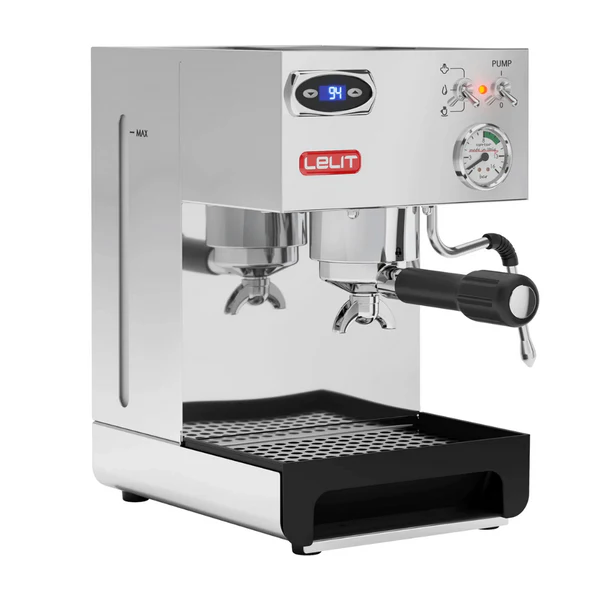
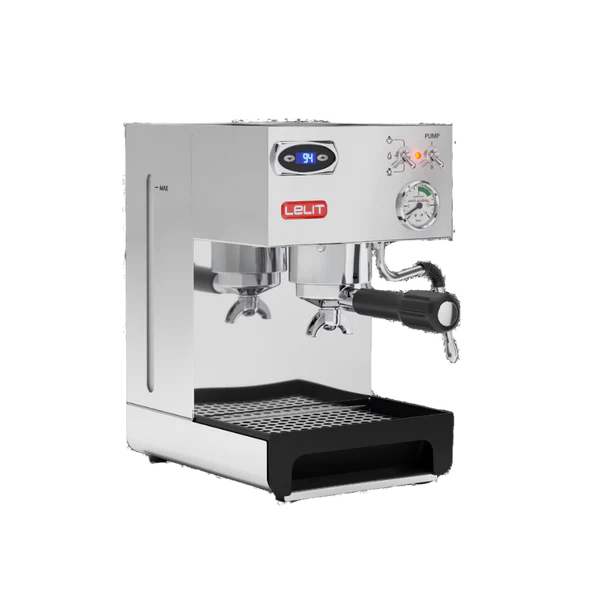

Description
When comparing the Anna PID to the Classic E24, the value proposition becomes quite striking.
Our extensive testing revealed that the Anna comes fully equipped with premium features straight from the factory, at a lower price point than the Classic.
While you’d need to invest roughly £100 in modifications to bring the Classic up to similar specifications, the Anna arrives ready to brew exceptional espresso from day one.
Now, we’re not suggesting the Anna definitively outperforms the Gaggia Classic – that’s quite personal – but for coffee enthusiasts who prefer a machine that’s ready to go without modifications and prioritise pure performance, the Anna presents a compelling case.
Features and Benefits
• 2.7 Litre water tank
• 250ml brass boiler
• Adjustable brew temperature from 80-130C
• Adjustable steam temperature from 120-140C
• 57mm portafilter
• 57mm brass group
• Pro steam wand with single hole steam tip
• Toggle switches
• 15 bar pump with OPV (approx. 10 bar, but can be adjusted
• 3 way solenoid valve
57mm Portafilter
During our testing, we identified that the 57mm portafilter is likely the main sticking point for potential buyers.
The decision by Lelit to use this non-standard size remains puzzling to our team.
We suspect Gaggia is rather pleased about this choice, as the Anna’s impressive feature set at this price point would otherwise make it an even more formidable competitor to the Classic.
However, the situation isn’t quite as limiting as it might appear at first glance.
Through our extensive accessory testing, we’ve discovered that several 58mm accessories are actually compatible.
The dosing cups from DF grinders fit perfectly, as does the 58mm MHW-3Bomber cyclone WDT tool.
We were pleasantly surprised to find that the wooden handled Gaggia Classic tamper also works well, though dedicated Lelit 57mm tampers are readily available.
The main drawback is the reduced selection of third-party accessories compared to the standard 58mm size, particularly when it comes to upgraded baskets and puck screens.
One Heck of a Machine for £450!
Looking beyond the portafilter size, we’re genuinely impressed by the value packed into this machine.
The temperature control is remarkably precise, offering brew temperature adjustments in 1C increments and flexible steam temperature settings.
For beginners, the default 125C steam temperature provides manageable steam power while you’re mastering milk texturing.
More experienced baristas can crank it up to 140C for maximum steam output when needed.
Paired with a quality grinder – whether that’s the Lelit Fred, Baratza Encore ESP, DF40+, or premium options like the Eureka Mignon Libra, Eureka Mignon Zero, DF54, or DF64 – this machine consistently produces excellent espresso with minimal fuss.
While it’s not perfect (what is at this price?), the 57mm portafilter is really the only significant compromise.
If we’re being particularly critical, we’d suggest two minor improvements: a more transparent water tank to better utilise the side cut-out for water level visibility, and the addition of a handle similar to those found on the Lelit Mara X and Bianca V3 tanks.
The Best Lelit Espresso MachinesOne minor design drawback worth mentioning: the water tank would benefit from a proper handle. Reinserting the tank into the machine frame can be somewhat awkward since there’s no dedicated grip point – you’re forced to place your fingers inside the tank itself during installation.
However, when we consider the overall value proposition, this machine stands out in the sub-£500 category. You’re getting impressive specifications: a substantial 250ml brass boiler, brass group head, excellent steam performance, and comprehensive temperature control for both brewing and steaming. At around £450, it’s a compelling option that would definitely make our shortlist for espresso machines in this price range.
We should note that adjusting the OPV (Over Pressure Valve) is straightforward, though we wish manufacturers would follow Profitec and La Marzocco’s lead by placing this adjustment externally. Still, the process only requires removing the lid, disconnecting the water pipe, and turning a screw – a simple enough modification that even beginners can handle with care.


Reviews
There are no reviews yet.