

By: The Caffeinated Gear Team

When it comes to convenient coffee at home, Tassimo and Dolce Gusto stand out as popular choices in the pod coffee machine market.
Our expert team has thoroughly tested both systems to help you make an informed decision about which one might suit your needs better.
Let’s address the burning question: which system comes out on top?
Well, the answer isn’t quite as straightforward as you might expect.
As coffee professionals who’ve tested countless machines, we should mention that while both Tassimo and Dolce Gusto offer convenience, they don’t quite match the quality you’d get from freshly ground beans in a traditional coffee machine.
That said, we understand that pod machines serve a specific purpose, offering quick, consistent coffee with minimal fuss – and there’s absolutely nothing wrong with that.
When discussing best coffee machines in terms of pure convenience, pod coffee machines stand out as remarkably straightforward options. However, as our team of certified baristas discovered, not all pod systems are created equal.
Through extensive testing, we’ve found that while both Tassimo and Dolce Gusto offer convenient solutions, neither takes the crown for best overall pod system. That distinction belongs to Nespresso Original, thanks to its vast ecosystem of compatible pods, including offerings from boutique roasters who prioritise quality.
That said, if you’re specifically looking for a machine that can produce coffee shop classics like cappuccino and latte with minimal fuss, both Tassimo and Dolce Gusto deserve serious consideration.
However, we should address the elephant in the room – the milk. As coffee professionals, we must point out that the “milk” in these pods bears little resemblance to fresh dairy. Dolce Gusto primarily uses powdered milk, while Tassimo opts for milk concentrate. While technically milk-based, these alternatives simply can’t match the richness and texture of fresh milk.
Before committing to either system, we strongly recommend reading our comprehensive guide:
Now, assuming you’ve decided that either Tassimo or Dolce Gusto matches your needs, let’s break down their key differences to help you make an informed choice. We’ll examine various aspects that might influence your decision, based on our hands-on experience with both systems.
Our analysis shows that while both systems offer similar branded pod selections, partnering with familiar names like L’OR, Costa, and Starbucks, Dolce Gusto pulls ahead thanks to its open system. Unlike Tassimo’s barcode-scanning T-discs that prevent third-party options, Dolce Gusto welcomes compatible pods from other manufacturers.
Still, we should note that Nespresso Original remains the king of variety, particularly in the speciality coffee segment. This isn’t due to Nespresso’s generosity – quite the opposite. The credit goes to Dualit, a small British company that successfully challenged Nespresso’s monopoly, paving the way for independent roasters to create compatible pods.
Our price comparison research reveals Dolce Gusto as the more budget-friendly option, particularly for milk-based drinks. Beyond the availability of third-party alternatives, even the branded Dolce Gusto pods offer better value.
At Tesco, for instance, Tassimo charges £4 for 6 latte pods, while Dolce Gusto offers 16 flat white, cappuccino, or cafe au lait pods for £3.50. While Tassimo’s coffee-only pods (like their Americano at £4 for 16) are reasonably priced, their milk-based options command a significant premium.
Our current market analysis shows Dolce Gusto offering more variety, with six machines on their official website compared to Tassimo’s four. Dolce Gusto also presents a more accessible price range, spanning from £30 to £85, while Tassimo machines run from £40 to £140.
Having extensively tested both systems in our lab, we find them remarkably similar in terms of beverage quality. However, we must highlight an important consideration regarding the coffee itself.
Both brands use instant coffee in several of their milk-based drinks. Here’s what we found:
Tassimo pods containing soluble coffee:
Dolce Gusto pods containing soluble coffee:
For those seeking proper coffee rather than instant, check the ingredients list – “Roast and ground coffee” indicates real coffee, while “soluble coffee” means instant.
While our team of coffee professionals might find these machines limiting, we recognise they serve a valuable purpose for many coffee drinkers. If you’re accustomed to standard supermarket coffee or instant, both systems will likely meet your expectations admirably.
We acknowledge that most coffee drinkers aren’t obsessing over extraction ratios or bean origins – they simply want a reliable cup of coffee. While the speciality coffee movement grows steadily in the UK, convenience options like pods and instant still dominate the market.
Now, let’s examine the specific machines in detail:
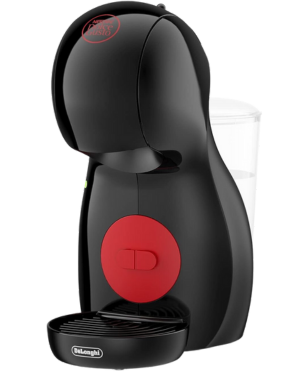
During our testing, this compact powerhouse impressed us as a best-seller for good reason. At under £30, it offers remarkable value, especially for those just venturing into pod coffee. Its modest investment makes it an excellent starter machine – even if you later decide to upgrade, it won’t feel like a significant financial misstep.
At just 14cm wide, it’s perfect for space-conscious situations like campervans or office desks. The 0.8L water tank might require frequent refilling if serving multiple people, but for personal use, it’s perfectly adequate.
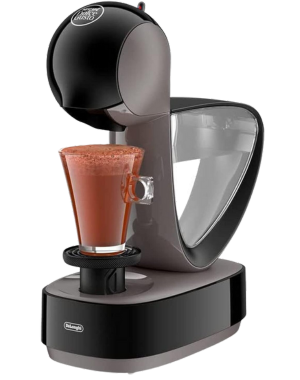
While not quite as popular as the Piccolo XS, this mid-range option justifies its higher price point with practical improvements. The larger 1.2L water tank means less frequent refilling – typically managing 3-4 drinks before needing a top-up. We particularly appreciated the adjustable riser, which eliminates the need to remove and replace the drip tray for different cup sizes.

The Mini Me slightly edges out the Piccolo XS in size while maintaining the same water capacity. Its key distinction lies in its automatic operation and compatibility with Dolce Gusto’s cold brew pods. While the automatic volume selection feature adds convenience, we question whether it justifies nearly double the price of the Piccolo XS, though the included 6-box pod bundle somewhat sweetens the deal.
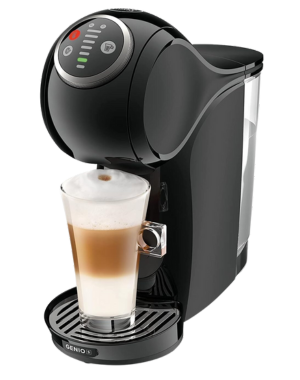
After rigorous testing in our workshop, we found this machine brings some visual flair to your countertop. While it shares the same 0.8L water tank capacity as its siblings, the Mini Me and Piccolo XS, it sets itself apart with an innovative LED control ring for volume selection.
When comparing it to more basic models, two features caught our attention. First, the espresso boost button (available on S Plus and S Touch models) reduces flow rate for a more concentrated brew. Second, the XL compatibility lets you use larger pods for generous 300ml servings.
However, we should mention a potential issue with cup height. Through our testing and customer feedback analysis, we’ve noticed that taller latte glasses can be problematic. While 14cm glasses do fit with the drip tray removed, it’s a tight squeeze. Some coffee enthusiasts have suggested this Genio model prioritises aesthetics over functionality.
From our professional perspective, the core brewing capabilities mirror those of the cheaper versions. Your decision might come down to whether the XL pod compatibility and espresso boost function justify the premium price point.
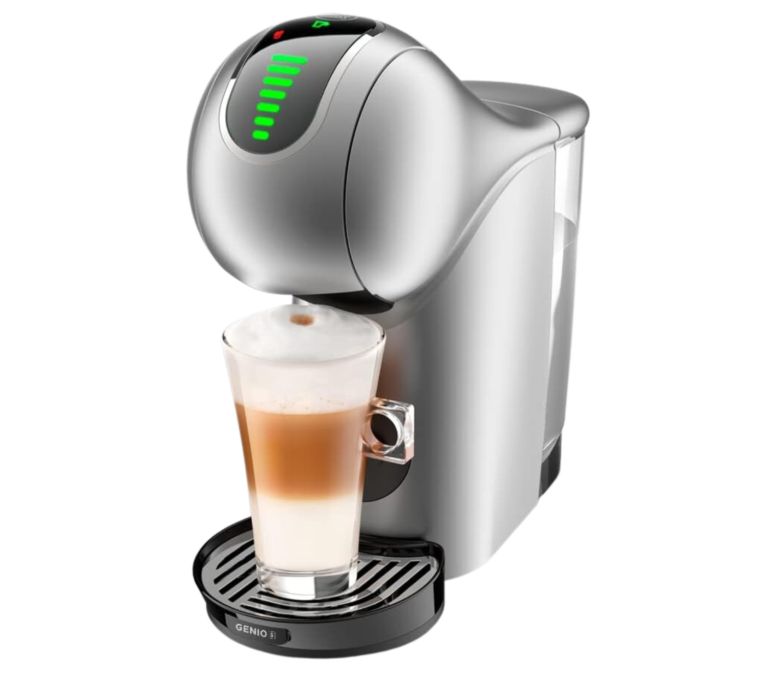
During our extensive testing sessions, we discovered the Genio S Touch essentially mirrors the S Plus model’s capabilities, with two notable additions: a sleek touch screen interface and temperature adjustment options. These complement the existing XL pod compatibility and espresso boost functionality.
While marketed as their flagship model, we were surprised by the modest water tank capacity. For a premium machine, the 0.8L reservoir—identical to their entry-level models—means you’ll need to refill after every 3-4 drinks. In our view, a flagship deserves more practical capacity.
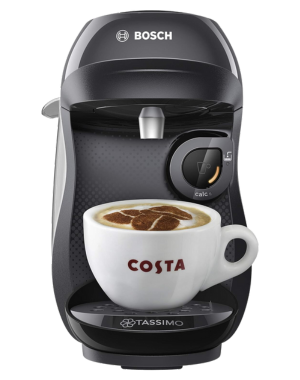
In our latest round of testing, this newer Tassimo release impressed us with its capabilities despite its entry-level pricing. Sitting in the same price bracket as the Vivy 2, it offers remarkable value. We particularly appreciated the smart features like descale alerts and digital water level monitoring.
The 0.7L water tank capacity mirrors other compact models in its class. For single households or moderate coffee drinkers (1-3 cups daily), this shouldn’t pose an issue. In fact, our team recommends daily water tank refreshes as best practice for optimal coffee taste.
However, if you regularly serve multiple coffee drinkers, consider that the smaller tank might require frequent refills. For larger households, we suggest exploring alternatives to pod machines entirely.
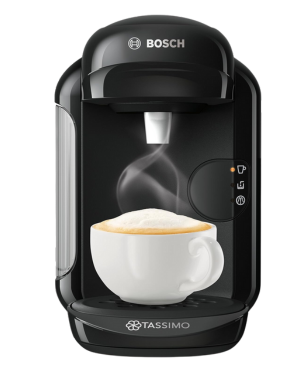
Through side-by-side comparison testing, we found the Vivy 2 closely matches the Happy’s capabilities while occupying slightly more counter space. Despite being marginally larger (a few centimetres in each dimension), it maintains the same 0.7L water capacity.
Our detailed analysis revealed no significant functional differences between these two models. If space efficiency matters in your kitchen, the Happy might be the better choice. Otherwise, we’d recommend choosing whichever model offers better value when you’re ready to purchase.
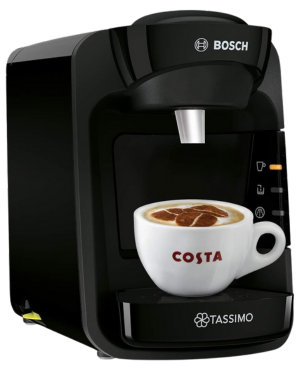
Currently leading Amazon UK’s single-serve coffee machine rankings, the Suny compares closely with the Dolce Gusto Piccolo XS in both price point and water capacity (0.8L).
One crucial distinction we noticed between entry-level Tassimo and Dolce Gusto machines lies in their automation level. Every Tassimo machine, including budget models, offers fully automatic operation thanks to barcode technology. Simply insert your pod and press start—the machine handles volume selection automatically. This contrasts with basic Dolce Gusto models requiring manual volume control.
Based on our market analysis, we believe this machine’s competitive pricing strategy mirrors that of printer manufacturers—offering affordable hardware while generating revenue through consumables. The pod pricing structure, particularly for instant coffee-based varieties with added ingredients, suggests healthy profit margins.
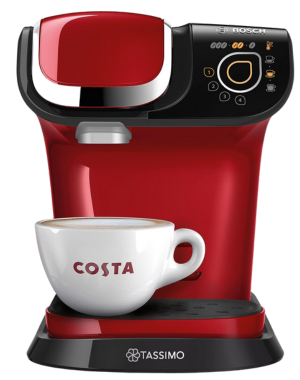
As Tassimo’s current premium offering, this model caught our attention during testing, particularly when considering its value proposition against lower-priced alternatives. Two features stand out: the larger water reservoir and included water filtration system.
Drawing from our extensive experience reviewing traditional espresso machines and bean to cup coffee machines, we noticed the tank size, while improved at 1.3L, still falls short of typical entry-level machines in those categories (usually 1.5L).
However, our testing revealed this isn’t necessarily a drawback. Fresh water produces better coffee, and we always recommend daily tank maintenance—empty, rinse, refill—regardless of size. The included Brita filter significantly enhances water quality, which, in our professional opinion, justifies the price premium over basic models.
After months of rigorous testing and countless cups of coffee, our team of certified baristas and coffee experts have put together this comprehensive comparison of two popular pod coffee systems. We’ve examined every aspect to help you make the perfect choice for your kitchen.
These competing pod coffee systems each bring something unique to your morning brew.
Dolce Gusto machines, owned by Nestlé, use their signature pods and compatible capsules.
Meanwhile, Tassimo machines, under JDE Peet’s ownership (formed when Jacobs Douwe Egberts joined forces with Peet’s Coffee), exclusively use T-discs.
Our testing revealed significant differences in pod flexibility between these systems:
Tassimo’s disc-shaped pods are completely distinct from Dolce Gusto’s more traditional capsule design.
While Dolce Gusto welcomes compatible pods from various manufacturers, Tassimo machines are more exclusive – they’ll only accept official Tassimo T-discs, which must pass through their built-in barcode scanner.
Through our extensive testing, we can definitively say that Dolce Gusto pods won’t work in Tassimo machines.
Each system is designed for its specific pod type, with Tassimo being particularly strict about using only their branded T-discs.
Based on our research and testing, Tassimo maintains a closed system – only official Tassimo T-discs will function in their machines.
This design choice ensures consistent quality but limits your options compared to other systems.
We’ve tested numerous compatible options for Dolce Gusto machines.
You’ll find excellent alternatives from well-known brands like Lavazza, plus quality offerings from Aldi and Lidl.
Popular coffee chains like Costa and Starbucks also produce compatible pods that meet the Dolce Gusto standard.
Drawing from our professional experience, we find the answer varies based on individual needs and preferences.
In our expert assessment, Nespresso Original offers distinct advantages over both Tassimo and Dolce Gusto.
The key difference lies in pod variety – Nespresso Original’s ecosystem includes an impressive range of compatible capsules, including specialty options from boutique roasters that truly elevate your coffee experience.
Caffeinatedgear.com is a participant in the Amazon Services LLC Associates Program, an affiliate advertising program designed to provide a means for sites to earn advertising fees by advertising and linking to amazon.co.uk.
© 2025 Caffeinated Gear.