

Caffeinated Gear » Best Coffee Machines: The Ultimate Buyer’s Guide (Expert Review)
By: Caffeinated Gear Review Team

Choosing the perfect coffee machine isn’t as straightforward as it might seem. After testing hundreds of machines in our specialised coffee lab, we’ve discovered that the ‘best’ coffee machine varies dramatically based on your specific needs and preferences.
As coffee professionals who spend our days brewing, testing, and comparing different machines, we’re here to guide you through selecting the ideal coffee maker for your particular situation.
From our extensive testing, we’ve found that most coffee enthusiasts are searching for machines that can recreate their favourite café drinks – cappuccinos, flat whites, lattes, and Americanos. These drinks all start with espresso as their foundation.
If this matches your coffee goals, you’ll want to focus on espresso machines, which fall into two main categories: automatic bean-to-cup machines and traditional portafilter espresso machines.
When we mention “bean-to-cup,” we’re specifically talking about fully automatic machines with internal brewing units that handle the entire process. We emphasise “automatic” to distinguish these from machines that simply include a grinder, as some retailers blur these lines in their marketing.
Through our testing, we’ve noticed that automatic bean-to-cup machines produce a distinct style of espresso compared to traditional machines. While they use similar principles – grinding, dosing, tamping, and pressure – the internal brewing unit creates a notably different result.
The key distinction we’ve observed is that bean-to-cup machines typically produce a milder espresso with less body. Most models are designed to create what we’d describe as a “gentler” espresso experience.
This suits many coffee drinkers perfectly. If you’re currently using a bean-to-cup machine and enjoying the results, that’s brilliant. Similarly, if you’re upgrading from pods or instant coffee, you’ll likely find bean-to-cup machines offer a noticeable improvement in quality.
However, if you’ve developed a taste for robust, full-bodied espresso from traditional machines, you might need time to adjust to bean-to-cup coffee. The trade-off is exceptional convenience.
In our experience, traditional portafilter machines consistently produce the finest espresso. For those who appreciate rich, full-bodied shots – whether drunk straight, mixed with hot water for Americanos, or combined with steamed milk for cappuccinos and lattes – these machines often provide the most satisfying results.
The catch? They require genuine skill to operate effectively. However, some entry-level models use pressurised filter baskets, reducing the skill requirement. While this makes them more accessible, particularly when using pre-ground coffee, it does impact the final cup quality.
Main advantage: Combines traditional espresso quality with automated convenience.
Main drawback: Usually higher price point (with one notable exception).
For coffee lovers torn between traditional quality and modern convenience, these hybrid machines offer an exciting solution. Sage originally dominated this category, but Ninja has recently entered the market with an interesting proposition.
The Ninja Luxe particularly impressed us by offering similar quality at a significantly lower price point.
Main advantage: Low initial cost and ultimate convenience.
Main drawback: Higher cost per cup long-term.
If convenience and minimal upfront investment are your priorities, pod machines deserve consideration. Our testing revealed that some of the more affordable models actually outperform their pricier counterparts. However, the long-term running costs from pod purchases can accumulate significantly.
Main advantage: Perfect for filter coffee lovers.
Main drawback: Not suitable for espresso-based drinks.
We should clarify a common misunderstanding: filter coffee machines won’t produce proper espresso-based drinks. While Americanos and filter coffee might seem similar, they’re distinctly different brews. And please don’t attempt cappuccinos or lattes with filter coffee – our testing confirmed this simply doesn’t work. However, if you’re specifically after filter coffee, these machines can be excellent, and we have a clear favourite to recommend.
Let’s explore our top picks in each category, based on extensive testing and real-world experience.
Having extensively tested dozens of automatic machines, we’ll focus on those with internal brewing units. These are true hands-off machines – simply add beans, press a button, and the machine manages everything else autonomously.
Bean-to-cup machines span a wide price range. Through our testing, we’ve noticed a clear pattern: machines with manual panarello (turbo frother) steam wands typically represent the more budget-friendly options. Meanwhile, “one-touch” machines that automatically handle milk drinks tend to command higher prices.
We’ve been particularly impressed with Gaggia’s offerings that include professional-grade steam wands. These machines are worth considering if you want precise control over milk temperature and texture.
One-touch milk systems offer unmatched convenience, and recent models have shown remarkable improvements in milk texturing. However, our extensive testing reveals that milk temperature remains a common limitation across many models.
For those seeking a one-touch machine that delivers properly hot milk drinks, we recommend checking out the DeLonghi Magnifica Plus. As DeLonghi’s newest addition to their Magnifica range, it achieves higher milk temperatures than its predecessors and produces remarkably good flat whites for an automatic machine.
We’ve organised our recommendations based on milk frothing systems, as our testing suggests this best helps match machines to user needs. This approach also roughly aligns with price points, making it easier to find options within your budget.
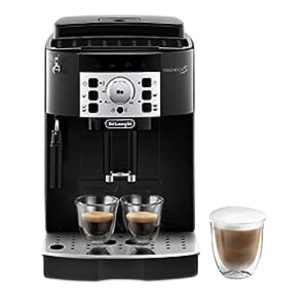
The De’Longhi Magnifica S has earned its stellar reputation in the coffee machine market for good reason.
After extensive testing in our coffee lab, we’ve found that this budget-friendly bean-to-cup machine delivers remarkable value for money.
This model falls into the standard bean-to-cup category, which is important to understand when comparing your options.
Let’s clarify the key differences in bean-to-cup machines.
You’ll find super-automatic (or “one-touch”) models that handle everything automatically, including milk frothing.
In contrast, standard machines like the Magnifica S come equipped with a Panarello steam wand, putting you in control of milk texturing while keeping the process straightforward.
Our hands-on testing revealed impressive performance overall, though we discovered some quirks worth noting.
The aroma dial’s function isn’t quite what you might expect – our tests suggest it primarily adjusts brewing time rather than coffee quantity.
Similarly, the 2-shot button operates differently from many competitors.
Through careful measurement, we found it uses roughly two additional grammes of coffee while doubling the water volume, rather than doubling both coffee and water as most users might expect.
While other manufacturers like Gaggia, Melitta, and Jura opt for true double doses, De’Longhi’s approach isn’t necessarily problematic.
You’ll simply need to run two separate single shots if you want a genuine double shot with twice the coffee grounds.
The practical design features truly shine through.
The front-loading 1.8L water tank proves particularly useful when positioning the machine under kitchen cabinets.
We were pleasantly surprised by the 13 grind settings – an impressive range for this category.
The height-adjustable spout adds welcome versatility for different cup sizes.
Worth noting: this newer model runs noticeably quieter than its predecessor, addressing a common criticism of earlier versions.
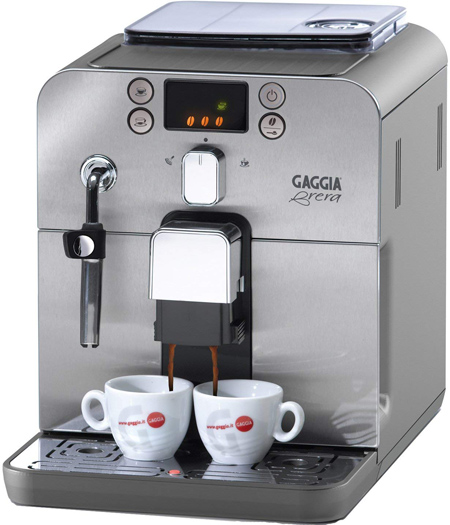
Gaggia, the pioneers of modern espresso machines, continue to produce reliable, high-quality equipment. After thorough testing, we believe the Brera deserves special recognition in this guide.
While priced slightly higher than the DeLonghi options above, our testing shows the Brera justifies its cost through several key features: true double shot capability without requiring two separate singles, and superior dose control. We particularly appreciate its easily accessible burr cleaning system and the potential for grind size modifications.
Throughout our extensive testing of Gaggia’s bean-to-cup range, we’ve found their bean setting system particularly intuitive. The Brera offers settings 1-3 (with some premium models extending to 1-5), each incrementally increasing the dose from 5 to 11 grams, providing precise control over coffee strength.
A standout feature we discovered is the Brera’s genuine double shot function. When you select the 3-bean setting and press the shot button once, you’ll get a single shot using 11 grams of coffee. Press it twice, and the machine delivers a proper double shot using twice the coffee – exactly what coffee professionals expect from a true double.
The Brera’s compact design impressed our team, combining aesthetic appeal with practical functionality. Its intuitive controls and reliable performance make it an excellent workhorse for daily use.
While the 1.2L water tank might seem modest, the front-access design makes refills remarkably simple. The low-profile drip tray extends fully under the machine, offering more capacity than initially apparent.
Our grinding tests revealed the Brera achieves slightly finer grounds than comparable DeLonghi models. For enthusiasts seeking more traditional espresso characteristics, we discovered a simple modification: remove the hopper screws, lift it off, and adjust the grinder ring clockwise. This small tweak brings the espresso profile closer to traditional portafilter results.
Regarding maintenance, we’re often asked about using oily dark roasts in bean-to-cup machines. Through our testing, we’ve found that proper cleaning makes this entirely feasible. We recommend using either Urnex Grindz or Puly Grind cleaning pellets.
The Brera offers a particularly safe cleaning method: remove the brewing unit, insert folded card into the relevant sensor slots, and grind the cleaning pellets directly into a cup. This approach eliminates any risk to the brewing unit.
Based on our comprehensive testing, we consider the Brera the standout choice among lower-priced bean-to-cup machines, especially for those seeking traditional styling with modification potential.
For UK customers, there’s an additional advantage – Gaggia machines are distributed by Gaggia Direct, known for their exceptional one-to-one support. Rather than endless queue times or impersonal ticket systems, you’ll receive direct phone or video support – a refreshing approach to customer service.
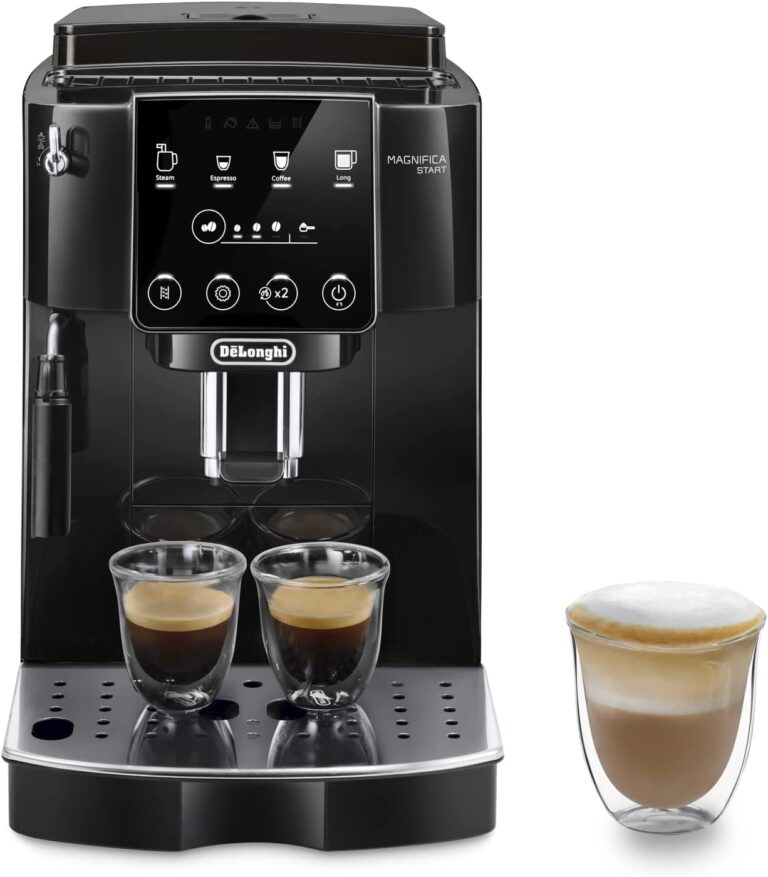
In our hands-on testing of DeLonghi’s latest offerings, we found the Magnifica Start shares much of its DNA with the older Magnifica S. Our technical analysis suggests identical core components – the same grinder, brewing unit, and pump system.
The primary distinctions? A more contemporary interface with soft-touch buttons and a dedicated one-touch Americano function. When advising coffee enthusiasts on budget-friendly automatic machines from DeLonghi, we typically recommend choosing between these two models based on current pricing – unless the one-touch Americano feature particularly appeals to you.
An important accessibility note from our testing: the Start’s interface lacks the tactile feedback found on the Magnifica S and Gaggia Brera. For households where visual impairment is a consideration, we’d recommend opting for machines with more pronounced, physical buttons.
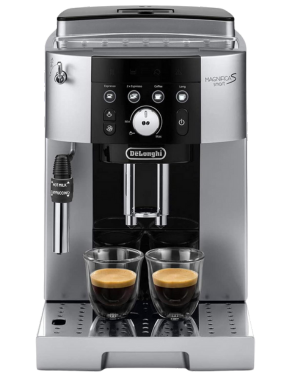
A quick note on DeLonghi’s model numbering system, based on our research: the first numbers (like 21 or 250) indicate the model series. The letters typically denote colours – ‘S’ for silver, ‘B’ for black. Additional numbers usually reference specific aesthetic variations within the same model line.
The Magnifica S Smart brings some notable upgrades to the table. Beyond its more premium aesthetic, it features what we consider a breakthrough in milk frothing technology – the smart wand (which we suspect inspired the ‘S’ designation). Having tested countless panarello wands, this stands out as the most impressive we’ve encountered.
What makes it special? The wand offers two distinct settings: one for milk stretching (frothing) and another for heating, giving unprecedented control over milk aeration. This innovative approach has us wondering why other manufacturers haven’t adopted similar technology – though we suspect DeLonghi may hold the patent rights.
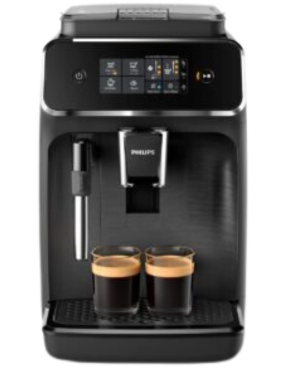
During our testing, we found the Philips 2200 series provides strong competition to DeLonghi’s Magnifica range. While the DeLonghi machines have a slight edge in build quality, the Philips 2200 offers several compelling advantages.
Most notably, it delivers a proper double shot. Unlike the Magnifica, which simply produces a larger, diluted coffee when you select two cups, the Philips 2200 performs two complete brewing cycles – grinding fresh beans each time for a genuine double shot. While you can achieve this with the DeLonghi by pressing the shot button twice, the Philips automates the process.
Another standout feature is compatibility with the Acqua Clean water filtration system. Though sold separately, these filters can handle around five thousand coffees before descaling becomes necessary – particularly valuable for those in hard water areas.
The dosing system mirrors Gaggia’s intuitive approach, with three strength settings delivering 7, 9, or 11 grams (doubled for double shots). However, our testing revealed some minor drawbacks: a slightly noisier pump and internal design that requires more frequent cleaning of trapped grounds.
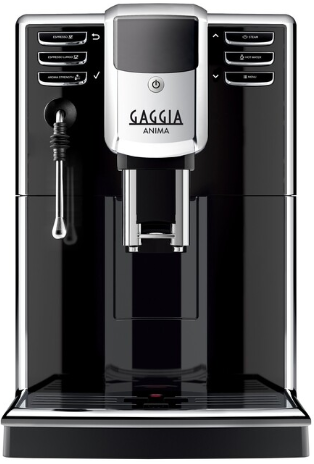
Through extensive comparison testing, we’ve identified the Anima as a sweet spot in the bean-to-cup market. It strikes an excellent balance between meaningful features and price point – unlike some premium models where additional costs don’t necessarily translate to noticeable improvements in coffee quality.
Compared to the Brera, you’re getting practical upgrades that justify the price difference: five dose settings instead of three for better strength control, and a larger 1.6L water tank. The top-filling tank design presents both advantages and challenges – while it’s easy to top up mid-brew, it might prove awkward if your machine sits under kitchen cabinets.
Other improvements include an expanded internal waste bin (18 pucks versus 8), increased cup clearance (15cm versus 12cm), and a more contemporary interface.
This particular model – the “Barista Plus” – features a professional steam wand. The standard Anima comes with a panarello wand – that’s the only difference between the models. For basic cappuccinos, the standard version works well, but if you’re keen on creating microfoam for flat whites and speciality drinks, we recommend the pro wand version.
The range also includes the Anima Deluxe with a cappuccinatore frother, plus the Prestige and Class models offering one-touch milk drinks. Our testing confirms no difference in milk quality between cappuccinatore and one-touch carafe systems – they use the same technology, just packaged differently.
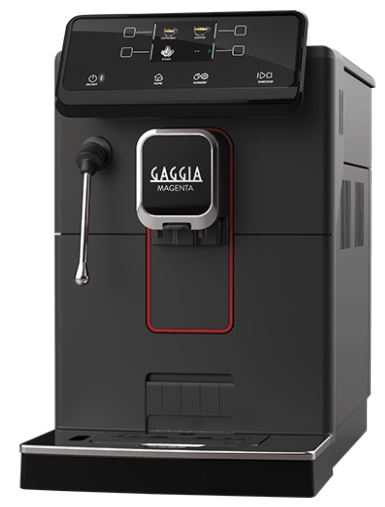
For coffee enthusiasts prioritising milk-based drinks (especially flat whites, cappuccinos, lattes, and cortados) who want bean-to-cup convenience without stretching to Oracle-range prices, our testing points to two standout options: the DeLonghi Eletta Plus discussed above, and the Gaggia Magenta Plus.
While both machines excel, our team particularly favours the Magenta Plus for its professional steam wand. During our extensive testing, this machine impressed us with several premium features: automatic pre-infusion, full-colour LCD interface, touchscreen controls, customisable drink options, adjustable brew head, stainless steel boiler, generous 1.8L water tank, and 250g bean hopper.
However, what truly sets it apart is that professional steam wand – a feature rarely found in this price bracket for bean-to-cup machines.
Gaggia offers two other Magenta variants: the “Magenta Milk” featuring one-touch operation via cappuccinatore, and the “Magenta Prestige” with an integrated milk carafe for traditional one-touch convenience.
For clarity: a cappuccinatore is an automatic milk-frothing device that draws milk through a tube from your container of choice. Many Gaggia machines offer this more budget-friendly “milk” option as an alternative to integrated milk carafes.
Based on our hands-on experience, particularly evident in our video testing above, the Magenta Plus stands out. For those of us who prioritise milk texture quality in a bean-to-cup system, this or the Cadorna Barista Plus below would be our top recommendations.
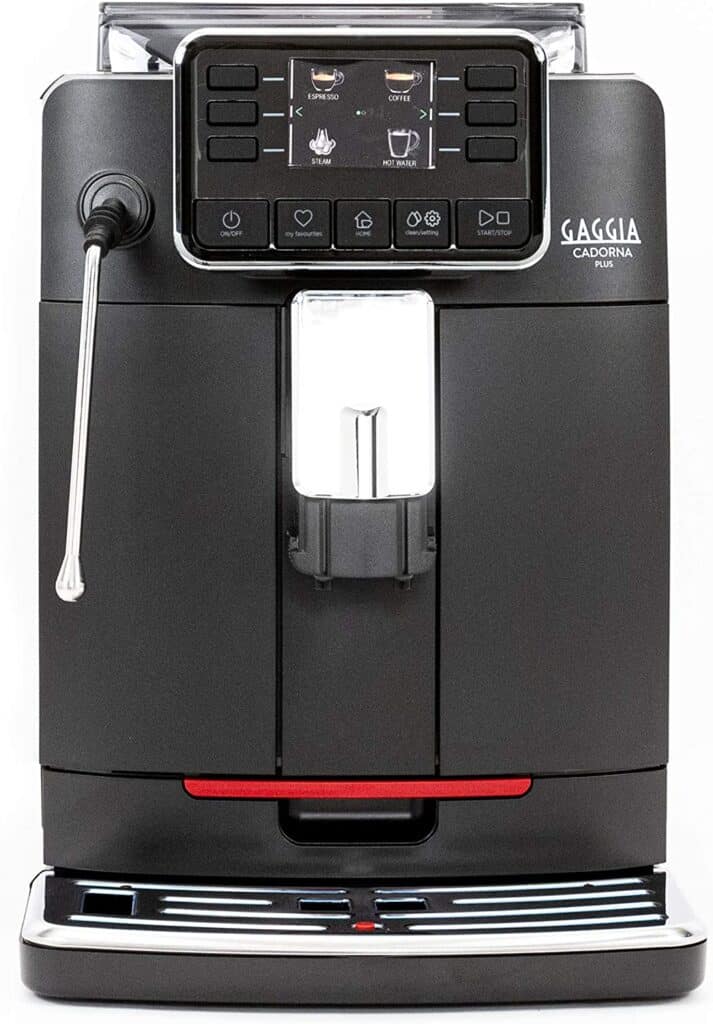
A recent addition to the Gaggia bean to cup lineup in the UK, the Cadorna Barista Plus matches the Magenta Plus’s professional steam wand capability, but with a longer wand design. Our testing revealed its particular strength in multi-user households, offering four colour-coded, fully customisable user profiles.
While our video review above features the Magenta milk with its cappuccinatore attachment, most other features remain consistent across models.
Comparing dimensions with the Magenta, the Cadorna is marginally larger – 3.5cm wider, 2cm taller, and 5mm deeper. It features a slightly smaller water tank (though only by 300ml), adds a dedicated Ristretto option, and boasts a larger display with those four personalised user settings.
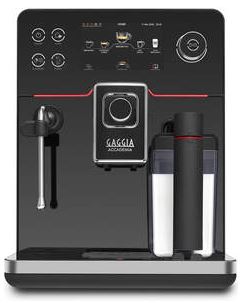
The redesigned Accademia represents Gaggia’s flagship bean-to-cup offering, uniquely featuring both a professional steam wand and a one-touch milk carafe.
Building on its predecessor’s reputation for reliability in busy households and small offices, this new iteration combines advanced features with impressive versatility. Our testing revealed significant improvements in both aesthetics and functionality.
The sleek glass front panel not only enhances its visual appeal and cleanability but also houses an exceptionally responsive touch screen interface. For those preferring traditional controls, an intuitive dial provides an alternative method for drink selection.
What truly impressed our team was the unprecedented level of customisation available. Users can fine-tune brew temperature, pre-infusion, and flow control with three settings each. Add to this five dose settings, true double shot capability, and an innovative “coffee boost” feature that adds a ristretto shot for extra intensity.
The extensive drink menu includes everything from ristretto to cortado, with all drinks adjustable via on-screen sliders and saveable across four user profiles. Even water dispensing shows thoughtful design, with three temperature settings optimised for coffee, green tea, and black tea respectively.
The professional steam wand consistently produces silky microfoam suitable for latte art, working equally well with dairy and plant-based alternatives. We particularly appreciated the comprehensive cleaning system – automatic cleaning after each milk drink, shutdown cleaning, and menu-accessed quick and deep clean options.
While this comes closest to bean-to-cup perfection we’ve tested, two minor issues prevent a perfect score: a somewhat limited drip tray capacity and the absence of a quick-access steam icon on the main screen.
Nevertheless, in terms of intelligence, sophistication, and versatility, this machine sets a new benchmark for domestic bean-to-cup coffee makers.
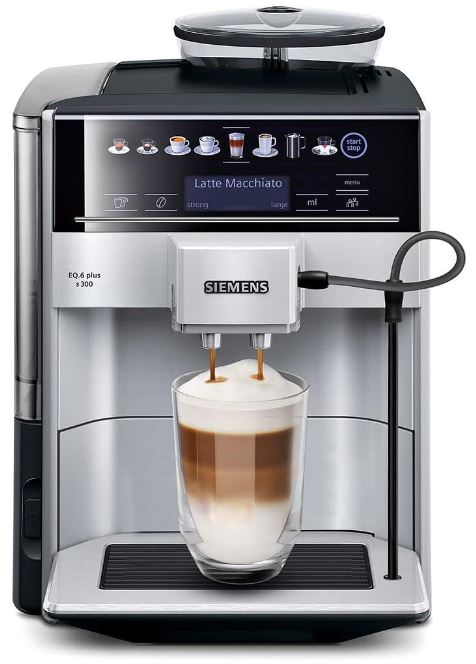
The EQ6 from Siemens has earned its popularity through reliable performance. Key features include dual user profiles, one-touch milk drinks (latte macchiato and cappuccino), genuine double shots, and generous 14cm cup clearance.
Our experience with Siemens machines confirms their reputation for reliability, particularly in their entry-level range like the S300. While Siemens offers pricier options, we consider the EQ6 S300 the value sweet spot. Unless you’re particularly keen on smart connectivity (which, in our view, won’t truly shine until it can physically deliver your coffee to you), the premium models’ additional features may not justify their cost.
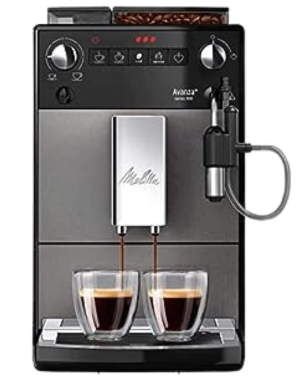
Though better known for filter coffee equipment, Melitta has successfully ventured into bean-to-cup territory with their slim, competitively priced Avanza series. Our testing confirms they’ve achieved an impressive balance of features and value.
Like Gaggia and Philips machines, it delivers proper double shots using twice the coffee amount, with three intuitive dose options for precise strength control.
It’s important to note this isn’t a one-touch milk system – while coffee and espresso are automatic, milk-based drinks require manual frothing via the cappuccinatore (often called “cap in cup”).
The machine lacks a bypass doser for pre-ground coffee, restricting you to whole beans. While some might view this as a limitation, our team sees it as a feature. Pre-ground coffee’s rapid flavour degradation makes whole beans the superior choice, even for decaf. Rather than treating the hopper as bean storage, we recommend only loading what you’ll use in the short term.
Based on our testing experience, we recommend discarding the first four to five coffees from this machine. This initial break-in period is crucial for optimal performance. Start with affordable medium to dark roast beans (avoiding very oily dark roasts) for the first few bags to avoid wasting premium coffee during the settling period.
While Melitta suggests keeping the factory grind settings for the first thousand coffees, our testing indicates a more practical approach: run several bags of basic beans through the machine, then switch to quality freshly roasted beans and begin fine-tuning the grind settings. Though bean-to-cup machines don’t offer traditional dialling in, we typically find the finer grind settings produce better espresso.
For those seeking a compact, aesthetically pleasing, and budget-friendly cappuccinatore machine from a respected manufacturer, the Avanza offers compelling value.
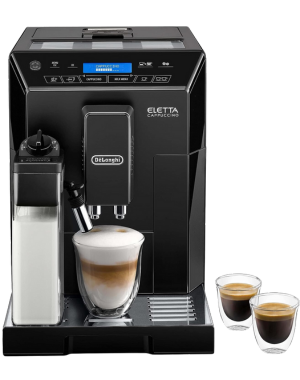
DeLonghi’s position as the world’s largest coffee machine manufacturer is well-earned, particularly with their Eletta range. While not the newest model, this maturity translates to exceptional value – especially in the entry to mid-range one-touch category.
Think of it like premium smartphones: while older models offer significant savings, they often feel dated due to rapid technological advancement. Coffee machine technology, particularly in true bean-to-cup systems, has remained relatively stable over the past two decades. Sometimes, newer models prioritise flashy interfaces at the expense of build quality.
The current Eletta lineup includes three variants: Plus, Cappuccino, and Cappuccino Top.
The Eletta Cappuccino (ECAM 44.660.B) shown above represents the entry-level one-touch model. It delivers automatic espresso, ristretto, lungo, cafe macchiato, latte macchiato, cappuccino, and latte. While it can produce Americanos and flat whites, these aren’t one-touch operations.
The Eletta Cappuccino TOP (ECAM 45.760.W) offers premium construction with more metal components and adds one-touch flat white capability – though we’d note that achieving true flat white quality from any automatic machine remains challenging.
The Eletta Plus (ECAM 44.620.S) matches the 44.660’s capabilities but replaces the automatic system with the same smart panarello steam wand found in the DeLonghi Dedica EC685 and Magnifica S Smart. Our testing shows this produces superior milk texture compared to standard panarello wands.
While no one-touch system quite matches the microfoam quality of a professional steam wand, the Eletta Plus’s steam wand comes impressively close. It handles the full range of drinks plus a milk-only setting for custom beverages including hot chocolate.
For accurate planning, note the true dimensions: approximately 36cm height, 26cm width, and 46cm depth.
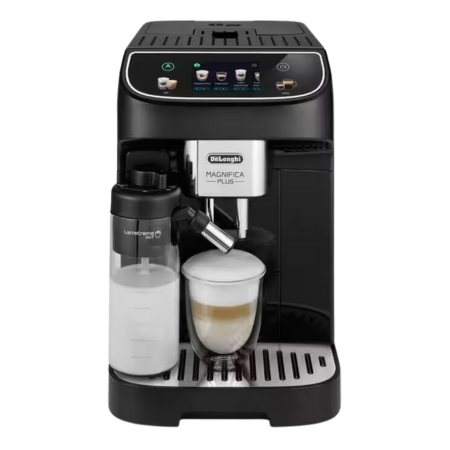
Our recent in-depth testing of DeLonghi’s latest Magnifica range addition has revealed something quite remarkable. What we initially expected to be a modest update with Rivelia and Eletta Explore-style interface improvements turned out to be much more significant.
For coffee enthusiasts who prioritise properly hot milk drinks – particularly authentic flat whites – but don’t want to stretch their budget to premium price points, this machine deserves serious consideration.
In fact, our comparative testing showed the Magnifica Plus outperforming (not just matching) the DeLonghi Eletta Explore, Rivelia, and other one-touch competitors specifically in flat white preparation.
Several factors contribute to this impressive performance:
First, the dosing capability stands out. The Magnifica Plus can handle up to 17g doses when using the 2x espresso or Doppio plus settings. Combined with adjustable volume control, this allows for particularly intense espresso – unusual for an automatic bean-to-cup machine.
This higher dose capacity proves crucial for authentic flat whites. While many one-touch machines produce flat whites indistinguishable from lattes in terms of intensity, the Magnifica Plus delivers the stronger coffee flavour profile that defines a proper flat white.
Perhaps most impressively, it solves the common one-touch machine challenge of milk temperature. Our testing recorded mid-60s Celsius for milk drinks – ideal in our view, and notably warmer than the 50s typical of most competitors.
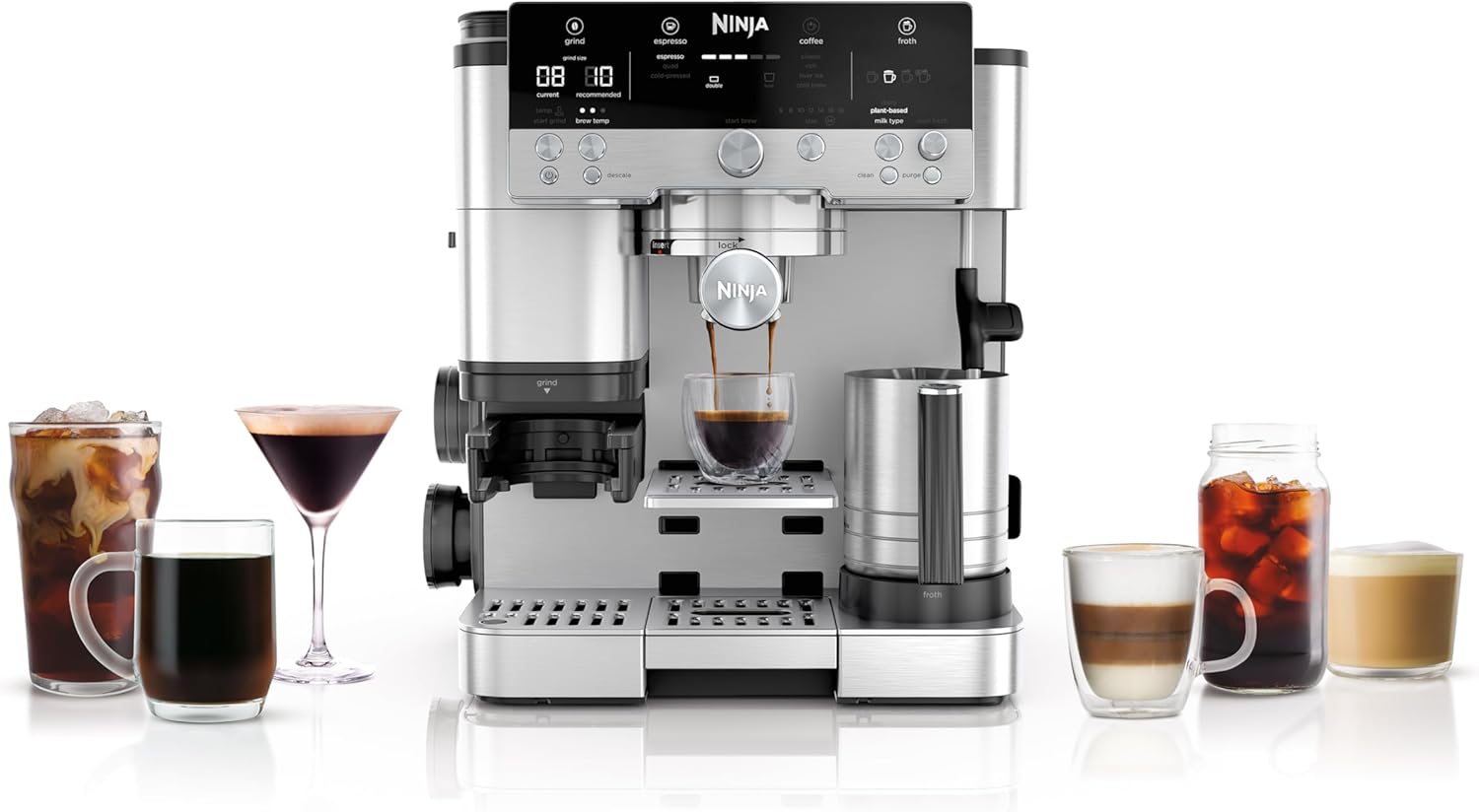
Note: Amazon is currently accepting orders with delivery from 11th March, but given Ninja’s production struggles to meet demand, we recommend securing your order promptly to avoid disappointment.
John Lewis offers email notifications for stock availability.
When Ninja announced their entry into the espresso machine market, our initial scepticism was high. Many major brands have attempted to challenge Sage’s dominance, typically falling short. However, the Ninja Luxe has proven to be a remarkable exception – when you can find one in stock.
While comparisons to Sage machines are inevitable, our testing reveals the Luxe as something quite distinct. Though often measured against the Barista Express due to similar pricing, it actually shares more DNA with the Barista Touch Impress.
Ninja has accomplished something significant here: delivering comparable functionality at a more accessible price point, potentially opening up this category to users who might never have considered a Touch Impress.
Does it match the Touch Impress in build and cup quality? Based on our side-by-side testing, not quite. However, considering the price difference, its performance is impressive. While it may not achieve perfect extraction, it consistently achieves results that will satisfy most coffee enthusiasts, and does so with remarkable efficiency.
The milk steaming capabilities particularly impressed our team. While the automatic function performs adequately, manual steaming produces exceptional microfoam. Additional features include excellent cold foam production, cold brew capability, cold pressed espresso, and a unique take on filter coffee that, while not traditional, delivers satisfying results for those seeking a robust black coffee.
For anyone dreaming of recreating their favourite café drinks at home, this machine shows enormous potential. Once Ninja resolves their stock issues (units typically sell out within days of availability), we predict this could become one of Britain’s bestselling coffee machines.
Sage’s latest release represents their most significant innovation yet. While they’ve deliberately avoided the bean-to-cup market, they recognise that mainstream coffee enthusiasts prioritise convenience and user experience.
Our testing confirms that traditional portafilter espresso delivers richer, fuller-bodied shots compared to bean-to-cup machines using identical coffee beans. Traditional machines also offer superior control over milk texturing and temperature for speciality drinks.
However, many coffee drinkers prioritise convenience over absolute quality, explaining the popularity of bean-to-cup machines. Rather than joining that crowded market, Sage has created something unique: a traditional portafilter machine delivering authentic espresso with the user-friendly experience of a premium touchscreen automatic machine.
Our journey with Sage’s premium coffee machines began with the Oracle Touch, but its price point limited its reach to specialist coffee enthusiasts.
Enter the Touch Impress – a machine that brilliantly bridges the gap between professional and home brewing.
At roughly half the Oracle Touch’s price, this machine brings premium coffee-making capabilities to passionate home baristas.
During our extensive testing, we found the Touch Impress’s guided setup process refreshingly straightforward.
The machine’s intelligent interface walks you through each step of crafting your perfect coffee.
What impressed us most was its flexibility – you can dive straight in or use the comprehensive tutorial mode whenever you need a refresher.
The standout feature is the Impress Puck System, which delivers precise dosing and a consistent 10Kg tamp with minimal effort.
Simply put, this machine delivers barista-quality drinks with the simplicity of an automatic system.
For an in-depth analysis, read our comprehensive review:
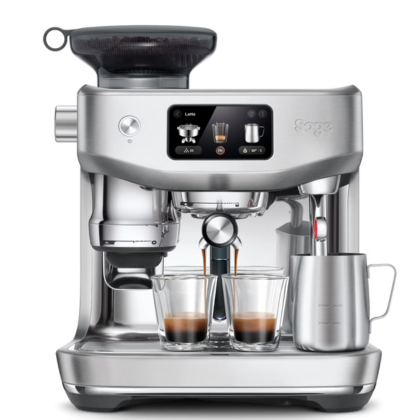
As Sage’s newest flagship model, the Oracle Jet represents a significant leap forward in home coffee making technology.
Through our hands-on testing, three features particularly stood out:
While sharing DNA with both the Barista Touch Impress and Oracle Touch, the Jet carves its own unique position in Sage’s premium range.
The dual thermojet system delivers outstanding temperature stability – a crucial factor in consistent espresso extraction.
One thermojet handles the group head heating while the other manages both espresso and steam production.
This innovative design ensures more consistent shots compared to machines without heated groups.
For the complete details of our testing process and findings, watch our video review above and read our detailed analysis here:
For coffee enthusiasts seeking exceptional drinks with minimal learning curve, who typically make one or two beverages at a time, the Jet stands as our top recommendation.
However, for households preparing multiple drinks in succession, the Oracle or Oracle Touch might prove more suitable with their larger capacity and faster recovery times.
The Jet’s WiFi capabilities particularly impressed us, as Sage continues to enhance the machine through firmware updates.
Recent updates have introduced exciting new recipes, including an Espresso Martini function, showing the machine’s ongoing evolution.
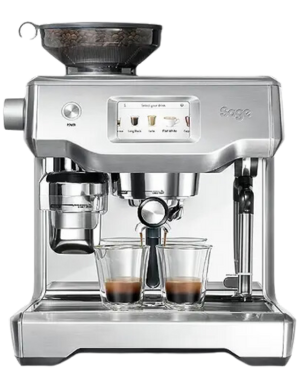
The Oracle Touch sits proudly as Sage’s premium offering in the automatic coffee machine market.
Built on the foundation of the exceptional Sage Dual Boiler – one of the finest home espresso machines on the market – it delivers professional-grade performance.
Our testing revealed temperature stability and precision that rivals commercial machines, thanks to its dual boiler system.
This allows simultaneous brewing and steaming – perfect for crafting multiple milk-based drinks.
The machine offers four programmable auto-on profiles, making it ideal for busy households or frequent entertainers.
While it requires 5-6 minutes to reach temperature, its efficiency in handling multiple drinks makes this warm-up time worthwhile for the right user.
For those typically preparing just one or two drinks, we’d suggest considering the Oracle Jet instead.
The dual boiler system uses most energy during initial heating, with minimal consumption thereafter – making it most economical when preparing multiple drinks in succession.
For a detailed comparison of both the Oracle and Oracle Touch, see our comprehensive review:
Let’s explore the world of traditional espresso machines, which we’ve divided into two categories based on their basket types.
Many entry-level machines advertise “15 bars of pressure for great quality espresso” and use pressurised baskets or portafilters.
These are specifically designed for pre-ground coffee.
Both Sage machines and the Gaggia Classic Pro include both basket types, making them versatile choices.
This dual-basket approach suits both beginners using supermarket coffee and those ready to experiment with freshly roasted beans (which require proper dialling in within about 4 weeks of the roast date).
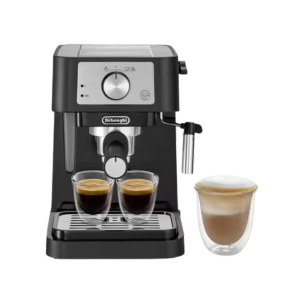
For anyone seeking an affordable, user-friendly traditional espresso machine that works well with pre-ground coffee, the Stilosa stands out as a compelling choice.
Often priced under £100, this machine offers remarkable value in the entry-level espresso market.
While you’ll find similarly priced options from lesser-known manufacturers, our testing experience suggests the Stilosa’s build quality gives it superior longevity.
DeLonghi’s expertise truly shines in this market segment.
While we have mixed feelings about some of their premium offerings targeting home baristas, their mastery of accessible domestic machines is undeniable.
For those wanting to make espresso, cappuccino, and lattes using pre-ground coffee, the Stilosa proves itself as a reliable choice.
Higher-priced alternatives exist, but if you’re planning to stick with pre-ground coffee and pressurised baskets, the extra investment might not be justified.
However, if you’re considering advancing your coffee journey with an espresso-capable grinder and non-pressurised baskets for precise shot dialling – similar to professional barista techniques – then exploring higher-end options makes sense.
But if that sounds unnecessarily complex, the Stilosa remains an excellent value proposition.
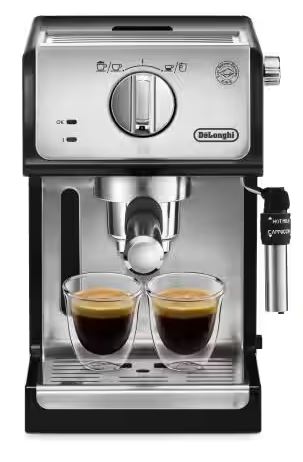
The ECP35.31 shares most features with the Stilosa but includes one notable upgrade: the smart wand technology found in the Dedica EC685.
During our testing, we found this doesn’t necessarily produce better milk texture than the Stilosa, but it does simplify the process.
For traditional, thick cappuccino or latte foam, simply use the cappuccino setting.
For silky microfoam suitable for flat whites, we discovered a technique: use the cappuccino setting for about 20 seconds (timing varies with milk quantity), then switch to heating-only mode.
This closes the air intake, allowing continued heating while distributing the existing bubbles.
With practice and consistent milk quantities, this smart wand can achieve results nearly matching a professional steam wand, but with a gentler learning curve.
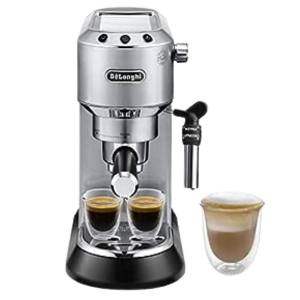
The Dedica has earned its place as one of the most successful home espresso machines ever produced.
While the stock machine isn’t quite what we’d classify as a home barista espresso machine, it holds exciting potential for enthusiasts.
With some straightforward, budget-friendly modifications and paired with a suitable grinder, it’s become a favourite starting point for aspiring home baristas.
In our testing of the EC685 model, we found the Panarello wand surprisingly capable of producing excellent milk texture.
Alternatively, you can modify it by removing the outer wand and using the internal steam pipe as a traditional steam wand (secured with a cable tie for safety).
Converting the Dedica into a more serious home barista tool is surprisingly simple.
Adding an aftermarket portafilter with a standard basket transforms its capabilities, and you can even install a professional steam wand if desired.
Our detailed guide to these modifications is available in the video below, though please pardon our early production values!
The latest EC785 model builds on the EC685’s success with subtle refinements.
You’ll notice a shifted colour palette towards grey rather than silver, plus valuable additions to the package including a proper metal tamper and milk jug.
Regarding the Smeg machine, its striking similarity to the Dedica series isn’t coincidental.
Our analysis suggests near-identical internal components, with the primary distinction being Smeg’s signature aesthetic design.
When customers ask about the price premium for the Smeg version, we usually suggest it’s only worth considering if matching existing Smeg appliances is a priority.
For an in-depth look at the DeLonghi Dedica, read our detailed review:
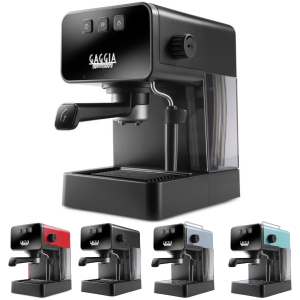
In our professional assessment, the new Gaggia Espresso currently leads the pressurised basket market.
Its distinctive design (reminiscent of building blocks) might divide opinion, but its functionality impresses.
We particularly appreciate the versatile steam wand – a Panarello that transforms into a professional wand by simply removing the outer sleeve.
The pressurisation system sits in the basket itself, offering flexibility with aftermarket modifications.
While it lacks the 9-bar OPV and 3-way solenoid valve found in the Gaggia Classic, and sits slightly below the Sage Bambino models in some aspects, its PID temperature control delivers remarkable stability at this price point.
For anyone seeking a sub-£200 machine with potential for future upgrades to whole bean grinding, this machine tops our recommendations.
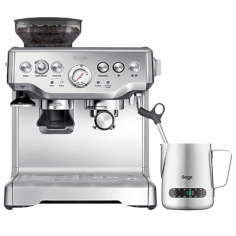
Beyond Sage’s assisted machines, they offer several integrated-grinder models without automation, beginning with the Barista Express.
This machine has dominated global espresso machine sales for over a decade, maintaining its popularity despite increasing competition.
One common misconception, often perpetuated by retailers, is categorising it as a bean-to-cup machine.
We should clarify: true bean-to-cup machines use internal brewing units rather than portafilters, producing notably different espresso characteristics with less intensity and body.
The Express remains unique in Sage’s lineup, retaining its original burr set rather than adopting Baratza’s design.
Our testing shows these original burrs deliver impressive particle distribution, though the stepped adjustment might limit precise dialling in.
For those seeking maximum value in an integrated-grinder espresso machine without requiring extreme precision, the Express remains a solid choice.
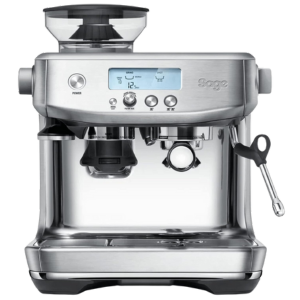
The Pro model targets home baristas with features like precise dialling capability, integrated shot timer, 9-bar OPV, and enhanced steam power.
We should note that the 9-bar OPV doesn’t indicate different pump pressure – it simply regulates maximum basket pressure by internally releasing excess pressure.
While beneficial, we’ve found through testing that the OPV’s impact isn’t as dramatic as some suggest.
Currently, we rate the Barista Pro as the best value integrated-grinder machine for serious home barista use.
Though we typically recommend separate grinder and machine setups, this represents an excellent entry point for budding home baristas requiring an integrated solution.
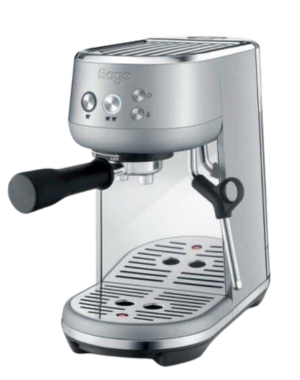
The standard Bambino offers a more compact and budget-friendly alternative to the Plus model.
Our testing reveals it retains most crucial espresso-making features of its bigger sibling, including PID temperature control and 9-bar OPV.
However, there are some notable differences.
The most significant is the absence of automatic milk steaming.
The steam wand also differs, featuring a single-hole tip and reduced power – achieving similar results but requiring about 20 seconds more steaming time.
For espresso production, the main distinction lies in the absence of a 3-way solenoid valve.
Typically, this would affect initial water distribution, as spring valves tend to deliver water at full force immediately.
However, Sage’s clever firmware implementation still provides gentle pre-infusion and pressure ramping, similar to the Plus model.
The lack of a 3-way valve does mean slightly more post-shot dripping and less dry pucks.
When using very fine grinds, you’ll need to wait briefly before removing the portafilter to avoid pressure-related splatter.
On the positive side, we appreciate the ball-joint steam wand mount for enhanced positioning flexibility, plus dedicated hot water delivery.
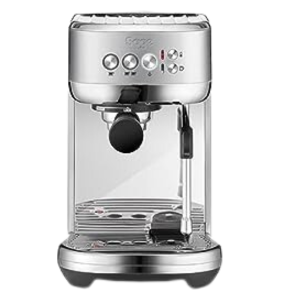
As we transition into home barista territory, the Bambino Plus demands attention as a standout entry-level prosumer machine.
For guidance on automatic milk steaming techniques applicable to most machines, watch our demonstration:
Let’s highlight the impressive feature set that makes this machine exceptional for its price point:
While the PID isn’t user-adjustable, its presence ensures consistent temperature control – a significant advantage over similarly priced competitors.
For comparison, the Rancilio Silvia costs considerably more and requires an additional PID modification to achieve similar temperature stability.
Our extensive testing confirms the automatic milk steaming system’s effectiveness.
If you encounter issues with milk texturing, this typically indicates maintenance needs – usually scale buildup in the steam valve or wand, or potentially sensor/pump problems.
When properly maintained, the auto-steaming nearly matches manual capabilities.
Our primary critique focuses on the included portafilter – we’d prefer the superior metal version supplied with the Express and Pro models.
Fortunately, these upgraded portafilters are available separately.
For our complete analysis, see:
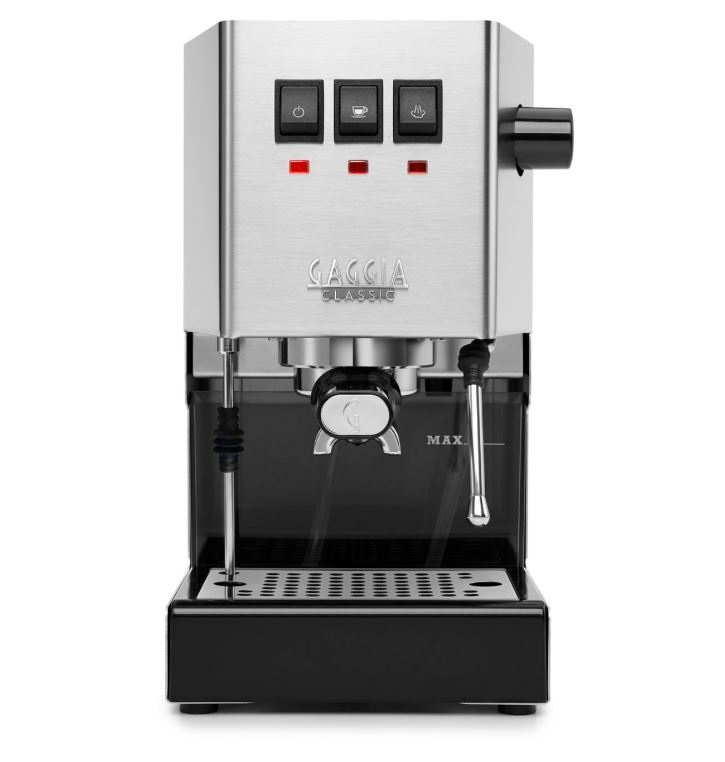
The Classic Pro holds a special place in the home barista community, maintaining its position as a leading entry-level machine for over three decades.
Its enduring popularity has created something of a cult following among coffee enthusiasts.
The machine’s reputation stems from its robust engineering philosophy – built with mechanical simplicity that ensures longevity and straightforward maintenance.
In our experience servicing vintage models, we regularly encounter Classics from the 90s and 00s still performing admirably and retaining impressive resale value.
The latest E24 iteration builds upon the Evo 2023 platform, introducing one significant upgrade: a brass boiler replacing the previous aluminium design.
Key improvements carried over from the Evo Pro 2023 include:
The transition from the Evo Pro’s non-stick coated aluminium boiler to an all-brass design in the E24 represents a significant enhancement.
Beyond addressing concerns about aluminium in coffee equipment, the brass construction’s thermal properties allow for thinner walls, increasing boiler capacity by approximately 30%.
At 105ml, the boiler remains compact enough for quick heating while potentially offering enhanced steam power.
We’re currently awaiting delivery of our E24 test unit, as these have only recently reached UK shores, and will update our findings on steam performance soon.
A Word of Caution: We’ve noticed some retailers offering seemingly excellent deals on Gaggia machines and other brands. Always verify that you’re purchasing UK stock with appropriate plug fittings and warranty coverage through Gaggia Direct or their authorized resellers to avoid unexpected customs duties and courier fees.
For our detailed analysis of the Gaggia Classic Pro, see:
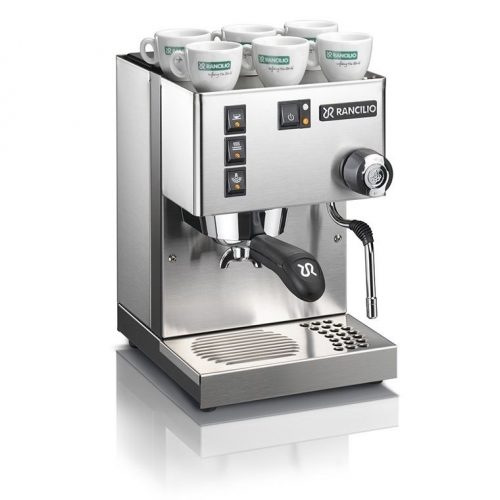
The Rancilio Silvia commands a slight premium over the Classic Evo Pro, but our testing confirms its value proposition.
Its 300ml brass/chrome alloy boiler (compared to the Classic’s 80ml) delivers exceptional steam power, outperforming many pricier machines, though heating times increase accordingly.
Quality features include a professional 58mm portafilter, 3-way solenoid valve, and adjustable OPV.
Without a PID modification, temperature management requires technique – you’ll need to master temperature surfing or consider the upgrade.
We should note some quirks: the powerful steam wand demands practice, and the unusual hex bolt shower screen design serves as a built-in dosing indicator – if you see a hex impression in your coffee puck, you’ve overdosed the basket.
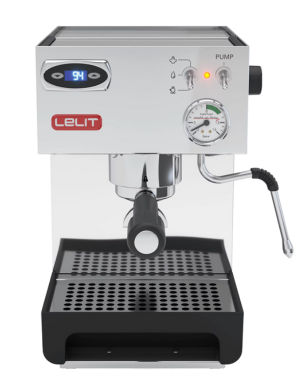
While Lelit may not yet have mainstream retail presence, they’ve earned significant respect within the home barista community.
Their recent acquisition by the Breville Group (known as Sage in the UK) has brought welcome pricing adjustments through Lelit UK.
The Anna matches the Rancilio Silvia’s core capabilities but includes factory-fitted PID control – a significant value proposition considering a PID-modified Silvia would cost nearly £700.
Key advantages include:
These features position the Anna ahead of both the Silvia and Gaggia Classic in pure performance terms.
However, our assessment considers more than just performance metrics.
Aesthetic preference matters – you’ll spend considerable time with your machine.
While build quality meets expectations at this price point, we found the overall fit and finish slightly behind its competitors.
Minor issues include occasional sharp edges and a basic steam control dial.
The main compromise is the 57mm group size, which limits aftermarket accessory compatibility compared to the standard 58mm format.
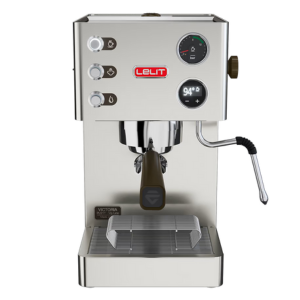
After extensive testing in our coffee lab, we’ve found the Lelit Victoria to be a compelling option for serious home baristas seeking premium features without the premium price tag.
While many coffee enthusiasts naturally gravitate towards the Profitec Go for its exceptional build quality – and rightfully so – our hands-on experience with the Victoria reveals it to be a worthy alternative that won’t empty your bank account.
When comparing it to the investment required for a Gaggia Classic Pro plus PID modification, the Victoria presents remarkable value, delivering professional-grade features straight out of the box.
The LLC (Lelit Control Centre) particularly impressed us during testing, offering precise temperature control for both brewing and steaming in 1-degree increments, while doubling as a shot timer during extraction.
We’re quite fond of their proprietary “coffee slide” 58mm portafilter, and the 300ml brass boiler provides consistent performance for daily use.
However, we should note a few minor quibbles: the OPV adjustment could be more straightforward, the steam dial’s feel leaves room for improvement, and we would have appreciated adjustable pre-infusion capabilities.
Nevertheless, considering the price point, our team’s consensus is that the Victoria stands as an excellent choice for home baristas seeking professional features without the professional price tag.
For a comprehensive look at the entire range, check out our detailed guide to Best Lelit Coffee Machines
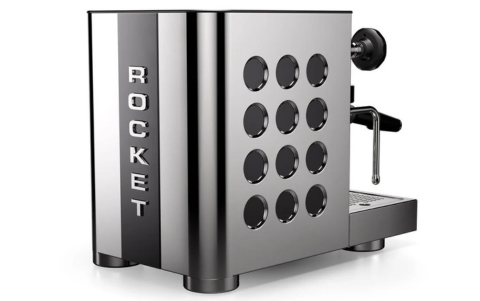
In our extensive testing of premium espresso machines, we’ve always admired Rocket’s commitment to stunning design. The Appartamento’s enduring popularity owes much to its head-turning aesthetics, even when competing machines offered more features at similar or lower price points.
With the TCA version, we’re pleased to see Rocket has enhanced both form and function. The addition of temperature control (TCA: Temperature Control Adjustment) brings welcomed precision to the brewing process. The reinforced chassis design impressed us during our durability assessments, while the insulated boiler demonstrates improved energy efficiency in our tests.
We particularly appreciate the factory-set 9-bar OPV and the redesigned steam tip, which our less experienced team members found notably easier to master for milk texturing, despite the machine’s professional-grade steaming power.
In our extensive testing of coffee machines, we’ve noticed that Tassimo machines remain a popular choice in the UK market, and for good reason. These affordable pod systems offer an impressive variety of drinks that appeal to casual coffee drinkers, from classic espresso to flavoured lattes and even hot chocolates.
The partnership with recognised brands such as Costa, L’or, Jacobs, Bailey’s, and Cadbury adds significant value for consumers seeking familiar tastes. While our team specialises in traditional espresso machines, we understand the appeal of pod systems for everyday coffee drinkers.
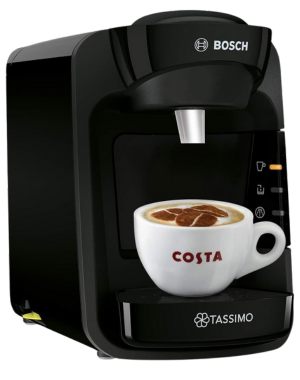
During our testing, we found the Bosch Suny consistently ranks among Amazon UK’s top-selling pod machines. After comparing it with other Tassimo models, we understand why – it offers virtually identical performance at a more competitive price point.
While all Tassimo machines share the same brewing technology and pod compatibility, there are subtle distinctions between models. For a detailed comparison, we recommend checking this helpful chart from Tassimo.
Our analysis shows that Happy, Vivy, and Suny models primarily differ in design rather than function. The Suny comes exclusively in black, while its siblings offer various colour options.
We measured the following dimensions:
For meaningful feature upgrades, you’d need to consider the My Way model, which adds a larger water tank, Brita filtration, and customisable brewing settings.
Based on our testing, the Suny presents excellent value if you’re comfortable with its black finish and dimensions. Unless you specifically want the My Way’s personalisation features, we see little reason to spend more.
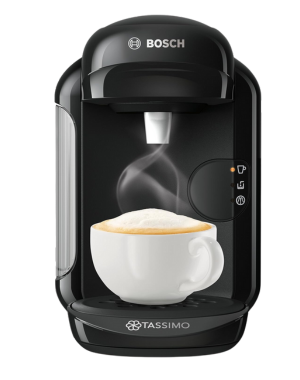
In our compact machine testing, the Vivy 2 impressed us with its space-efficient design. At just 21cm deep and 29cm wide, it’s perfect for kitchens where counter space is precious. For ultra-compact needs, we found the Happy model’s 17.5cm width makes it even more suitable for desk placement or caravan use.
Our testing confirmed all T-discs perform identically across the range. Unless you’re specifically interested in the My Way’s customisation options, we suggest choosing based on your space requirements and aesthetic preferences.
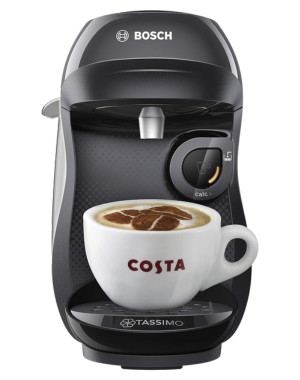
At just 17.5cm wide, our measurements confirm the Happy as the most compact Tassimo machine available. Despite its small footprint, we found it delivers identical drink quality to its larger siblings. It’s particularly well-suited for office desks or small kitchens where space is at a premium.
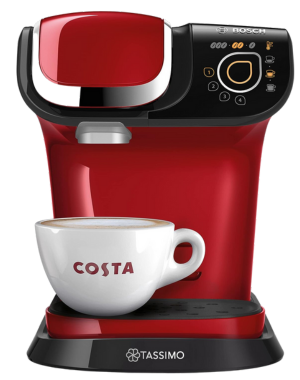
In our comparison testing, the My Way 2 stands out as the most advanced Tassimo machine. Key features that impressed us include:
While larger at 40cm x 26.5cm x 31cm, we found the extra features justify the increased footprint for those seeking more control over their drinks.
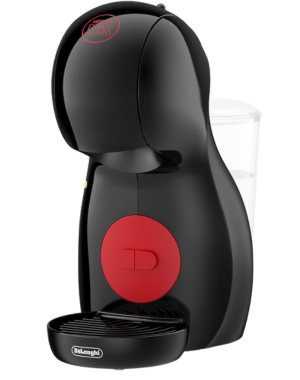
Our testing reveals a key advantage of Dolce Gusto systems over Tassimo: compatibility with third-party pods. This flexibility expands your drink options significantly.
The Piccolo XS currently ranks as Amazon’s second best-selling pod machine. Our measurements show a compact footprint of 25cm x 32cm x 25cm, with an 800ml water tank. Unlike automatic models, this machine requires manual pressure adjustment based on pod specifications.
In contrast to Tassimo’s range, we found meaningful differences between Dolce Gusto models that might justify choosing higher-priced options, particularly regarding automation features.
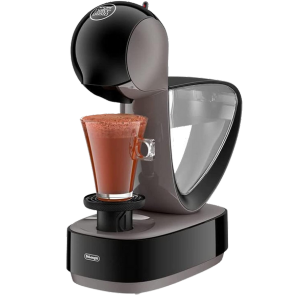
Our comparison testing shows the Infinissima builds on the Piccolo XS platform with several practical improvements. The larger 1.2L water tank proved particularly useful in our daily use tests. At 33cm x 32cm x 27cm, it requires more counter space but offers enhanced convenience with its adjustable-height drip tray – a feature we preferred over the Piccolo XS’s removable design.
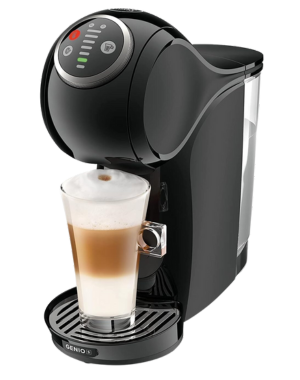
In our market research, we noticed an amusing quirk: the Genio S Plus currently tops Amazon’s bean-to-cup category, despite being firmly in the pod machine camp.
Our testing revealed this automatic model offers welcome convenience – simply insert a pod and the machine calculates optimal water volume. We particularly appreciated the customisation options for adjusting drink volume to personal taste.
Key specifications include an 800ml water tank and incredibly compact dimensions (12cm wide x 32cm deep x 27cm tall). Two standout features caught our attention: the “Espresso Boost” technology for more robust shots and the ability to adjust brewing temperature.
Moving to Nespresso machines, our testing experience takes an interesting turn. While we typically favour traditional espresso machines for home use, we’ve found compelling reasons to keep a Nespresso machine in our testing lab.
These machines truly shine in situations demanding speed and convenience. When time constraints make traditional brewing impractical, Nespresso offers a reliable alternative.
Through extensive comparative testing, we’ve identified several key advantages of the Nespresso system:
First, our blind taste tests consistently rank Nespresso among the top performers in pod-based systems, sharing the podium with Lavazza A Modo Mio machines.
Speaking of which, here’s an fascinating bit of coffee history: both systems were invented by the same innovative mind. The inventor’s story reads like a corporate thriller – securing a position in Nescafe’s packaging department specifically to understand the company from within before presenting his groundbreaking design.
For more details on how these systems compare, see our in-depth analysis: Nespresso vs Lavazza A Modo Mio
Our side-by-side testing showed Lavazza machines typically produce slightly hotter, stronger coffee. However, Nespresso offers broader machine selection and significantly more compatible pod options.
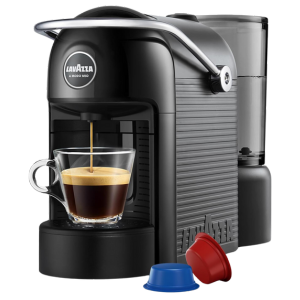
The Jolie’s design reminds us of the Nespresso Inissia, with clean, modern lines. Our testing revealed impressive performance in a compact package.
Key features we noted include:
For those prioritising stronger, hotter coffee in a space-saving design, our tests suggest the Jolie deserves serious consideration.
It’s worth noting that Nespresso now offers their Vertuo line, featuring expanded pod sizes and strength options compared to their original system.
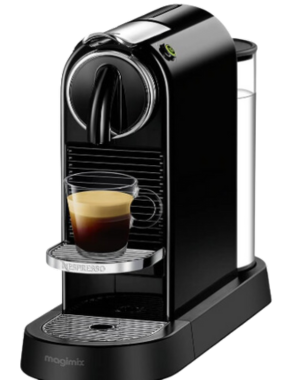
During our extensive testing, the Citiz stood out for its premium build quality compared to entry-level models. While its core functionality matches other Nespresso machines, the refined design and solid construction impressed our team.
Our hands-on testing revealed several notable features:
One quirk we discovered during testing: the powerful pump can cause lightweight espresso cups to vibrate on the fold-out tray, so we recommend keeping a watchful eye on smaller vessels.
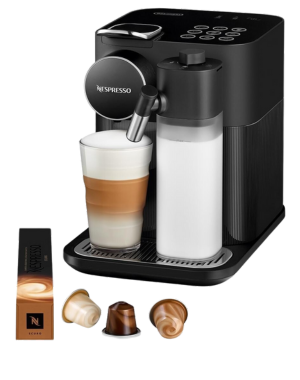
Our testing of this one-touch system revealed impressive automation – simply press a button for cappuccino, latte, or latte macchiato, and the machine handles everything. We particularly appreciated the adjustable milk texture settings and drink customisation options.
However, our long-term testing highlighted some practical concerns about maintenance. The cleaning routine requires holding the clean button for 16 seconds after each milk drink, and the recommended bi-daily cleaning of the milk carafe involves complete disassembly.
While Amazon reviews broadly praise the machine, our analysis of user feedback shows recurring themes around cleaning complexity and milk temperature. For serious milk drink enthusiasts, our testing suggests considering Sage Creatista machines instead, which offer superior control over milk texture and temperature compared to one-touch systems or Aeroccino combinations.
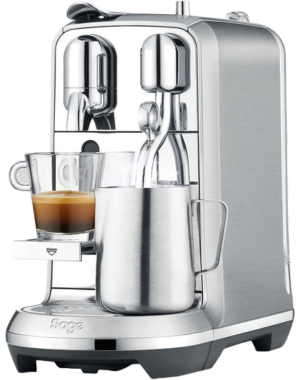
For milk-based drink enthusiasts considering Nespresso, our extensive testing puts the Creatista Plus at the top of the list. Think of it as Nespresso’s answer to the popular Sage Bambino Plus.
Our hands-on experience revealed impressive capabilities:
The sleek stainless steel design caught our eye as one of the more sophisticated offerings in the Nespresso range.
While it doesn’t quite match its premium sibling, the Pro model, it delivers outstanding value for serious pod machine users. Speaking of which…
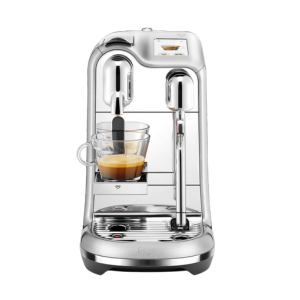
Our testing revealed the Creatista Pro as a remarkable achievement in pod machine engineering. It performs like a proper heat exchanger espresso machine, with simultaneous brewing and steaming capabilities thanks to its dual thermojet system.
Standout features from our analysis include:
While the price point sits at the premium end of pod machines, our testing confirms you’re paying for practical functionality rather than gimmicks. The dedicated hot water spout eliminates the need for kettle-boiling or the usual workaround of running water through an empty pod holder.
For Americano enthusiasts (or Long Black, as it’s labelled in the menu, following the Australian and New Zealand convention), the precise water volume control allows perfect customisation.
The dual thermojet system particularly impressed our team during testing. While standard Nespresso machines typically need about 20 seconds for extraction, this system’s ability to simultaneously steam milk and brew coffee delivers unmatched speed for those rushed morning cappuccinos.
While our American counterparts consider filter coffee machines a kitchen staple, we’ve noticed their popularity has waned somewhat in the UK. However, our testing reveals these machines still offer excellent value for filter coffee enthusiasts.
Currently leading UK sales charts, this budget-friendly model ranks among the most popular filter coffee machines. Our testing revealed surprising capabilities for its price point.
Key specifications include:
Our analysis of customer feedback shows consistent performance from working units, though we recommend purchasing through Amazon for their hassle-free return policy. One amusing note: the listing incorrectly suggests espresso and macchiato capabilities – this is strictly a filter coffee machine.
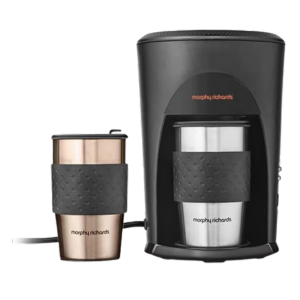
During our single-serve coffee maker testing, this Morphy Richards model caught our attention as a budget-friendly option for personal use.
The included travel mug makes it particularly suitable for commuters, though we found it works equally well with standard cups. Our team tested it as a desk-side brewing solution with satisfactory results.
While our durability testing revealed the build quality reflects its budget pricing, we believe it offers reasonable value for those seeking a basic single-serve filter coffee maker.
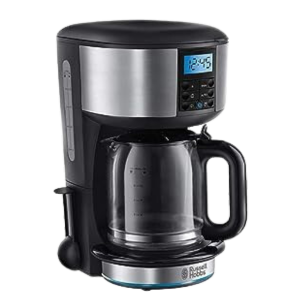
The Buckingham has maintained its position as a UK bestseller, and our testing helps explain why. This affordable machine combines practical features with reliable performance.
Key features we tested include:
Our practical testing revealed the manufacturer’s cup measurements are optimistic – using standard 250ml cups, you’ll get 4-5 servings rather than the advertised 10 (which assumes tiny 125ml portions).
One cautionary note from our durability testing: the glass carafe requires careful handling, and replacement costs nearly half the machine’s price. Keep this in mind when considering long-term value.
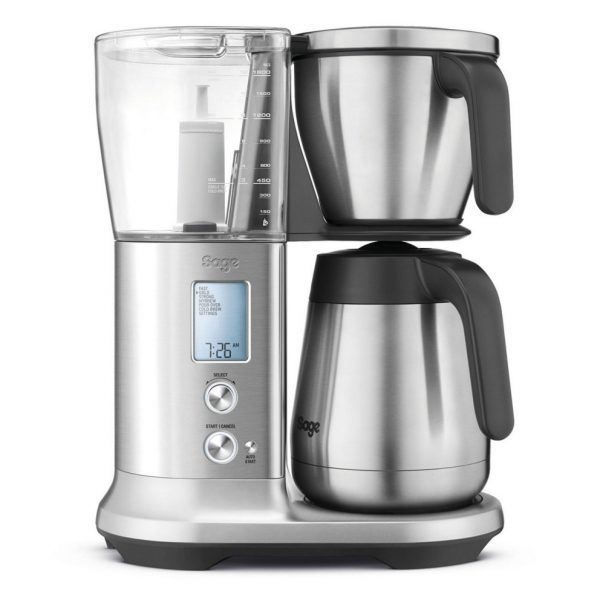
Our extensive testing of Sage products (known as Breville outside the UK) consistently reveals their talent for reimagining coffee brewing technology. The Precision Brewer exemplifies this innovative approach.
This substantial machine offers nearly 1.8L capacity (60 ounces), though it’s often listed as 1.7L. Our testing revealed several standout features:
The “My Brew” setting particularly impressed our team, offering unprecedented control over:
For those seeking simplicity with optimal results, the “Gold” setting automatically applies ECBC (European Coffee Brewing Centre) certified parameters. The programmable timer function proved reliable in our morning testing routine.
We were pleasantly surprised by its cold brew capabilities – a unique feature for a filter machine.
During our months of testing, we noticed just one minor quirk: the water tank measurements skip the 1L mark, jumping from 900ml to the next increment. However, this small inconvenience hardly detracts from what our team considers the most innovative filter coffee machine available.
It’s worth noting that James Hoffman, former World Barista Champion, uses this as his daily brewer – a powerful endorsement from one of coffee’s most respected voices.
For an in-depth analysis, read our complete review: The Sage Precision Brewer Review
After extensive testing of dozens of machines, our team hopes this comprehensive guide has helped narrow down your options.
Identifying the right category of machine for your needs significantly simplifies the selection process.
One crucial insight from our years of testing: while the machine matters, coffee quality remains the paramount factor in your cup’s taste. Many coffee enthusiasts are surprised to learn that upgrading their beans often yields more dramatic improvements than upgrading their machine.
Caffeinatedgear.com is a participant in the Amazon Services LLC Associates Program, an affiliate advertising program designed to provide a means for sites to earn advertising fees by advertising and linking to amazon.co.uk.
© 2025 Caffeinated Gear.